- Web Desk
- Apr 05, 2026
China responds to US trade policies with new import taxes
-

- Web Desk Karachi
- Feb 11, 2025
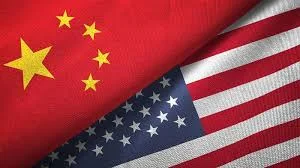
LONDON: China implemented retaliatory import tariffs on certain American goods starting Monday, escalating the trade conflict between the two leading global economies. This move followed a new 10 percent tariff imposed by the US on all Chinese imports, which began on February 4.
On Sunday, President Donald Trump announced plans to levy a 25 percent tariff on all steel and aluminum imports into the US, with further details expected to be provided on Monday. While on Air Force One heading to the Super Bowl, Trump mentioned he was considering reciprocal tariffs on other countries, although he did not specify which nations would be affected.
The recent Chinese tariffs include a 15 percent tax on US coal and liquefied natural gas, as well as a 10 percent tariff on American crude oil, agricultural machinery, and large-engine vehicles.
In a related move, Chinese authorities initiated an anti-monopoly investigation into Google and added PVH, the parent company of well-known brands like Calvin Klein and Tommy Hilfiger, to its “unreliable entity” list. Additionally, China has imposed export restrictions on 25 rare metals essential for various electrical and military applications.
Trump’s announcement regarding steel and aluminum tariffs followed his recent agreements with Canada and Mexico to avoid similar 25 percent tariffs on goods from those countries.
During his first term, he established tariffs of 25 percent on steel and 10 percent on aluminum, but later allowed several partners, including Canada, Mexico, and Brazil, to escape these tariffs through duty-free quotas. The European Union’s import taxes were not resolved until the Biden administration took office.
Details regarding any potential exemptions for specific countries from the new tariffs remain unclear. Trump’s plans for reciprocal tariffs align with a campaign promise to match tariffs imposed on American goods by other nations. He also indicated that vehicle import taxes were still an option, highlighting his concerns about higher EU tariffs on American cars compared to those imposed by the US.
Europe could be a big loser in US-China trade war, ECB warns
Last week, Trump suggested that tariffs on EU goods could be imminent while indicating a possible negotiation could be reached with the UK. Following the introduction of US tariffs, Beijing accused Washington of making “unfounded and false allegations” regarding China’s involvement in the synthetic opioid fentanyl trade as a justification for the tariffs.
In a formal complaint to the World Trade Organization (WTO), China criticised the US tariffs as “discriminatory and protectionist,” claiming they violated trade rules. However, experts caution that China is unlikely to win a favorable ruling, as the WTO dispute resolution mechanism is currently inoperative.
Trump had been anticipated to communicate with his Chinese counterpart Xi Jinping in recent days but has expressed no urgency to resume talks. According to Scott Kennedy, a Chinese business and economics expert at the Center for Strategic and International Studies, “China is much better prepared [now compared to Trump’s first term].” He noted that, despite facing cyclical economic slowdowns, China’s technological capabilities have advanced significantly, and it has diversified its trade and investments.
Since taking office on January 20, many of Trump’s policies have been subject to alteration. On Friday, he announced a suspension of tariffs on small packages from China, which, together with the additional 10 percent tariffs, came into effect on February 4. This suspension will remain until adequate systems are established to efficiently process and collect tariff revenues. After the order revoked duty-free treatment for shipments valued under $800, the US Postal Service (USPS) and other agencies scrambled to comply, leading USPS to temporarily stop accepting packages from China, only to reverse that decision the following day.
You May Also Like