
- WEB DESK
- April 5, 2026
Petrol prices likely to drop for rest of October after Ogra review
-

- WEB DESK
- October 15, 2025
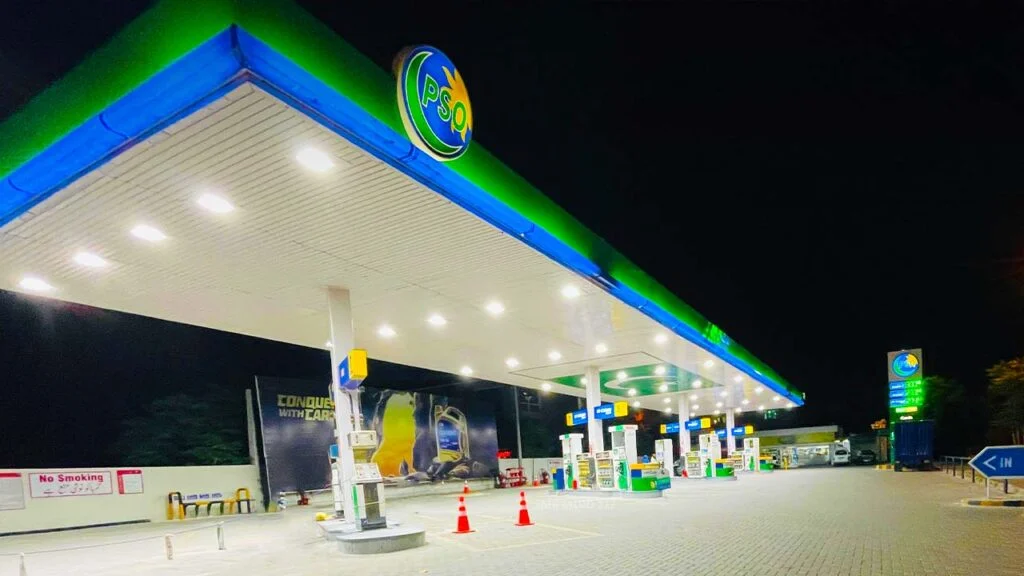
ISLAMABAD: Pakistani consumers may finally see a bit of relief at fuel stations, as petroleum product prices are expected to drop in the upcoming fortnightly review, effective October 16, 2025.
Officials familiar with the matter said the expected decline follows a recent dip in global oil prices. Petrol prices could fall by up to Rs7 per litre, bringing the new rate to around Rs261.68 per litre.
According to industry sources, the Oil and Gas Regulatory Authority (Ogra) is finalising its calculations today (Wednesday), while the Ministry of Finance is expected to announce the official prices on October 15 after reviewing updated data on global oil markets and exchange rate trends. Once approved, the new prices will take effect nationwide from October 16.
At present, petrol in Lahore, Islamabad, Gujranwala, and Sialkot is being sold at around Rs269.80 per litre, while high-octane petrol is priced at approximately Rs283.95 per litre, which is Rs14.15 higher than regular petrol.
The expected cut, however, may not bring significant relief to consumers, as a reduction of less than Rs10 per litre seems modest given the already high prices. Still, any decrease, no matter how small, may be welcomed by the public as a rare bit of good news.
It is important to note that these are provisional estimates, and the final prices will be confirmed by the Ministry of Finance after 9 PM today.
Small drop expected in diesel, kerosene and LDO
High-Speed Diesel (HSD) may see a modest decline of Re1.00 per litre, bringing its estimated new price to Rs275.81 per litre. Kerosene Oil is also likely to become cheaper by Rs2.75 per litre to Rs182.22 per litre, while Light Diesel Oil (LDO) could fall by Rs1.64 per litre to Rs163.86 per litre.
Sources added that the import premium currently stands at USD 6.62 per barrel for petrol and USD 3.20 per barrel for HSD.
Heavy levies still weigh on prices
Despite the possible reduction, the current price structure continues to carry heavy taxes. Petrol bears a petroleum levy and carbon surcharge of Rs80.52 per litre, while HSD is burdened with Rs79.51 per litre in similar charges.
The Inland Freight Equalisation Margin (IFEM) stands at Rs8.69 per litre for petrol and Rs6.19 per litre for diesel, with no exchange rate adjustment recorded in the last review period.
If approved, the expected cut in prices will provide some respite for inflation-hit consumers, although high taxes and freight costs continue to limit the full benefit of falling international oil prices.
Global crude market sees further decline
Now, looking at the latest situation in global oil markets, prices continued to fall in early trade on Wednesday, extending losses from the previous session. Investors appeared cautious after the International Energy Agency (IEA) warned of a potential supply surplus in 2026 and as renewed US-China trade tensions raised concerns about weaker demand.
Brent crude futures slipped 12 cents, or 0.19 percent, to $62.27 a barrel by 0021 GMT, while US West Texas Intermediate (WTI) futures dropped 10 cents, or 0.17 percent, to $58.60 a barrel. Both benchmarks ended Tuesday at five-month lows.
The IEA said on Tuesday that the global oil market could face a surplus of up to 4 million barrels per day next year, a larger glut than it previously forecast. The increase is expected as OPEC+ members and other producers boost output while global demand remains sluggish.
Adding further pressure on demand, the United States and China have imposed new port fees on ocean carriers. Meanwhile, Beijing announced sanctions against five US-linked subsidiaries of South Korean shipbuilder Hanwha Ocean, deepening trade tensions between the two largest economies.
Read next: IMF, Pakistan reach staff-level deal on second EFF review and first RSF review
You May Also Like

- Sadiq Khan
- February 4, 2026
Gold steadies as investors eye geopolitics and US jobs data

- Zafar Ali
- February 3, 2026