- Web
- Feb 05, 2026
SBP’s mid-year review highlights positive developments in banking
-

- Web Desk Karachi
- Sep 19, 2024
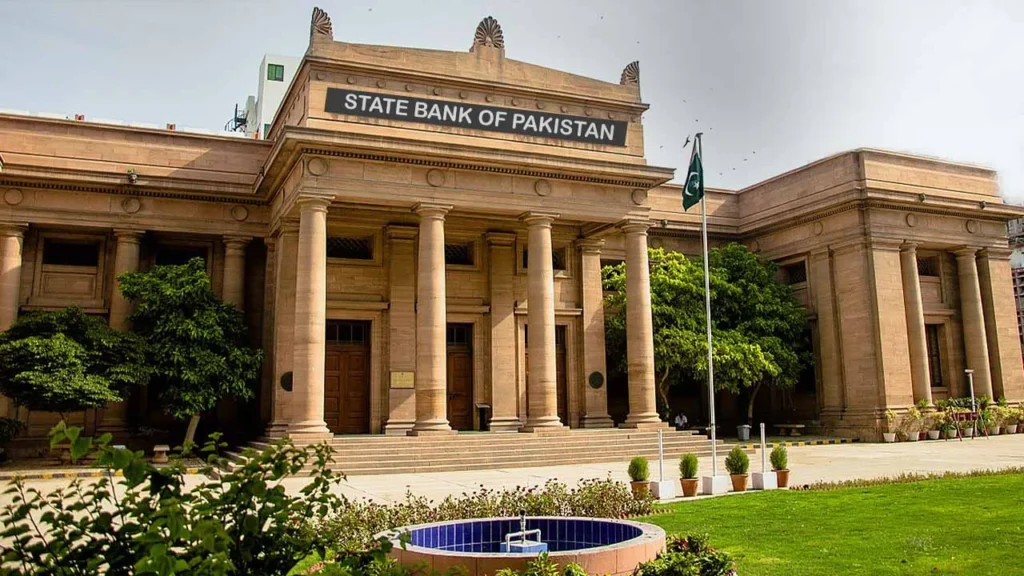
The State Bank of Pakistan (SBP) has released its Mid-Year Performance Review of the Banking Sector, which highlights the positive developments in the country’s economy and the banking sector’s performance. The review notes that the macroeconomic environment has improved, with a revival in economic activity, receding inflationary pressures, and a narrowing current account deficit. As a result, the SBP has cut the policy rate by 450 basis points, which is expected to ease financial conditions and support the banking sector’s performance.
According to the review, the banking sector managed to grow at a decent pace of 11.5 percent in H1CY24. The expansion in the asset base was mainly driven by investments.
Domestic advances increased by 0.6 percent in the reviewed period; however, this growth mainly came from public sector advances, which grew by 3.9 percent, while private sector advances contracted by 0.6 percent in the reviewed period.
In the wake of gradually improving macroeconomic conditions, however, the contraction in private sector advances was significantly lower as compared to 7.0 percent contraction witnessed in H1CY23. On funding side, deposits increased by 11.7 percent in H1CY24.
Besides, banks’ reliance on borrowings remained noticeable as well. Asset quality dynamics remained steady as uptick in gross nonperforming loans (NPLs) remained subdued while total provisioning coverage further improved as the introduction of IFRS-9 led to creation of allowances for any prospective future losses in the regular portfolio.
Accordingly, total provisioning to NPLs ratio improved to 105.3 percent by end June-2024 (94.4 percent in June-2023), while the specific provisioning to NPLs ratio also improved to 85.5 percent by end June-2024 (83.6 percent in June-2023).
Earnings, nonetheless, slowed down owing to deceleration in net interest income; non-interest income, however, supported the profitability. The solvency position of the banking sector remained strong as Capital Adequacy Ratio stood at 20.0 percent at end June-2024 (17.8 percent in June-2023).
Encouragingly, the banking sector, in different scenarios of stress testing exercise, shows sufficient resilience to withstand severe shocks to key risk factors and hypothetical adverse economic conditions. Domestic financial markets witnessed relatively lower stress during H1CY24 as compared to H1CY23. It was on account of gradually improving macroeconomic conditions and reduction in country risk premium, which kept financial markets volatility under check. A relative stability in the FX market, which witnessed significant volatility in the corresponding period of last year, contributed to overall calm in the financial markets during the reviewed period, although equity market witnessed an uptick in the volatility.
However, money market continued to operate in an orderly manner as SBP monetary policy operations kept interest rates in the policy range. The respondents in the 14th wave of the Systemic Risk Survey, conducted in July-2024, expressed confidence in the stability of the financial system and the ability of the regulator to manage any unforeseen shocks.
The review also notes that the banking sector’s exposure to the government is expected to remain high in the second half of the year, which demands earnest measures by the treasury to reduce its reliance on the banking sector for fiscal needs. The sector’s solvency position remains strong, with a capital adequacy ratio of 20.0 percent.
The review also states that the banking sector is expected to remain resilient to adverse shocks due to its capital cushions and buffers. The results of macro stress tests also suggest that the sector is expected to withstand assumed severe macroeconomic shocks over the next two years.
You May Also Like