- Web Desk
- Jul 09, 2025
KU ISST celebrates World Space Science
-

- Web Desk Karachi
- Oct 09, 2024
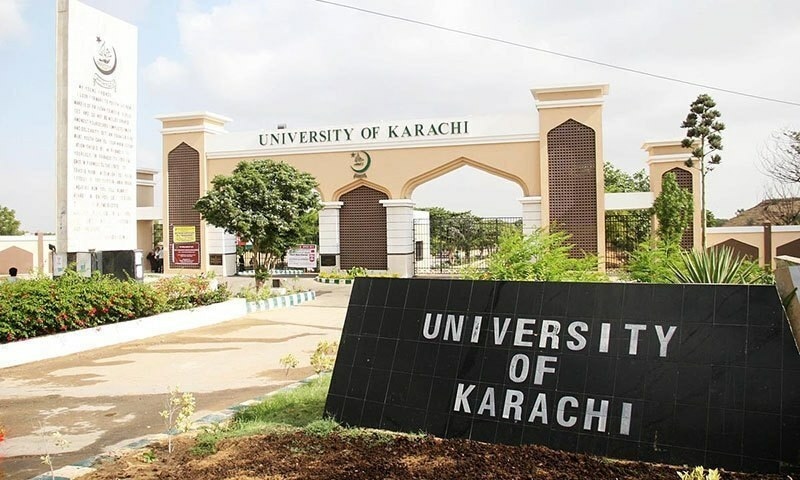
The Institute of Space Science and Technology of the University of Karachi organized a two-day international conference on space science and technology to celebrate World Space Science 2024 week.
The General Assembly by its resolution 54/68 of 6 December 1999, decided to celebrate World Space Week every year to acknowledge the contributions of space science and technology to the betterment of the human condition.
The KU ISST hosted the inaugural session of the international event the Chinese Teachers Memorial Auditorium on Tuesday. Speakers from USA and China, LUMS, NED University and others will present their research work during the both days of the conference.
The KU Vice Chancellor Professor Dr Khalid Mahmood Iraqi during his address mentioned that advancements in space science and technology will not only help in discovering new things about our universe but through scientific capacity building, technical human resource development and spin-off technologies, we can see some real economic and social development.
He said that space technology is playing a vital role in defense. Many countries have deployed surveillance satellites to monitor the military operations and activities of other nations. Some of the countries have designed anti-satellite (ASAT) weapons to destroy or disable satellite in orbit, making them an important component of military strategy in the modern era.
However, he added, destroying satellites could create a significant amount of space debris, which could pose a threat to other satellites and spacecraft, and could also lead to an arms race in space which could undermine efforts to promote peaceful cooperation and collaboration in space.
The KU Director ISST Professor Dr Muhammad Jawed Iqbal, and Absar Ahmad from ISST in their joint paper shared the complex and evolving landscape of space militarization, distinguishing it from the more aggressive concept of weaponization. They highlighted the potential hazards associated with militarization, emphasizing the need for international cooperation and regulatory frameworks to ensure the peaceful use of outer space. According to them, it aims to foster a deeper understanding of the strategic dynamics shaping space as a new frontier of global security.
Speakers from KU ISST Mahnoor Farooq and Syed Nazeer Alam mentioned that wind power is one of the most promising sources of energy across the globe. Wind power is the cleanest electricity and currently the second largest source of power among the renewable energy sources.
They shared that it has many environmental and socioeconomic benefits, such as reduction of greenhouse gas emission, positive impact on public health and job opportunities. The wind being available in a mechanical form is easily converted to useful work. They elaborated the emerging trends in designing low-to medium range wind power systems providing reliable and sustainable power for various applications, from residential to commercial applications.
The Principal Scientific Officer, National Institute of Oceanography, Dr Ibrahim Zia said that remote sensing and GIS as applied all field of social sciences in recent days, as these technologies also provide an approach with plenty of high-quality data from above the ocean to help us collect, observe and monitor large area data synoptically.
He mentioned that as Pakistan has a more than 1000 km coastline and 290000 km2 exclusive economic zone area followed with the challenges of cyclones, sea level rise, coastal erosion thus these technologies are significantly very important in this region.
According to him, in Pakistan, remote sensing and GIS are also utilized by various oceanographic studies such as marine resources assessments, coastal ecosystems monitoring, and physical and chemical processes in the ocean. It helps us predict cyclones more accurately, plan development along coasts and manage various aspects of marine biodiversity. Short message service and software solutions decrease risks of natural disasters, such as Cyclone Biparjoy, by enabling timely evacuation and mitigation efforts.
A Chinese speaker from National Astronomical Observatories, Chinese Academy of Sciences, Beijing, China, Jin L. HAN during his online presentation shared that in last 55 years, about 3000 pulsars have been found by the radio telescopes over the world. Recently China built a huge radio telescope, called FAST (The Five-hundred-meter Aperture Spherical radio Telescope), which is the most sensitive one over the world.
He mentioned that they use that to survey the Galactic plane of the Milky Way in the last five years, and have already discovered more than 730 pulsars, including 170 pulsars in binary systems with a companion orbiting each other. Some pulsars radiate pulses only occasionally, which are transient in the Milky Way. We have measured strong relativistic effects of some binaries. In addition, we have also discovered 8 fast radio bursts which originate from a source outside of the Milky Way
You May Also Like