- WEB DESK
- October 3, 2026
21 years on, 2005 earthquake remains stark reminder of disaster risks
-

- WEB DESK
- October 8, 2026
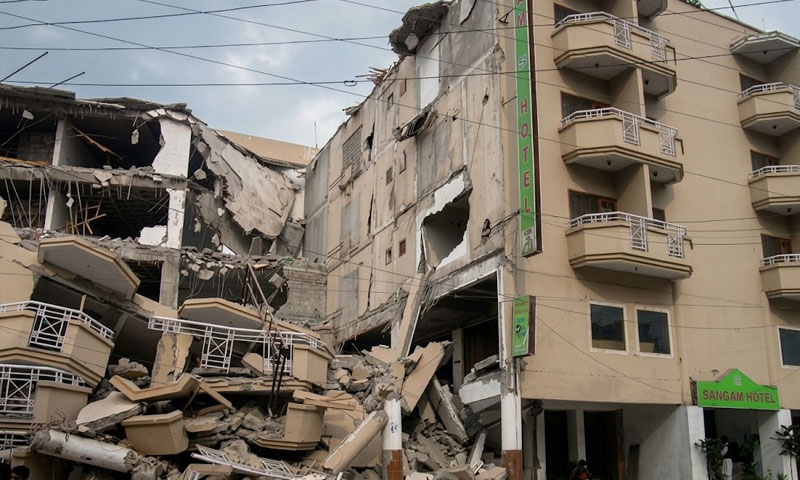
ISLAMABAD: Twenty-one years after a powerful 7.6-magnitude earthquake struck northern Pakistan, killing more than 80,000 people and leaving millions affected, the memories of the October 8, 2005 disaster remain deeply etched in the national consciousness.
The earthquake struck at around 8:50am on October 8, 2005, with its epicentre near Muzaffarabad in Azad Jammu and Kashmir (AJK).
The US Geological Survey (USGS) had placed the epicentre about 21 kilometres north-northeast of Muzaffarabad and recorded the magnitude at 7.6.
The earthquake devastated large parts of AJK and what was then the North-West Frontier Province, now Khyber Pakhtunkhwa. Muzaffarabad, Bagh, Neelum Valley, Balakot, Mansehra, Battagram and surrounding mountainous areas suffered extensive destruction.
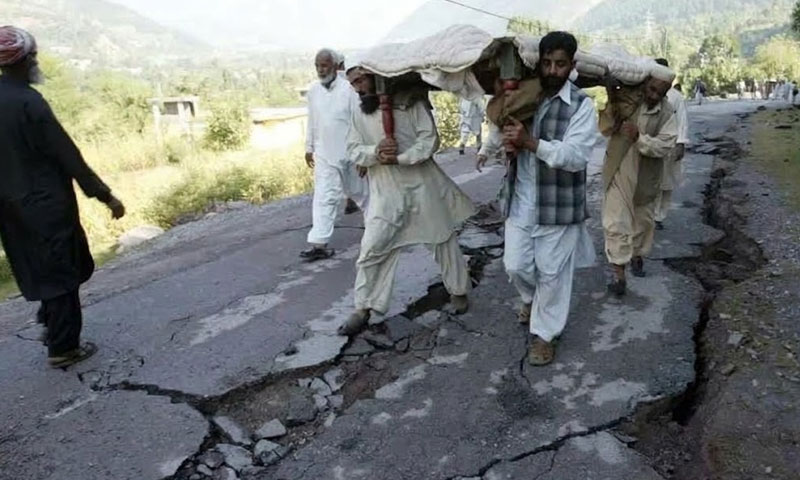
Entire villages were destroyed, while homes, schools, hospitals, government buildings, roads, bridges and other infrastructure collapsed within minutes.
Thousands of landslides were also triggered across the mountainous region, further cutting off communities and hampering rescue operations.
Official assessments have put the human and economic cost at different levels.
The National Disaster Management Authority (NDMA) records say the disaster initially claimed 73,338 lives, injured more than 128,000 people and left around 3.5 million people homeless. Other international estimates put the death toll at more than 86,000.
The scale of destruction was immense. NDMA records estimate that around 600,000 houses were destroyed, while more than 5,800 education facilities and hundreds of health facilities were destroyed or damaged. Thousands of kilometres of roads and hundreds of bridges were also affected.
Muzaffarabad and Balakot were among the worst-hit areas. The destruction of schools and other public buildings resulted in a particularly heavy loss of life, while landslides and damaged roads made access to many affected communities extremely difficult.
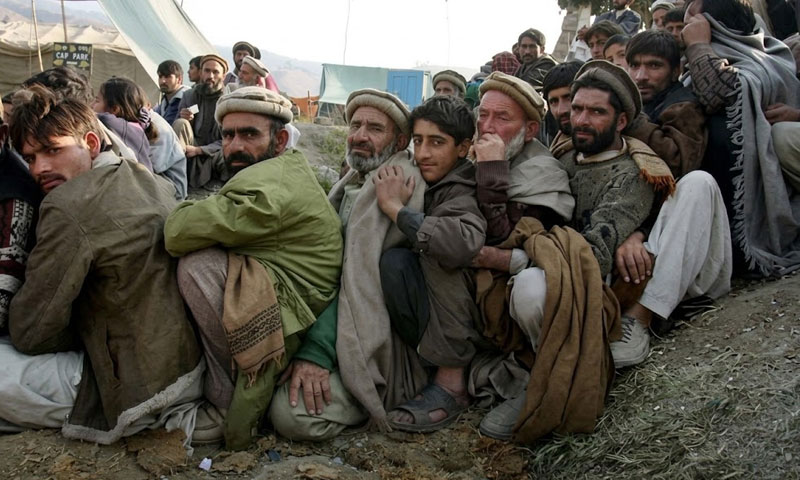
The disaster triggered one of Pakistan’s largest relief and reconstruction efforts, with the government, armed forces, local communities, international organisations and foreign countries joining the rescue and rehabilitation operation.
The government subsequently established the Earthquake Reconstruction and Rehabilitation Authority (ERRA) to oversee reconstruction and rehabilitation in the affected areas.
International assistance also poured into Pakistan after the disaster, with countries and humanitarian organisations providing emergency relief, medical assistance, helicopters, search-and-rescue teams, equipment and financial support.
AJK marks anniversary
AJK observed the 21st anniversary of the earthquake on Thursday with prayers and ceremonies to remember those who lost their lives.
The main prayer ceremony was held at the University College Ground in Muzaffarabad, where AJK Prime Minister Barrister Iftikhar Gillani participated. Special prayers were offered for the victims, while tributes were paid to those who lost their lives in the disaster.
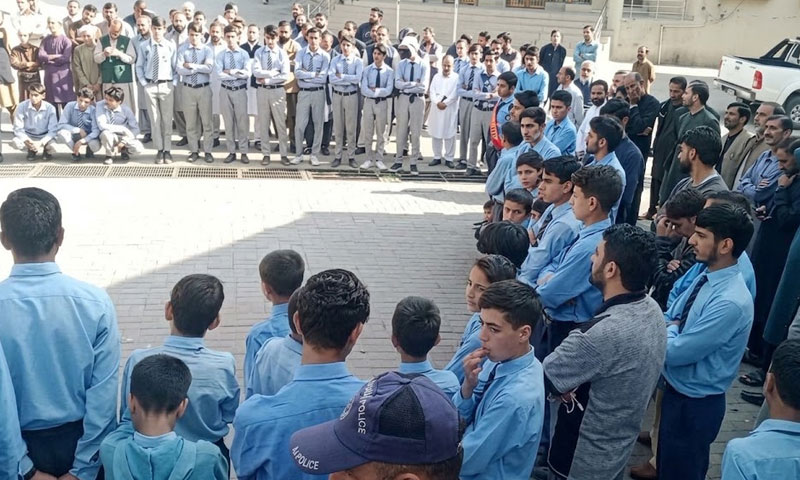
In his message, Gillani described the October 8 earthquake as an unforgettable tragedy in the history of AJK and said the loss of thousands of lives continued to be remembered.
He expressed gratitude to the international community for its assistance in rebuilding the earthquake-hit areas and paid tribute to the Pakistan Army for its role in relief and rescue operations.
He said October 8 had become an example of national unity and called for continued efforts to make AJK better prepared to deal with natural disasters.
Zardari calls for stronger disaster preparedness
President Asif Ali Zardari paid tribute to the victims and thanked countries that assisted Pakistan following the 2005 earthquake, including Saudi Arabia, the United States, China, Türkiye, Iran, Japan and Cuba.
He said Pakistan faced complex challenges from climate change and environmental degradation and stressed the need to protect future generations by strengthening disaster preparedness.
The president also highlighted the use of technology and artificial intelligence in the National Disaster Management Authority’s early-warning systems, saying risk reduction should be incorporated into development planning.
Shehbaz stresses early warning systems
Prime Minister Shehbaz Sharif also paid tribute to those who lost their lives and expressed solidarity with the survivors and affected families.
He said the response to the 2005 disaster demonstrated the resilience and spirit of cooperation of the Pakistani nation.
The prime minister stressed that Pakistan needed to strengthen its capacity to deal with climate-related and other natural hazards, saying advance preparation and technology were essential for reducing losses.
He said the government was working to improve disaster management through modern data, technology and early-warning systems.
Ayaz Sadiq calls for disaster-ready infrastructure
National Assembly Speaker Ayaz Sadiq said the unity, sacrifice and resilience demonstrated by Pakistanis after the 2005 earthquake remained a significant chapter in the country’s history.
He stressed the need for advance planning, effective disaster-management measures and coordination among relevant institutions.
The speaker said protecting human lives and infrastructure should remain a central element of national planning and that effective early-warning systems could play a key role in reducing casualties and damage in future disasters.
Maryam praises rescue agencies
Punjab Chief Minister Maryam Nawaz also expressed solidarity with the victims and survivors of the 2005 earthquake, saying the nation’s spirit of sacrifice and cooperation during the disaster remained unforgettable.
She stressed the need for effective policies to deal with earthquakes, floods, smog and other disasters and said timely preparedness could help reduce losses.
She also praised the Pakistan Army, Navy, Air Force and rescue organisations for their role in disaster response and said the Punjab Disaster Management Authority had been modernised in line with contemporary requirements.
Lessons from the disaster
The 2005 earthquake also exposed Pakistan’s vulnerability to seismic hazards, particularly in densely populated mountainous areas with fragile infrastructure and limited access.
The disaster prompted greater attention to earthquake-resistant construction and disaster-risk reduction. The Building Code of Pakistan’s Seismic Provisions 2007 emerged as one of the major post-earthquake measures aimed at improving earthquake resilience.
The NDMA has continued to warn that communities in Muzaffarabad, Mansehra and other areas remain exposed to seismic hazards, particularly where settlements and infrastructure lie close to active fault lines.
It has also identified unplanned urbanisation, construction in high-risk areas and weak compliance with building codes as factors that can increase vulnerability.
Twenty-one years on, the October 8 earthquake remains both a day of mourning and a reminder of the importance of preparedness. The anniversary is observed as National Resilience Day, with authorities and civil society organisations using the occasion to promote disaster awareness, preparedness and risk reduction.
You May Also Like