- Aasiya Niaz
- 27 Minutes ago
30 days to financial crisis: IMF approval is Pakistan’s only lifeline amid $31b debt
-

- Syeda Masooma
- 1 Minute ago
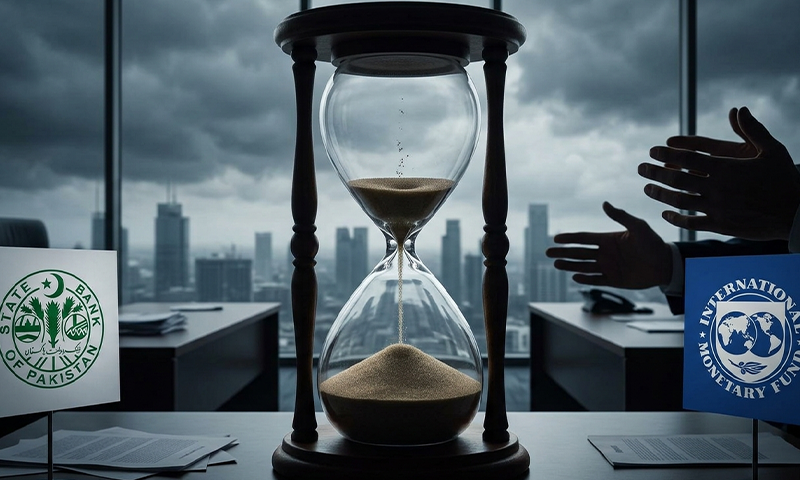
As Pakistan confronts a rapidly escalating debt crisis, the stakes are higher than ever. The latest “International Reserves/Foreign Currency Liquidity” report from the State Bank of Pakistan (SBP), released today (April 1), paints a dire picture.
National reserves = $16.3 billion. Debt to be repaid this year = $31.23 billion.
Out of this, over $6.2 billion is due within the next 30 days!
This ticking clock has placed Pakistan’s financial stability at a critical juncture, with the next month acting as a make-or-break period for the economy. With international creditors, including China, Saudi Arabia, and the UAE, holding the keys to the nation’s survival, the country is in a race against time to secure critical rollover agreements before reserves are depleted and the Pakistani rupee risks catastrophic depreciation.
THE TIMING CRISIS: BETWEEN HANDSHAKES AND BOARD APPROVALS
The urgency surrounding Pakistan’s debt obligations is magnified by its current reliance on international financial partners, particularly the International Monetary Fund (IMF). On March 27, Pakistan’s Ministry of Finance announced a Staff-Level Agreement (SLA) with the IMF for the third review of the $7 billion Extended Fund Facility (EFF).
This was a significant step forward, signaling that the IMF was satisfied with Pakistan’s fiscal strategy. But here’s the catch, while the SLA is important, it is not final. The true test will come when the IMF’s Executive Board convenes to officially approve the disbursement of the critical $1.1 billion loan. Without this approval, the much-needed funds cannot be accessed, and the clock will keep ticking toward the $6.2 billion debt due in 30 days.
In short, Pakistan is now in a financial “waiting room.” The IMF’s nod of approval is the green light Pakistan needs to approach its bilateral creditors for rollover loans, which are critical to bridging the gap between available reserves and upcoming debt obligations. But as these creditors wait for IMF approval before signing off on new loans, the gap is growing ever more perilous. Every day the IMF delays its board meeting is another day closer to a possible liquidity crisis.
‘BORROWING TO PAY’ HANGING BY A THREAD
Pakistan’s current financial strategy is to manage its enormous liabilities through a complex web of debt rollovers and new funding sources. The government is diversifying its borrowing options, seeking funds from international markets through Panda Bonds in China and Green Bonds tied to climate projects.
The aim is to maintain a primary surplus, a key indicator of fiscal health, while keeping creditors on board. However, this strategy comes with high stakes. The “rollover” strategy, where the government asks its creditors to extend the repayment deadlines, can only work if creditors are confident that Pakistan will be able to meet its obligations in the future. Without the IMF’s stamp of approval, that confidence is shaky.
The most immediate challenge is the $6.2 billion due within the next 30 days. Should Pakistan fail to secure the necessary rollovers or new loans, the country could face a liquidity crisis of monumental proportions, putting the entire economy in jeopardy. This would likely trigger a sharp depreciation of the Pakistani rupee (PKR), further increasing inflation and exacerbating the cost of living for millions.
THE DOMESTIC IMPACT: MORE THAN JUST A DEBT CRISIS
For ordinary Pakistanis, the debt crisis is not an abstract issue; it’s already starting to affect their daily lives. Pakistan imports most of its fuel and key commodities, and any weakness in the PKR will result in higher prices for petrol, food, and basic goods.
The government is also under pressure to implement austerity measures in order to secure the IMF loan. This could mean fewer public-sector jobs, cuts in social programs, and limited government spending on infrastructure and development projects. For many, this will be a year of economic stagnation, with inflation eroding purchasing power and growth stagnating.
One of the most immediate ways the public will feel the impact is through higher utility bills. To maintain a favorable stance with the IMF, the government has been increasing its debt servicing surcharge. For instance, the cost of electricity is rising due to the country’s mounting debt, directly hitting households. This surcharge (currently Rs 3.23 per unit) will likely remain in place as Pakistan scrambles to meet its financial obligations.
THE “30-DAY GLITCH”: A FINANCIAL GAME OF CHICKEN
Pakistan isn’t simply facing a debt crisis, it’s in the midst of a timing crisis. The country has crafted a comprehensive strategy to deal with its liabilities, but the most important piece is still missing: IMF approval. The clock is ticking, and the next 30 days could either see the country scale its debt wall or crash against it. With every day that passes without IMF approval, the situation grows more precarious, and the country edges closer to a full-blown financial meltdown.
In the financial world, it’s often said that timing is everything. Right now, for Pakistan, the next month is a high-stakes test of both strategy and execution. Can the nation secure the rollovers and IMF approval it needs in time? Or will the 30-day countdown lead to a financial crisis that could shake the country’s economy to its core?
You May Also Like