- WEB DESK
- October 30, 2026
32.4mn Pakistanis face mental health conditions, but care remains out of reach
-

- Ali Hamza
- October 30, 2026
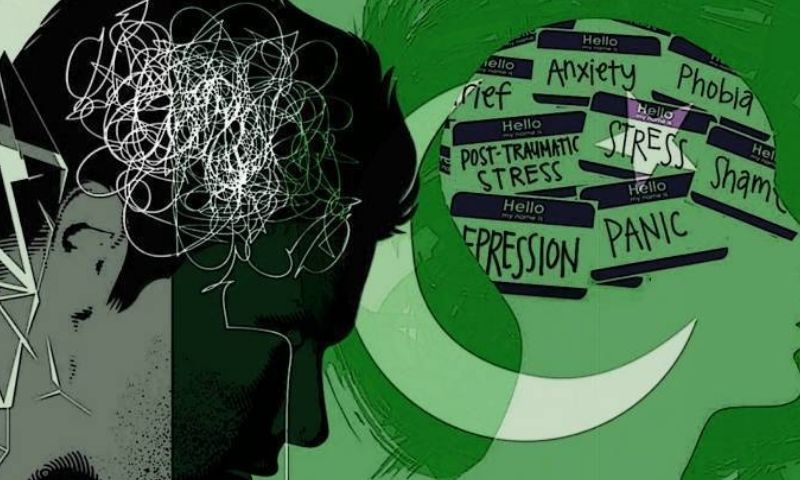
ISLAMABAD: The number is rising, and the government is not the one counting it. In a written reply to the National Assembly, Federal Health Minister Syed Mustafa Kamal put the number of Pakistanis living with mental health conditions at 32.4 million in 2023, up from 30 million in 2019. That is an increase of 8 per cent in four years, or roughly 600,000 more people a year. The figure comes not from the ministry’s own records but from the Global Burden of Disease Study, an international research project. Dr Shazia Sobia Aslam Soomro, a member of the National Assembly, had asked how many Pakistanis are affected, where they can be treated and who is available to treat them. The ministry could answer only part of that.
Psychiatrists who spoke to Hum News say the rise is real and that it is also a sign that more people are seeking help. “It reflects both an actual increase in psychological distress and greater awareness and willingness to seek professional help,” says Dr Asma Mehboob Khan, a senior clinical psychiatrist at the Pakistan Institute of Medical Sciences (PIMS) in Islamabad, who has practised for 20 years.
Dr Ibad ul Haq, head of psychiatry at the Federal Government Polyclinic, agrees. He points to “economic stress, floods, displacement and insecurity”, but also to “more people finally coming forward as stigma slowly eases”. Better counting, Dr Haq says, “isn’t bad news in itself”, because “most people with mental illness in Pakistan still never reach care”.
The three psychiatrists agree on who is struggling most. Depression and anxiety dominate, “particularly among women and young people”, Dr Khan says, driven by “economic hardship, unemployment, family conflicts, academic pressure and social instability”.
Dr Waheed Razzaq, the only psychiatrist in Mandi Bahauddin, a district in Punjab, adds a modern cause. Young people are losing their “stress-coping skills”, Dr Razzaq says, in a “consumerist society” fed by social media, where “all the time we are comparing ourselves with someone or other”.
How many of these patients get help is anyone’s guess, because the state barely keeps records. The ministry’s only count is for Islamabad Capital Territory, where 301,266 people were reported to have mental health conditions in 2023. That is roughly one in eight of the capital’s 2.36 million residents. For everywhere else, the reply notes that health has been a provincial subject since the 18th Amendment and says the data “may be obtained from the respective provincial departments”. There is no breakdown between urban and rural areas. On clinical psychologists, the reply says simply that data “are not available”.
The workforce figures the ministry does have are grim. The Pakistan Health Workforce Snapshot 2026, compiled with help from Britain’s Foreign, Commonwealth and Development Office, counts 1,050 registered psychiatrists for a population of 257.7 million, including people in Azad Jammu and Kashmir and Gilgit-Baltistan. That works out at one psychiatrist for every 245,400 people. Registration is not the same as practice, though. Dr Haq reckons fewer than 900 psychiatrists are actually working, because many have emigrated over poor pay and facilities. Dr Razzaq says nobody knows how many of the 1,050 are practising or how many have left the country.

The figures for each province, from 2024, are worse still: 406 psychiatrists in Punjab, 228 in Sindh, 122 in Khyber Pakhtunkhwa and 44 in Balochistan. Against 2023 census populations, Punjab has one psychiatrist for every 315,000 people, Khyber Pakhtunkhwa one for every 335,000 and Balochistan one for every 338,000. Within each province, the specialists are concentrated in the cities.
“In Mandi Bahauddin I can say I am still the only psychiatrist,” Dr Razzaq says. Neighbouring Hafizabad, Khushab and Chakwal have no full-time psychiatrists, only visiting ones. In big cities, Dr Razzaq says, appointments are easy to get, and some psychiatrists even struggle to fill their diaries. “But in rural areas it is a different story. People really need it, and they have to travel very long distances.”
In the countryside, a patient “may travel hours, wait weeks and see a specialist for ten minutes”, Dr Haq says. Many go first to faith healers and hakeems. The scarcity means “delayed diagnosis, limited treatment and poor access to specialist care”, Dr Khan says. “Many patients remain untreated or seek help from unqualified practitioners.”
The government’s reply offers plans rather than people. It lists a National Action Framework for Non-Communicable Diseases and Mental Health (2021-2030), a Global Mental Health Summit held in Islamabad this year, a draft National Mental Health Policy for 2026-2035, an “Islamabad Declaration”, a helpline (1166) and a subcommittee. The idea at its centre is sensible. Under the World Health Organisation’s mhGAP programme, general doctors and Lady Health Workers would be trained to identify and treat common disorders, leaving specialists to deal with the most complex cases. Pakistan has form here. Problem Management Plus and Early Adolescent Skills for Emotions, two low-cost talking therapies designed for delivery by non-specialists, were developed and tested in Pakistan and are now used by the WHO worldwide.

All three psychiatrists back the approach, with conditions. “A psychiatrist alone cannot see every patient with depression and anxiety. We have to filter somewhere,” Dr Razzaq says. Primary-care staff can help “only with proper training, resources and regular psychiatric supervision”, Dr Khan says, adding that “severe and complicated cases must be referred to specialists”. Dr Haq calls such task-shifting “the only realistic route to scale”. But without training, supervision, medicines and clear referral routes, Dr Haq warns, “it’s a label rather than a service”.
That points to the missing piece: money. The reply sets no target for training psychiatrists and gives no budget. Dr Khan wants mental health made “an essential part of primary healthcare”, with “adequate funding at district and community levels”. Dr Haq asks for “a ring-fenced budget” for the same purpose, along with better pay to stop psychiatrists from leaving. Dr Razzaq’s request is the most concrete. “Whatever health insurance schemes the government has brought so far, be it the Sehat Card or anything else, mental health has never officially been included,” Dr Razzaq says. The cards cover no psychiatric admissions, outpatient visits or addiction treatment. Until they do, most of Pakistan’s 32.4m will pay for their own care or go without.
You May Also Like