- WEB DESK
- October 7, 2026
$6b of Iran’s frozen assets to be released via Qatar under deal, says Pezeshkian
-

- Sadia Basharat
- June 29, 2026
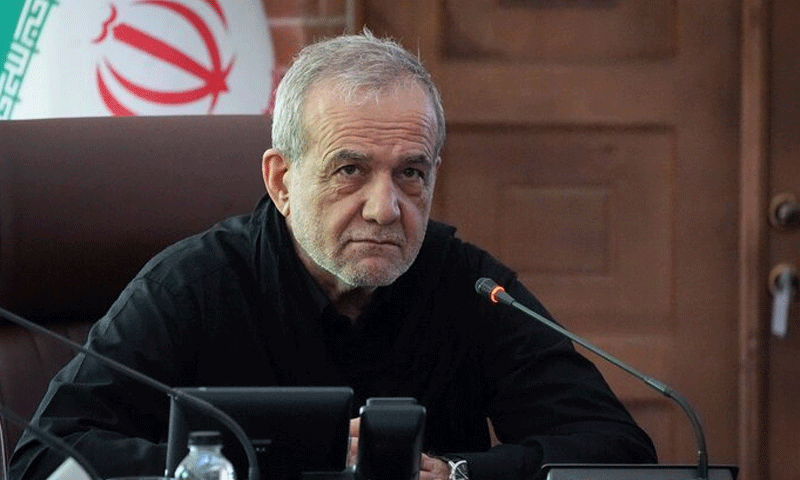
WEB DESK: Iranian President Masoud Pezeshkian on Monday announced that $6b of Iranian frozen assets will be released and repatriated through Qatar, saying the move forms part of a wider agreement under a peace framework involving international negotiations. He said the development marks what he described as a “great victory” for the Iranian people.
The president, speaking during a visit to Qom where he met senior cleric Grand Ayatollah Shobeiri Zanjani, said the released funds form part of a total $12b in Iranian assets held in Qatar, with efforts underway to secure the return of the remaining balance, according to Mehr News Agency.
Frozen funds and sanctions relief
Pezeshkian said the financial release and lifting of oil and petrochemical sanctions were agreed under the framework of talks held in Switzerland and a memorandum of understanding signed in Islamabad.
He claimed that the measures reflected the outcome of sustained negotiations aimed at easing economic pressure on Iran.
He added that the US sanctions had previously been designed to exert maximum pressure on Iran’s economy, but insisted that the country had withstood the impact through internal resilience and national unity.
Nuclear assurances and regional stance
Reiterating Iran’s long-standing position, the president said the country does not seek nuclear weapons and that its nuclear activities remain within declared peaceful parameters. He said this policy, he added, had been consistently upheld by the country’s leadership.
Pezeshkian also said the United States ultimately pushed Israel to accept the agreement, although he noted that Israel and some opposition groups remain critical of its implementation.
He further said the government has begun reconstruction planning and introduced economic support measures, including increased credit for food subsidies, as part of broader post-agreement stabilisation efforts.
You May Also Like