
- Web Desk
- 1 Hour ago
A fateful Friday: survivor of Islamabad imambargah bombing recalls the tragedy
-

- Zoya Anwer
- Feb 07, 2026
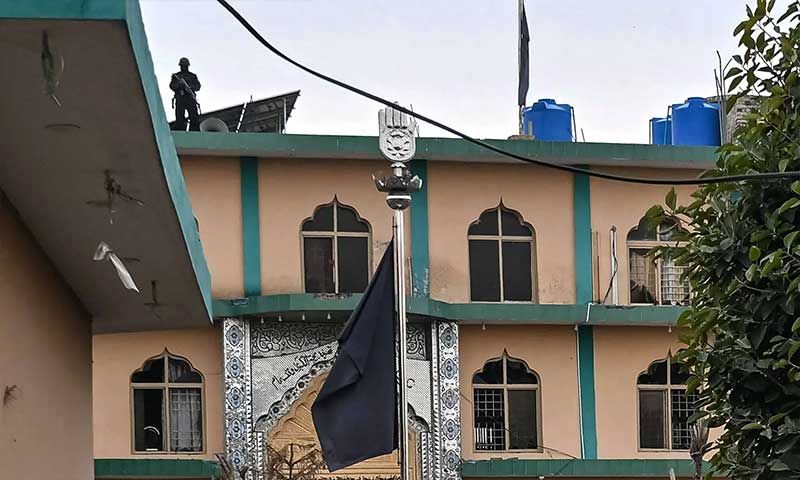
On Friday afternoon the weather in Islamabad had become quite pleasant, even the rain on Thursday evening could not bring back the chillness. Abid Jaffery made his way to the Khadijatul Kubra Imambargah in Tarlai Kalan for his usual Friday prayers. After all, since the past year and a half, he is a regular there. What he did not know, however, was that he was to become one of those lucky survivors who could not be engulfed by the devastation awaiting them as a suicide blast shook the imambargah, killing at least 36 worshippers and leaving more than a 100 injured.
The architecture of the imambargah
Jaffery, 32, who works at a private company as an Assistant Manager Procurement arrived when the second part of the Jummah Khutba was nearing its end.
“To understand the horror that unfolded, one must understand the space itself. The Imambargah is guarded by a large black main gate that usually remains closed. Worshippers typically enter through a small, room-like structure to reach the main hall,” Jaffery recalled the layout with clinical precision, noting, “The distance from that main gate to the central part of the Imambargah, where this blast took place, is approximately 70 to 80 steps”.
On this particular day, Jaffery entered the hall and took his place on the right side. It was a choice that perhaps ultimately saved his life. The area was “packed to capacity,” as many preferred to pray in the lower section directly behind the leader, the Allama, even though an upstairs hall is available.
Gunfire during the second rakat
The transition to chaos was marked by the sound of gunfire. At approximately 1:35 PM, the congregation stood to begin the prayer. They had progressed to the second Rakat and were in the Ruku position when the first shots rang out.
Initially, the violence felt distant. Jaffery noted that “the sound of the gunshot seemed to be coming from a distance, as if someone had fired from far away”. But the distance vanished in heartbeats. The gunfire grew closer, intensifying into a rhythmic, terrifying roar. In those seconds of escalating noise, Jaffery realised that the mosque was being stormed. He sensed the presence of two to four attackers armed with “heavy-duty weapons” charging toward the main entrance.
When it all collapsed
The horror piqued occurred during the most humble moment of prayer when all went into the sajda. As the worshippers pressed their foreheads to the sajdigah in submission to God, the suicide bomber detonated his vest at the main entrance.
The force of the explosion was very difficult to fathom owing to its intensity.
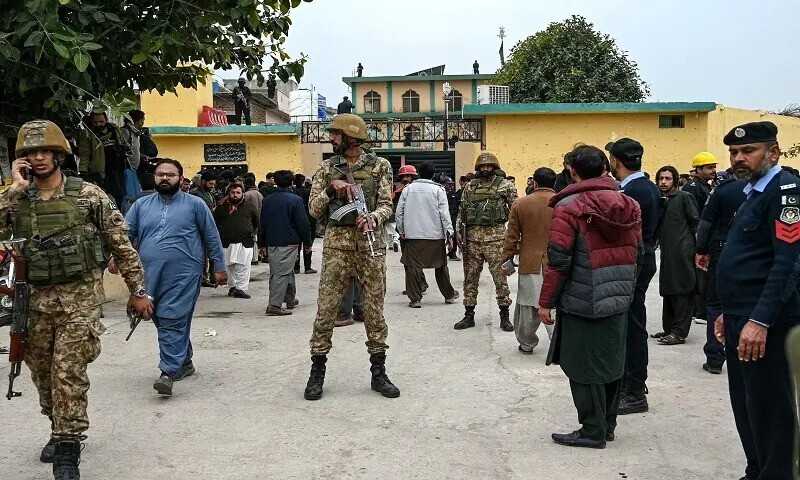
“It felt as if the entire building had collapsed, and everything around us turned pitch black. Dust choked the air,” he told.
“At the main gate, there were bodies everywhere, right where the suicide bomber blew himself up,” Jaffery said. He described the gruesome remnants of the attacker, a severed foot lying near the shoe racks, while the force of the blast had thrown the individual’s head deep into the mosque interior.
A barefoot departure
Amidst the screams and the thick, settling dust, Jaffery and those near him scrambled toward a small steel side door. Everyone left their shoes behind, running out onto the street and into the mosque’s garden area barefoot, gasping for breath.
Jaffery saw worshippers collapsed on the ground: “Some were desperately carrying their injured sons in their arms making the toll apparent. Because I was on the right side, I only sustained minor injuries to my feet, as we all ran out of the mosque barefoot.”
Fate and its ways
As the dust began to settle, it became clear that those praying closest to the main entrance and directly behind the Allama, where the hall was most crowded, had suffered the greatest loss.
Jaffery, who was standing in the back row on the far right, realised how narrowly he had escaped harm. “Most of the worshippers on my left were martyred,” he said. He sustained only minor cuts, but the awareness of how close he had been to the blast weighed heavily on him.
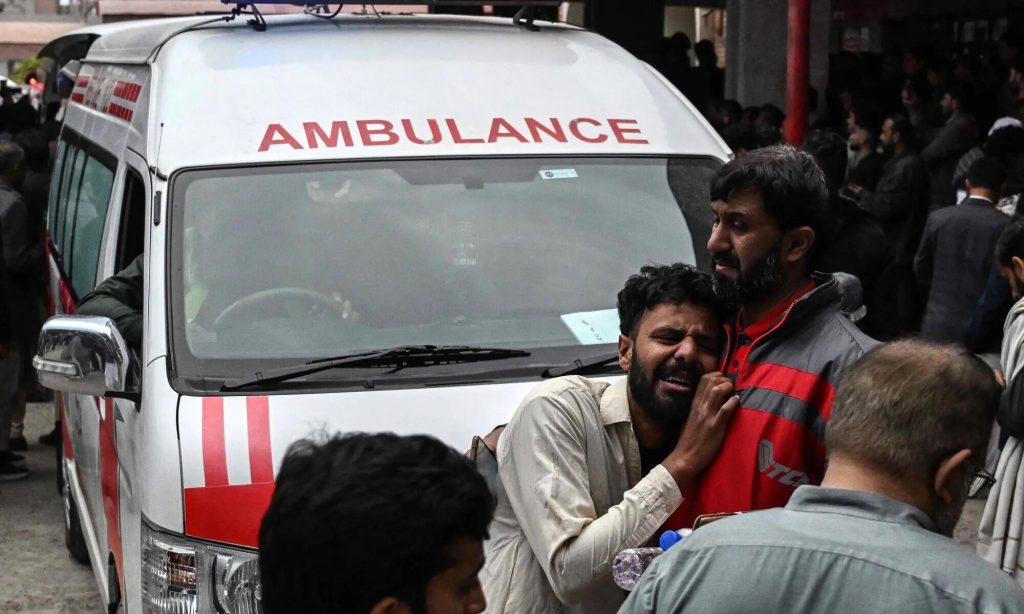
Recalling the moments after the blast, Jaffery said the scene outside the imambargah was overwhelming. “When I came out, people were covered in blood everywhere,” she said. “Someone was carrying their child, someone was holding their brother. Everyone was trying to help each other, but there was complete chaos.”
He was in a state of shock and struggled to process what was happening: “I managed to leave the area and head towards the office, but by mind went completely blank,” adding that he could not understand what he should do or where he should go.
The shock, he said, deepened as thoughts of his family surfaced: “I have one young son, and I have been married for only three years. All of that hit me at once.”
Jaffery noted that Friday prayers were under way across the country at the time of the attack, and that his family and friends were aware he regularly attended the same imambargah: “Around 15 to 20 minutes after the explosion, he began receiving calls from relatives and friends checking on his safety.”
He added that he called his family while still trembling. He later realised he had been injured, with shards of glass from the blast cutting her foot and causing it to bleed, but that he was absolutely aware of his encounter with death and how he emerged as a survivor.
You May Also Like