
- Aasiya Niaz
- 57 Minutes ago
A quiet solar revolution: 19TWh of power is missing from Pak’s official records
-

- Syeda Masooma
- Feb 11, 2026
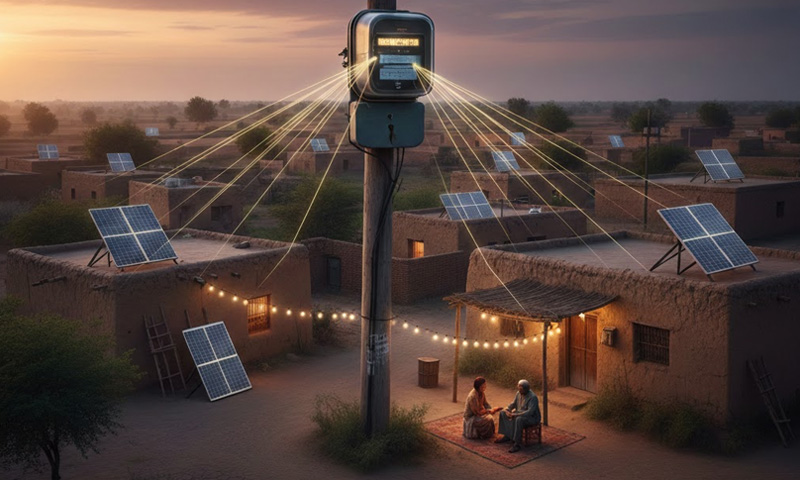
For years, Pakistan’s official energy statistics have presented a puzzling picture. Despite population growth, urban expansion and modest economic recovery, national energy consumption appeared to stagnate. Between FY20 and FY24, primary energy supply hovered around 81 million tonnes of oil equivalent (MTOE), even as real GDP grew by an average of 2.6 per cent annually.
This apparent “decoupling” of economic growth from energy use raised eyebrows. Historically, countries at Pakistan’s stage of development consume more energy as incomes rise and cities expand. Pakistan’s population increased from roughly 188 million in 2014 to about 242 million in 2024, while urban growth averaged 3.7 per cent annually in recent years. Yet per capita energy supply fell to 11.9 gigajoules in 2024, down from 14.6 gigajoules in 2018.
A new analysis by ‘Renewables First’ argues the mystery may not lie in economic efficiency, but in incomplete accounting. The missing piece is distributed solar power.
While official data track grid-based electricity and net-metered solar systems, they largely exclude off-grid and behind-the-meter installations. These range from small solar home systems in rural areas to multi-megawatt industrial arrays installed by textile and fertiliser manufacturers.
Trade data show that by June 2025, Pakistan had imported nearly 48 gigawatts (GW) of solar photovoltaic (PV) panels, worth $7.4 billion. Yet official figures record only about 6.1GW of net-metered capacity and 780 megawatts of utility-scale solar. Independent estimates suggest actual installed distributed capacity stood between 27GW and 33GW by mid-2025.
For FY24 alone, distributed solar capacity is estimated at 14.5GW – enough to generate around 21 terawatt-hours (TWh) of electricity annually. After adjusting conservatively for under-utilisation, that translates to roughly 19TWh of generation.
To put that in perspective, grid electricity sales in FY24 were around 110TWh. Distributed solar could therefore account for nearly one-fifth of total electricity consumption – energy that does not appear in conventional statistics.
In energy terms, that solar output equals about 1.6MTOE of final energy consumption, while displacing roughly 5MTOE of primary fossil fuel input due to the inefficiencies of thermal power plants.
The surge in solar adoption was driven by economics rather than policy planning. Between 2021 and 2024, electricity tariffs rose by 155 per cent, while reliability concerns persisted. Meanwhile, global solar panel prices fell sharply, from $0.25 per watt in 2020 to around $0.10 per watt in FY24. Pakistan also allowed duty-free solar imports and initially supported financing through subsidised credit.
For households and businesses, solar became a hedge against rising tariffs and unreliable supply.
The implication is significant: Pakistan’s energy demand has not weakened – it has shifted. Consumers are increasingly generating their own electricity, bypassing traditional measurement systems.
Without updating energy accounting frameworks to include distributed solar, policymakers risk misreading economic trends and planning future supply based on incomplete data. Far from consuming less energy, Pakistan may already be undergoing one of the fastest decentralised energy transitions in the developing world – largely unrecognised in official statistics.