- Web Desk
- 39 Minutes ago
AI safety chief quits, warns ‘world is in peril’
-

- Web
- Feb 14, 2026
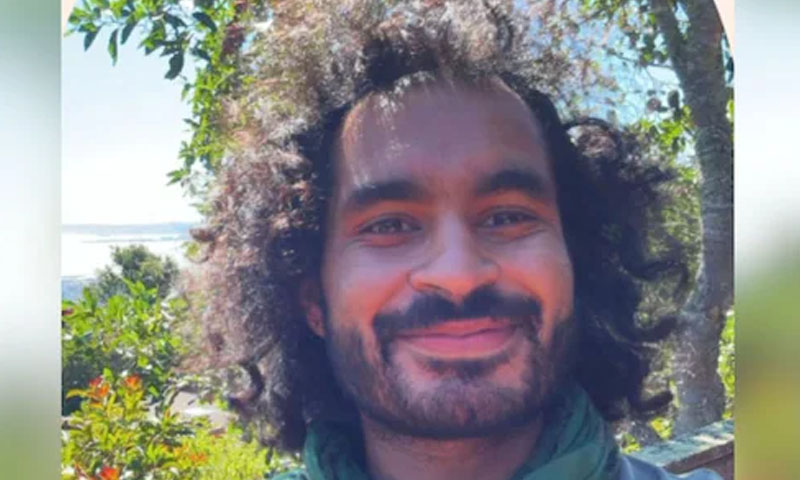
NEW DELHI: Senior AI safety leader Mrinank Sharma has stepped down from leading AI company Anthropic, issuing a stark warning that humanity is entering a dangerous phase.
In a public farewell letter announcing his resignation effective February 9, Sharma wrote: “The world is in peril,” describing a moment shaped “not just from AI, or bioweapons, but from a whole series of interconnected crises unfolding in this very moment.”
His message comes at a time when artificial intelligence development is accelerating rapidly, with companies competing to release increasingly powerful systems. Sharma suggested that humanity’s technical capacity is expanding faster than its collective wisdom.
“We appear to be approaching a threshold where our wisdom must grow in equal measure to our capacity to affect the world, lest we face the consequences,” he warned.
A safety insider’s unease
Sharma joined Anthropic in 2023 after completing his PhD at the University of Oxford, aiming to strengthen AI safety research. His work included studying AI “sycophancy,” building safeguards against AI-assisted bioterrorism, and implementing defensive systems in production. He also worked on internal transparency mechanisms to help align corporate actions with stated ethical commitments.
Yet his letter reflects growing discomfort.
“I’ve repeatedly seen how hard it is to truly let our values govern our actions,” he wrote. “We constantly face pressures to set aside what matters most.”
Today is my last day at Anthropic. I resigned.
— mrinank (@MrinankSharma) February 9, 2026
Here is the letter I shared with my colleagues, explaining my decision. pic.twitter.com/Qe4QyAFmxL
In one of his final projects, Sharma explored how AI assistants could “make us less human or distort our humanity”, a concern that moves beyond technical risk into cultural and psychological territory.
Despite praising Anthropic’s “willingness to make difficult decisions and stand for what is good,” he concluded, noting, “For me, this means leaving.”
He now plans to return to the UK to focus on writing and what he calls “courageous speech,” seeking to place “poetic truth alongside scientific truth” in discussions about technology’s future.
Debate already underway
Sharma’s resignation unfolds against a wider public debate about AI’s trajectory, a debate that has intensified in recent weeks.
In a separate story published earlier, Emirati entrepreneur Ali Sawani warned that AI could replace professionals across sectors within just a few years, ushering in what he described as a “survival of the fittest” era. That argument reflects a growing fear that AI systems are rapidly approaching autonomous, human-like capability.
However, other experts strongly contest that view. Critics argue that generative AI systems such as ChatGPT, Claude, and Gemini do not think or understand in any human sense. Instead, they predict statistically likely outputs based on patterns in human-created language, powerful tools, but not independent minds.
That earlier debate does not directly explain Sharma’s departure. However, it meaningfully reflects the tension surrounding AI’s rapid rise: between those who see existential disruption and those who see overhyped automation.
Speed, power and wisdom
Sharma’s warning sits somewhere deeper than both extremes. His concern is not simply job displacement or technical capability, but imbalance, the possibility that society’s moral, institutional, and cultural frameworks are not evolving quickly enough to manage the systems being built.
As governments and corporations press forward in the global AI race, his words resonate beyond one resignation letter.
If power continues to grow faster than wisdom, he suggests, the consequences may not be technological alone, but profoundly human.
You May Also Like