
- Zoya Anwer
- September 3, 2026
AJK police accuse banned JAAC of using protests to challenge state writ
-

- WEB DESK
- September 3, 2026
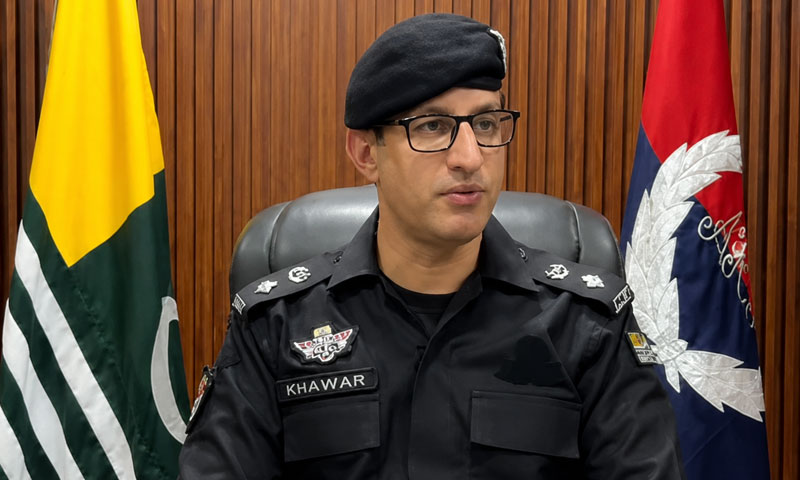
RAWALAKOT: Azad Jammu and Kashmir police have accused the banned Joint Awami Action Committee (JAAC) of using the cover of a rights movement to promote violence, disrupt public life and challenge the writ of the state.
Addressing a press conference in Rawalakot, AJK spokesperson SSP Khawar Ali Shaukat alleged that armed groups associated with the committee had attacked police and other law-enforcement agencies, while also attempting to disrupt education, transport and commercial activity across Azad Kashmir.
He questioned the nature of a movement that, according to him, involved armed men attacking law-enforcement personnel.
“Is this a protest? Is this a rights movement?” the police spokesperson asked, arguing that a genuine rights movement could not justify attacks on police and security personnel deployed to maintain peace.
Shaukat said that a Rangers personnel had been killed in violence at Balouch, while several AJK police personnel had also been injured in clashes.
He alleged that armed groups were not only attacking law-enforcement agencies but also encouraging young people to stay away from educational institutions, calling for school boycotts, road closures and the shutdown of businesses.
The AJK police spokesperson claimed that such activities demonstrated that the banned committee was seeking to undermine peace, damage the image of the state and create disorder in the region.
“Peaceful protest is a fundamental right of every citizen,” he said, while maintaining that the right to protest did not extend to attacking state institutions, engaging in violence or putting the lives of ordinary citizens at risk.
SSP Shaukat said that the state had shown considerable restraint but could not allow armed groups to hold citizens hostage or challenge the authority of the state indefinitely.
He maintained that restoring the rule of law and the writ of the state was the responsibility of the government and law-enforcement agencies.
Police claim evidence recovered from suspects
The AJK police spokesperson also presented what he described as evidence gathered during investigations into recent violence.
He said that law-enforcement agencies had intensified checking at several locations to maintain peace and had arrested individuals allegedly involved in attacks on police and security forces.
According to Shaukat, weapons were recovered from some suspects and forensic examination of their mobile phones allegedly produced videos showing armed groups, attacks on security personnel and meetings of protesters.
He specifically referred to the arrest of a young man named Abdullah, a resident of Sudhnoti district, who he said was detained during routine checking.
Shaukat claimed that videos and photographs recovered from Abdullah’s mobile phone showed armed men at action committee sit-ins.
Police subsequently released what they described as an admission by the suspect.
In the statement shown during the press conference, Abdullah said that he was a student from Mang and that some of the photographs and videos on his phone had been recorded with friends at action committee sit-ins.
He claimed that armed people were present at the sit-ins and that some of the material on his phone showed people carrying weapons.
The police spokesperson presented the material as evidence supporting the authorities’ allegation that armed elements were operating within or alongside the protest movement.
However, the allegations and the interpretation of the recovered material were presented by police could not be independently verified.
Shaukat further alleged that the banded action committee had been encouraging young people to boycott schools and remain away from education for nearly three months.
He questioned why a movement claiming to represent public rights would seek to keep children away from schools.
He alleged that the committee’s activities were aimed at disrupting development and keeping the younger generation away from education.
The ongoing protests have also affected educational activities. In June, the Azad Jammu and Kashmir Board of Intermediate and Secondary Education, Mirpur, postponed intermediate examinations across the region following disruption caused by a lockdown called by the action committee.
The committee has maintained that its movement is centred on public and economic rights, while authorities have increasingly characterised the protests as a threat to law and order.
‘State will not leave violent elements at large’
SSP Shaukat warned that those involved in attacks on law-enforcement personnel and challenges to state authority would be dealt with under the law.
He said the state could not allow violent and disruptive elements to operate freely if peace and development were to be maintained.
“The state cannot leave elements involved in violence, spreading disorder and challenging the writ of the state at large,” he said.
He added that action was being taken against those involved in attacks on law-enforcement agencies and those allegedly operating behind such incidents.
The police spokesperson also appealed to the public, particularly parents, to keep young people away from violent activities.
In August, Shaukat had alleged that eight highway police personnel deployed for election duty had been abducted and subjected to violence, and demanded their immediate release. The committee, however, denied holding the personnel.
Police have also previously alleged that armed men were involved in violent incidents in Rawalakot and that modern weapons were recovered from suspects arrested after clashes.
You May Also Like

- WEB DESK
- September 3, 2026