- Web
- 5 Hours ago
Ali Larijani dead at 67: who was Iran’s veteran power broker?
-

- Web Desk
- Mar 18, 2026
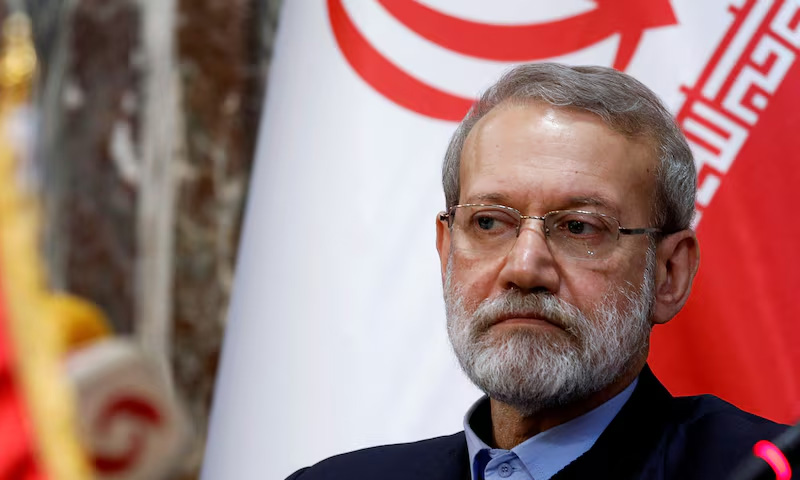
One of the most recognisable figures in Iran’s political and security establishment, Ali Larijani, has died at the age of 67, closing the chapter on a career that spanned state media, nuclear diplomacy, parliament and the innermost circles of the Islamic Republic’s leadership.
Born in Najaf, Iraq, in 1958, Larijani came from a powerful and deeply connected religious-political family that held considerable influence within Iran’s ruling system. His career reflected that pedigree. Over the years, he moved through some of the country’s most sensitive institutions and became known as a seasoned insider who combined ideological loyalty with political calculation.
Before emerging as a senior national figure, Larijani served in Iran’s Revolutionary Guards, an early role that placed him close to the country’s security apparatus. He later went on to lead Iran’s state broadcasting organisation, remaining at the helm of the official media network for a decade. That post gave him a major platform inside the state and helped cement his standing as a trusted figure within the establishment.
In 2004, he stepped down from broadcasting and moved closer to the centre of strategic decision-making, becoming a security adviser to Supreme Leader Ayatollah Ali Khamenei. A year later, he entered the presidential race but failed to gain enough support, finishing behind several rivals in a contest eventually won by Mahmoud Ahmadinejad.
Despite that setback, Larijani’s influence grew. In 2005, he was appointed secretary of Iran’s Supreme National Security Council, one of the country’s most important bodies on defence and foreign policy. He also became Iran’s top nuclear negotiator, taking a hard line in talks with the West. At the time, he strongly opposed proposals that would have required Tehran to give up its nuclear fuel cycle in exchange for European incentives, arguing that Iran would be surrendering something far more valuable than what it was being offered.
Larijani resigned as chief nuclear negotiator in 2007 during Ahmadinejad’s presidency, but remained a central player in Iranian politics. The following year, he became speaker of parliament, a position he held until 2020. During those 12 years, he built a reputation as a moderate conservative: firmly rooted in the clerical order, but often seen as more pragmatic and measured than hardline rivals.
His political ambitions did not disappear after leaving parliament. However, Iran’s powerful election vetting body blocked his attempts to run for president in both 2021 and 2024, reflecting the narrowing space even for long-serving insiders.
In 2020, Khamenei appointed him as a political adviser and named him to the Expediency Council, a body that arbitrates key disputes within the system. Even after being shut out of electoral politics, Larijani remained part of the state’s upper tier.
His death removes a figure who, for decades, sat at the intersection of power, policy and ideology in the Islamic Republic.
You May Also Like