- Reuters
- November 4, 2026
‘America is big enough for all of us’: Abdul El-Sayed hits back at anti-Muslim attacks after historic Senate win
-

- WEB DESK
- November 4, 2026
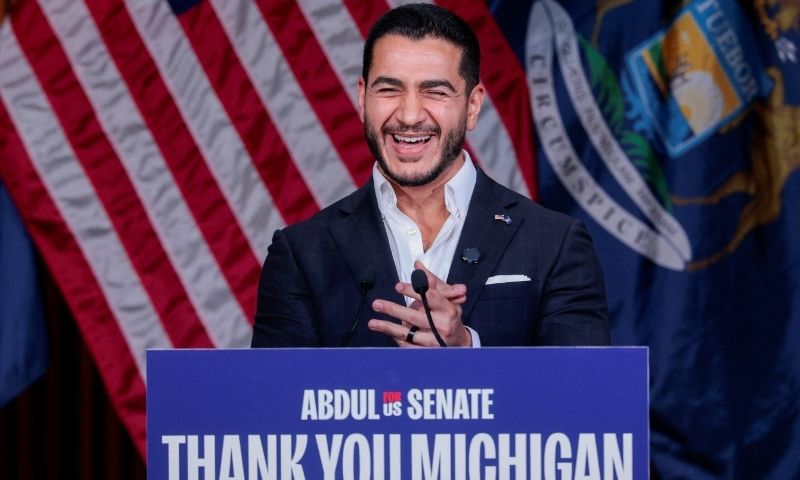
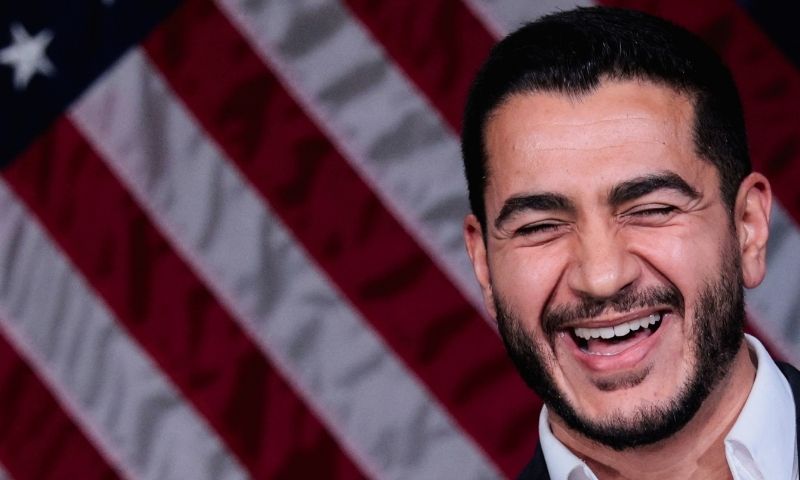
Declaring that his Muslim faith and name were never responsible for Americans’ economic struggles, Abdul El-Sayed used his victory speech after winning Michigan’s US Senate race to deliver a pointed response to the attacks against his identity, saying the campaign had ultimately been about the kind of country America wanted to be.
The Democrat, whose Senate race against Republican Mike Rogers said his name and faith had become targets during the campaign but had nothing to do with the economic difficulties facing American families.
“They might have been pointing to my name and my faith, but we all know that my name and my faith aren’t the reason you can’t afford your gas. Not the reason you can’t afford your groceries. Not the reason you can’t see a doctor,” El-Sayed told supporters.
He said his opponents had initially tried to discredit him through his associations before launching what he described as one of the ugliest political campaigns in recent memory. Rather than respond by labelling his opponents racist or hateful, he said, he chose to frame the attacks as an attempt to undermine a broader idea of American identity.
“Because here’s the thing: I didn’t run for myself. And in truth, they weren’t targeting me. They were just, weren’t just attacking me. They were targeting and attacking you. They were targeting and attacking the very idea of America,” he said.
El-Sayed argued that the attacks reflected an effort to define the country in a way that excluded people because of their appearance, religion or family background.
“See, they hate the idea of an America big enough for anyone who looks a little different, or prays a little different, or whose family comes from a different part of the world,” he said.
He added that the message of inclusion extended beyond Muslim Americans to anyone who did not fit the identity or social expectations of those attacking him.
“That includes me, but it also includes anyone and everyone who doesn’t look like them, pray like them, love like them, or isn’t rich like them,” he said.
According to El-Sayed, the election had presented voters with a choice between an America that was “too small for some of us” and one that recognised the rights and dignity of all its people.
“We know that America is big enough for all of us,” he said, linking that vision to the country’s ability to confront the crises affecting ordinary families.
‘We don’t do this work for ourselves’
El-Sayed broadened his remarks by describing people whose struggles, he said, represented the hopes behind his campaign. He spoke of a mother fighting to ensure that her two children with a genetic lung disease did not lose the medication they relied on to stay alive, and who wanted other families to avoid the difficulties she had faced with health insurance.
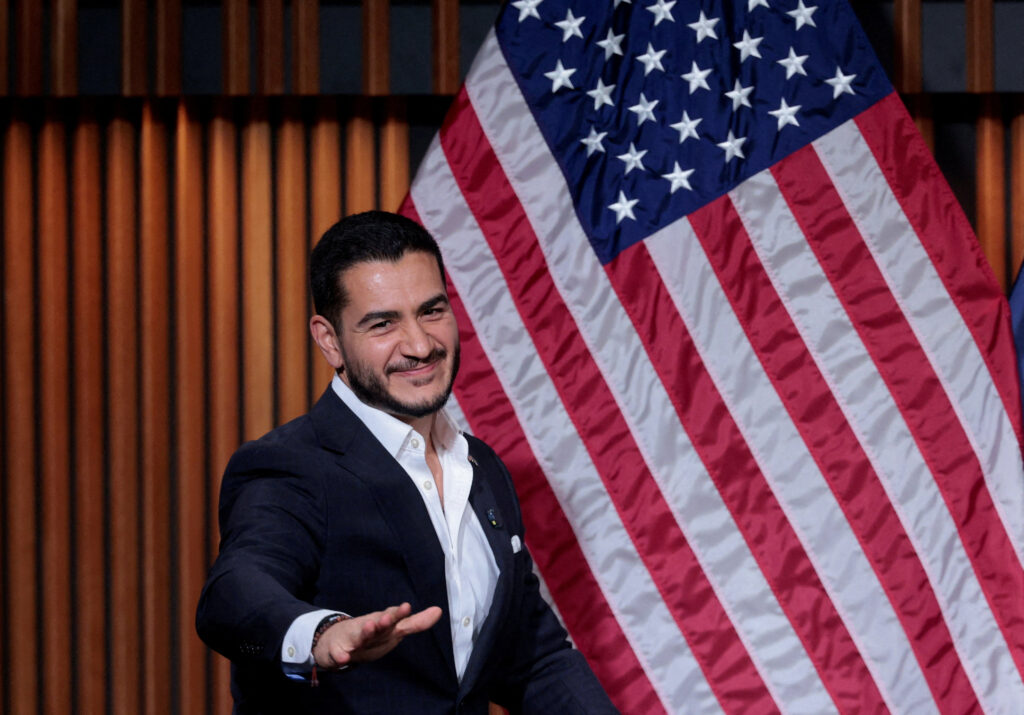
He also referred to a grandmother on Detroit’s east side who was trying to prevent the violence that had taken her son from claiming her grandson, as well as a United Auto Workers member who had fought corporate employers over billions of dollars in profits.
The examples, he said, illustrated how the hopes of individual Americans were connected to one another and why political work should be undertaken collectively.
“We don’t do this work for ourselves. We do this work for each other,” he said.
El-Sayed said he had run to defend Americans against what he described as another generation’s youth, resources and opportunities being squandered through endless wars. He also criticised corporate oligarchs who, in his words, had bought and sold the government to rig the system against ordinary people.
He took aim at the healthcare system, saying it was more interested in monetising illness than healing people’s bodies and minds. He also cited polluted air and water, and threats to voting, reproductive and human rights, as issues requiring political action.
“See, I ran to defend us all from politicians who want to divide us rather than movements that work to dignify us,” he said.
His remarks placed healthcare access, economic inequality, environmental concerns and civil liberties alongside his criticism of attacks on his religious identity. Rather than treating these as separate campaign issues, he presented them as part of a common struggle over whose interests the government should serve.
‘The many really can win’
Turning to the money spent against his campaign, El-Sayed said more than $350 million had been deployed across the Democratic primary and general election contests in an effort to defeat him.
He described the amount as a record in Michigan, adding that $70 million had been spent during the primary alone, with funding from donors and interests that also supported spending during the general election.
“But y’all, Michigan, we built something bigger than a bank account. We built a movement,” he said.
El-Sayed described that movement as a government of the people, by the people and for the people, arguing that the contest had demonstrated the ability of ordinary voters to overcome the financial power of wealthy interests.
“We showed that in a battle between the money and the many, that the many really can win,” he said.
He also addressed children who had watched the campaign and parents who had struggled to explain why the president openly mocked someone because of their name. His remarks appeared to refer to attacks and insults directed at him during the election campaign.
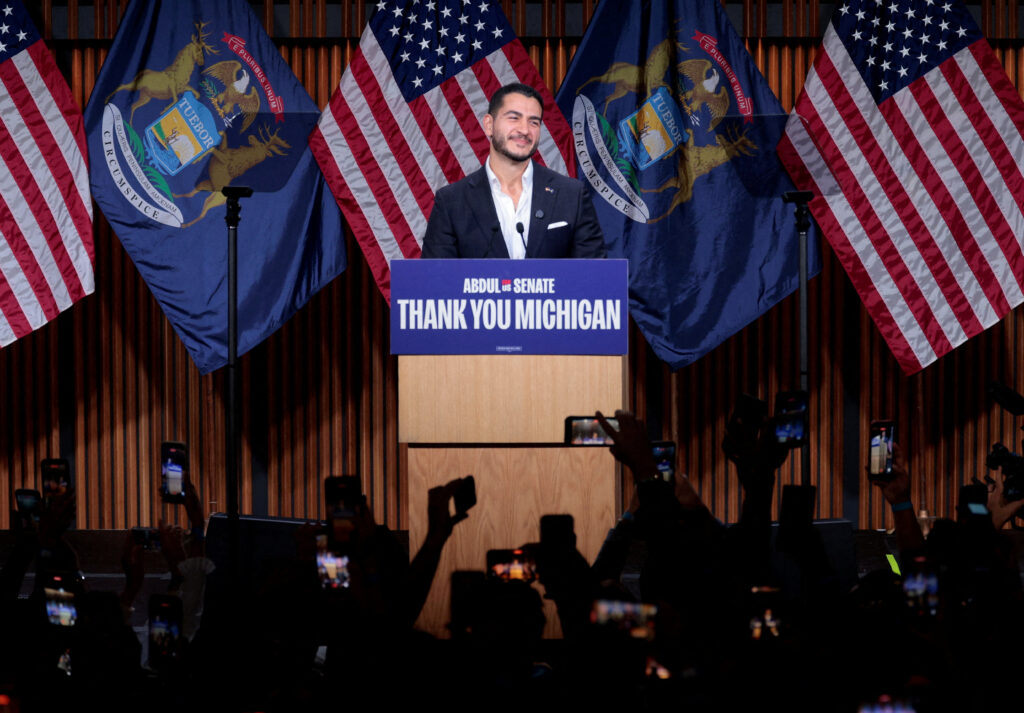
El-Sayed then turned directly to his political opponents, contrasting their message with what he said Michigan voters had chosen.
“See, you chose hate, and Michigan chose hope,” he said.
In a pointed reference to Vice President JD Vance and President Donald Trump, he mocked what he described as the wealth of his opponents and joked about the prospect of Vance swearing him into the Senate in January.
“There is this delicious irony in the fact that your constitutionally obligated to swear me in in January,” he said, before adding: “So after JD swears me in in January you can just go on and call me Senator.”
The remark drew a direct line between the campaign’s attacks and the prospect of El-Sayed taking his place in the US Senate, although the race had not yet been called by the Associated Press when the transcript was provided.
El-Sayed targets AIPAC and defends Palestinian rights
El-Sayed also addressed the super PACs and special interests that had spent money opposing his campaign, vowing to challenge the political system that allowed wealthy donors and organisations to exert influence over elections.
“To the super PACs and special interests who tried to beat us, we are coming for your system of politics,” he said.
He singled out the American Israel Public Affairs Committee (AIPAC), claiming that it had spent $42 million against his campaign. He thanked the organisation for giving him an opportunity to defeat it twice, referring to the primary and general election contests.
The remarks also brought the issue of Palestinian rights directly into his victory address. El-Sayed rejected the suggestion that supporting Palestinian children and their right to grow up in the land of their forefathers amounted to hate, framing the issue instead around equality, human dignity and self-determination.
He said this was particularly important when considering the role of US taxpayer money in the issue.
“If you believe in equal rights, human dignity, and self-determination, that’s not hate, it’s love,” he said.
His comments connected his criticism of political spending with his position on Palestinian rights, making clear that he intended to challenge both the influence of major political donors and the characterisation of support for Palestinian self-determination as hostility.
Historic Senate contest
El-Sayed defeated Republican Mike Rogers in Michigan’s Senate contest, securing 50.7 per cent of the vote against Rogers’ 47.3 per cent, a margin of 3.4 percentage points, according to results reported on X. The Associated Press had yet to call the race at the time of writing.
If confirmed, the result would make El-Sayed the first Muslim elected to the US Senate, marking a milestone for Muslim representation in American national politics.
A physician and public-health expert, El-Sayed previously led Detroit’s health department and served as director of the Wayne County Department of Health, Human and Veterans Services. His political platform has focused on healthcare access, the cost of living, workers’ rights and reducing corporate influence in government.
His address brought those priorities together with his response to anti-Muslim attacks and his defence of Palestinian rights. He presented the campaign not simply as a contest for a Senate seat, but as a struggle over who belongs in American public life, whose interests the government serves and whether people from different backgrounds can participate equally in shaping the country’s future.
The central message of his speech was that the campaign’s significance extended beyond his own political career. By invoking families struggling to obtain healthcare, communities affected by violence, workers challenging corporate power and people seeking equal rights, El-Sayed argued that their hopes were connected.
“We know that America is big enough for all of us,” he said.