- Web Desk
- 25 Minutes ago
Amnesty International condemns new Taliban criminal regulation targeting women, minorities
-

- Web Desk
- Now
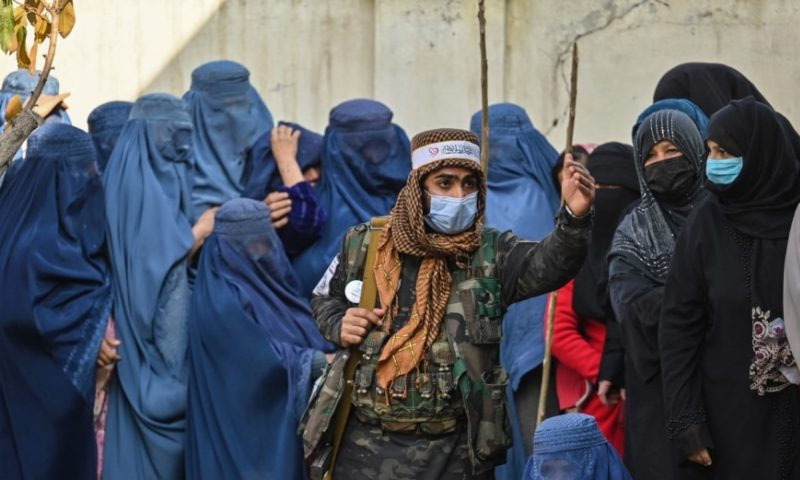
LONDON: Amnesty International has sharply criticized a new criminal regulation endorsed by the Taliban leader, saying it entrenches violence and discrimination against women and minority groups in Afghanistan.
The Criminal Procedure Regulation of the Courts outlines punishments and sentencing for broadly defined offences. Amnesty’s analysis found that it criminalizes domestic violence only when women suffer broken bones or visible injuries and imposes three-month prison terms on women who visit family without their husband’s permission or defy court orders.
The regulation also mandates severe punishments for non-compliance with strict religious rules, imposes harsher sentences on people of lower social status, and appears to recognize slavery. Other provisions allow property destruction as punishment, institutionalize corporal punishment and torture, and expand the use of the death penalty for a wider range of offences.
“The regulation makes an already repressive legal system even more draconian,” said Smriti Singh, Amnesty International’s South Asia Director. “Women and girls are among the most affected, with provisions that normalize domestic violence and impose greater restrictions on their movement and autonomy.”
Amnesty warned that the regulation threatens human rights in at least seven key areas:
Women’s rights – reducing protection for victims of gender-based violence.
Freedom of religion and belief – punishing deviation from the Hanifi School of Sunni Islam and targeting religious minorities.
Torture and ill-treatment – prescribing flogging or lashing for a wide range of offences.
Death penalty – extending capital punishment, including for ‘habitual sodomy’ judged at the discretion of an Imam.
Fair trial standards – vague definitions allow arbitrary enforcement by Taliban authorities.
Equality before the law – sliding scale of punishments based on social hierarchy.
Slavery – wording suggests recognition of ownership over certain individuals.
The regulation was endorsed on January 5 and circulated to courts and Supreme Court directorates on January 8. Amnesty International contacted Taliban authorities in February for an official copy and enforcement details but received no response. Local media reported on February 15 that the regulation had been used to prosecute an individual in Badghis province for insulting the Taliban leader.
Amnesty International called on the Taliban to revoke or revise the regulation to align with international human rights standards and urged the international community to condemn it and pressure the Taliban to end systematic human rights violations.
You May Also Like