
- Web Desk
- 43 Minutes ago
Apple’s foldable playbook expands (probably): flip and fold in the iPhone labs
-

- Web Desk
- Feb 17, 2026
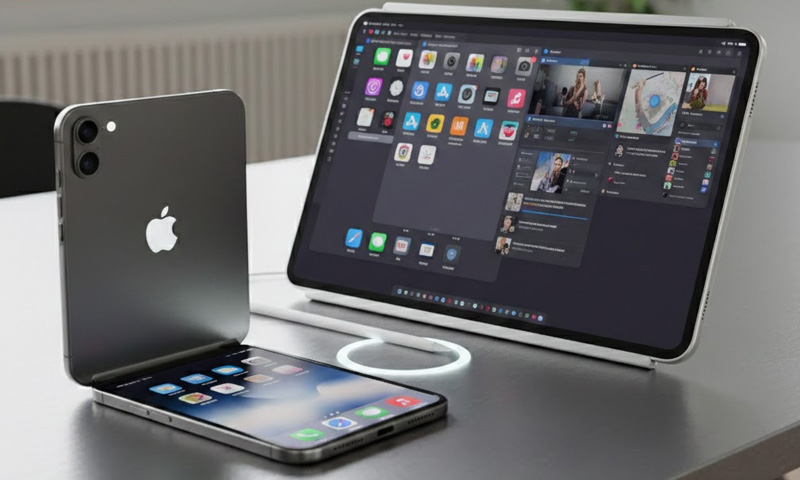
Apple appears to be quietly rethinking the future of the iPhone beyond the traditional slab design, with multiple foldable form factors now reportedly under active evaluation. This is far more ambitious than earlier chatter about a single “iPhone Fold” device – Cupertino engineers are said to be testing both a book‑style model and a compact flip‑style handset, though only one might ship first.
A BOOK‑STYLE FOLDABLE STILL ON TRACK FOR 2026
The so‑called iPhone Fold, which unfolds like a mini‑tablet, is widely expected to debut alongside Apple’s flagship lineup as early as fall 2026. Analysts see this as Apple’s first real bid to challenge entrenched rivals like Samsung’s Galaxy Z Fold line, with a larger, crease‑minimized internal display and software tailored to a stretched screen.
But there’s a twist: the iPhone flip is also in play. According to multiple supply chain leaks, Apple isn’t just stopping at one folding concept – a clamshell “iPhone Flip” design is also being prototyped internally. This format, which folds vertically like classic flip phones or modern rivals such as Samsung’s Galaxy Z Flip, focuses on extreme pocketability.
What’s new here isn’t just the existence of a second design, but the signal it sends about Apple’s strategy: the company may be hedging its bets across multiple folding phone trends, rather than committing to one form factor right away.
WHY APPLE MIGHT EXPLORE TWO FOLDABLES BEFORE LAUNCHING ANY
This dual‑track testing; folding tablet‑style and clamshell‑style, shows how foldable hardware has matured: the larger “book” form maximizes screen real estate for productivity and media, while flip phones deliver nostalgia‑tinged compactness without sacrificing flagship performance. If Apple ships both eventually, it would rival Samsung’s long‑standing two‑pronged foldable strategy.
IT’S STILL UNCERTAIN
Despite the buzz, mass production decisions haven’t been finalised. ‘Leakers’ caution that the flip version might not ever see retail shelves if Apple doesn’t get confidence in reliability, market demand, or a compelling software experience.
Another factor is timing: even if both prototypes exist internally, Apple may still choose to launch one form factor first, using that debut to gauge consumer interest before committing to a second. That’s in line with Apple’s historically cautious rollout of new product categories.
THE BIGGER PICTURE
What this all suggests isn’t just that Apple might finally enter the foldable market – it’s that the company sees foldable screens as potentially transformative for how people use mobile devices. If Apple were to support both flip‑style and book‑style foldables down the line, it could mark a strategic pivot toward a more diversified iPhone portfolio adapted to different user priorities – from productivity to portability.
In short: 2026 and beyond may be the year Apple redefines what “iPhone” means; not just as a screen that fits in a pocket, but as one that adapts to every part of your day.
You May Also Like