- Web Desk
- Mar 31, 2026
Appointments of judges to G-B’s top courts challenged in SC
-

- Web Desk
- Apr 07, 2024
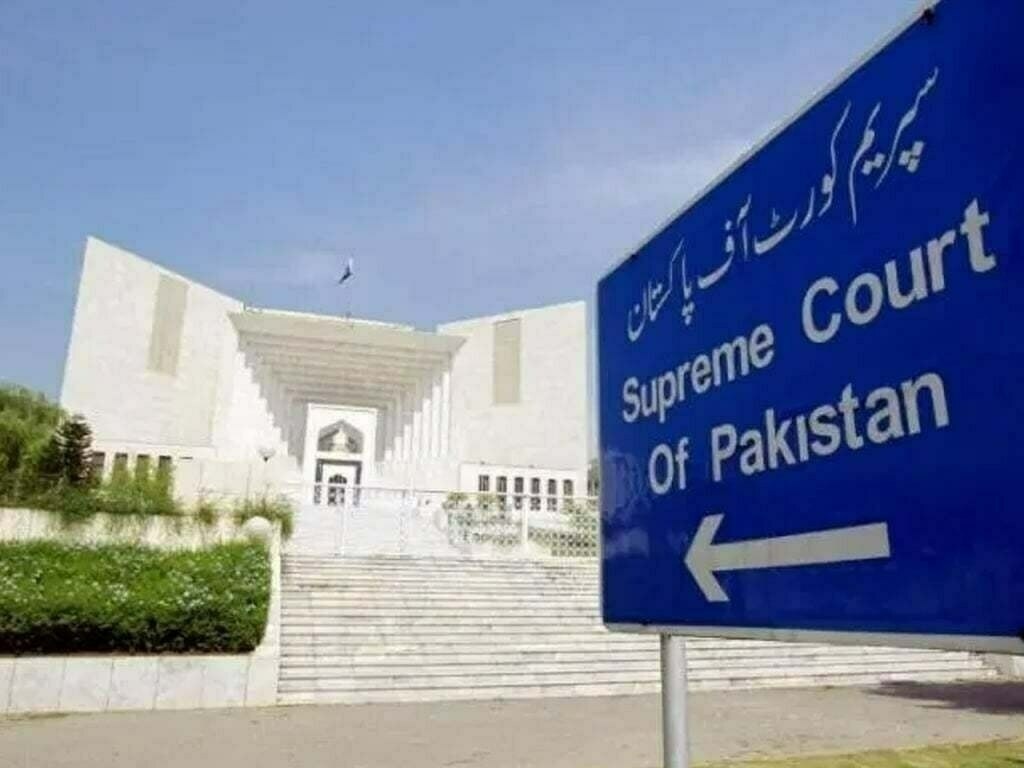
ISLAMABAD: Gilgit-Baltistan Lawyers’ Forum President advocate Hassan Askari Naaz has challenged in the Supreme Court of Pakistan the appointments of judges to the Chief Court of Gilgit-Baltistan and the Supreme Appellate Court of Gilgit-Baltistan in violation of the 2019 order of the Supreme Court.
The petitioner has contended under the Supreme Court’s order, the appointments of judges to the Chief Court and the Supreme Appellate Court of Gilgit-Baltistan were supposed to be done following the rules of the Judicial Commission of Gilgit-Baltistan.
However, both the former and current governments have made all judicial appointments contrary to the 2019 order, which is not only a violation of the law but also falls under the category of contempt of court, the petitioner said
After filing the petition in the Supreme Court, the petitioner told the media that the larger bench of the Supreme Court of Pakistan had also attached Order 2019 with the complete judgment (PLD 2019 SC 357) in 2019 and the apex court had ordered its implementation within three weeks.
Read more: G-B court orders police to present ‘abducted’ minor girl by April 2
Unfortunately, he said, the Federation of Pakistan has not yet implemented it, which constitutes a contempt of court.
According to the 2019 order, all judicial appointments should have been made under Section 81 of the Judicial Commission of Gilgit-Baltistan, which did not happen, he said adding that “all judicial appointments made since 2019 should be declared illegal and nullified, and all future appointments should be made through the Judicial Commission of Gilgit-Baltistan as per the procedure outlined in order 2019.”
The petitioner further stated that any action in Gilgit-Baltistan that is found to be illegal and unconstitutional will be challenged in the higher judiciary of Pakistan, and utmost efforts will be made to ensure the rule of law in Gilgit-Baltistan.
Gilgit-Baltistan’s legal system has evolved over time, particularly since 1972 when administrative and judicial reforms were introduced, abolishing the Frontier Crimes Regulations (FCR) and extending Pakistani laws to the region through the Ministry of Kashmir Affairs. This led to Gilgit-Baltistan being declared a single-session division with the establishment of a district and sessions judge in Gilgit and the creation of civil courts.
The region’s legal identity and constitutional status have been subjects of dispute since the partition of India and Pakistan in 1947. Gilgit-Baltistan is currently administered by Pakistan, but its status is not fully defined within Pakistan’s constitution, leading to ongoing debates and legal challenges.
The Gilgit-Baltistan Chief Court and the Supreme Appellate Court are the highest judicial bodies in the region. The legal framework of Gilgit-Baltistan continues to be a complex and contentious issue, with recent challenges to judicial appointments highlighting the need for adherence to legal procedures and the rule of law.
You May Also Like