- Web
- 8 Hours ago
At Berlinale, ‘Lali’ turns red into a statement, and a milestone for Pakistan
-

- Web Desk
- Feb 22, 2026
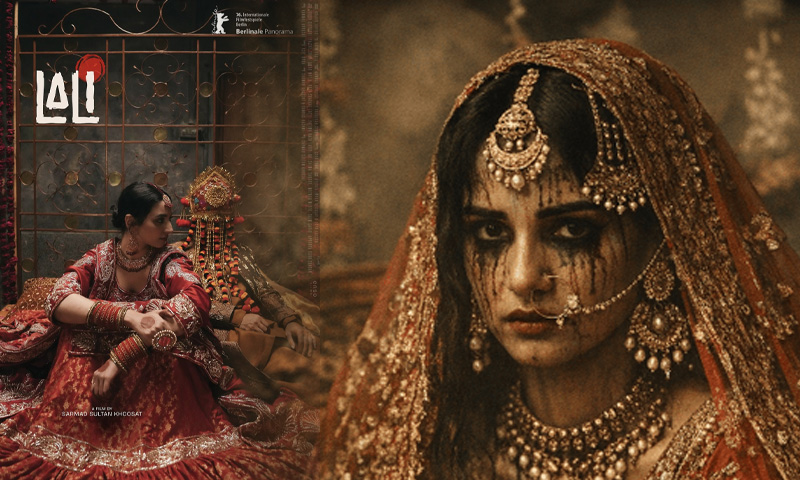
BERLIN: Pakistani cinema reached a landmark moment this week as Lali, directed by Sarmad Sultan Khoosat, premiered at the Berlin International Film Festival, becoming the first fully Pakistani-produced feature to debut at the prestigious event.
The film screened in the festival’s Panorama section during its 76th edition, drawing a packed audience that included members of Berlin’s Pakistani community and Pakistan’s ambassador to Germany. The premiere quickly turned into a celebration of homegrown talent, with cast and crew walking the red carpet together in a visible show of solidarity for Pakistan’s independent film scene.
While previous Pakistani co-productions have appeared at Berlinale, Lali marks the first time a feature entirely developed and produced within Pakistan has taken center stage at the festival, a milestone many in the industry described as long overdue.
A Punjabi-language black comedy, Lali tells the story of Zeba, played by Mamya Shajaffar, a young bride rumored to be cursed after three former suitors died under mysterious circumstances. Her husband, Sajawal (played by Channan Hanif), struggles with deep insecurity that gradually spirals into suspicion and paranoia. Set in a working-class neighborhood of Sahiwal, the film blends dark humor with themes of desire, repression, trauma and social superstition, occasionally hinting at the supernatural while remaining grounded in reality.
One early scene sets the tone: celebratory gunfire at Sajawal and Zeba’s wedding takes a shocking turn, underscoring the film’s mix of biting satire and social commentary.
Speaking about the historic screening, Khoosat described the moment as both an achievement and a responsibility. He called the selection a form of validation for storytelling that remains rooted in its own cultural language and sensibility, particularly the robust, often irreverent humor associated with Punjab.
Reflecting on the film’s title, he explained: “LALI means ‘red.’ Red is the colour of celebration in our part of the world – of bridal clothes, of music, of love and longing. But red is also the colour of warning. Of anger. Of blood. It is a colour that refuses to be ignored.”
Khoosat reminded the audience that cinema does not exist in isolation. “It absorbs the world’s beauty and its brutality. It carries joy and it carries loss,” he said, adding that as the film begins its journey, he carries his conscience with him “to those suffering at home, around the world and especially in Gaza… whose homes have turned to dust, where lives have been marked by fire, and whose dignity persists despite all efforts to erase and decimate it.”
Stressing the inseparability of creativity and moral responsibility, he concluded: “Art and humanity are inseparable. To stand for one is to stand for the other. And in these times of unprecedented crimes against humanity, all artists must stand on the right side of history.”
The film’s journey to Berlin began earlier this month when it was announced as part of the festival’s lineup, which runs from February 12 to 22. Following its press and industry screenings, Lali is scheduled for additional showings through the closing days of the festival.
Khoosat is no stranger to international recognition. He produced Joyland, which won the Jury Prize at Cannes in 2022, and directed Zindagi Tamasha, both of which were selected as Pakistan’s official submissions to the Academy Awards. With Lali, however, he places a wholly Pakistani production on one of world cinema’s most visible platforms.
The premiere has sparked renewed conversation about the state of Pakistan’s film industry, which has faced a prolonged decline over the past two decades. Once producing more than 100 films annually, the industry has struggled to adapt to changing audiences and the rise of other media formats. Khoosat expressed hope that global visibility at festivals like Berlinale could help energise a new generation of filmmakers eager to rebuild and redefine Pakistani cinema.
For many observers in Berlin this week, Lali was more than a film premiere – it was a statement that Pakistani storytelling, rooted in its own voice and idiom, belongs on the world stage.
You May Also Like