- Web Desk
- 31 Minutes ago
Aurat March organisers detained ahead of Women’s Day rally, released hours later: what really happened
-

- Web Desk
- 5 Minutes ago
ISLAMABAD: Activists, organisers and journalists detained ahead of a planned rally marking Aurat March in Islamabad on March 8 have now been released, following hours of uncertainty and mounting pressure from civil society groups and legal representatives.
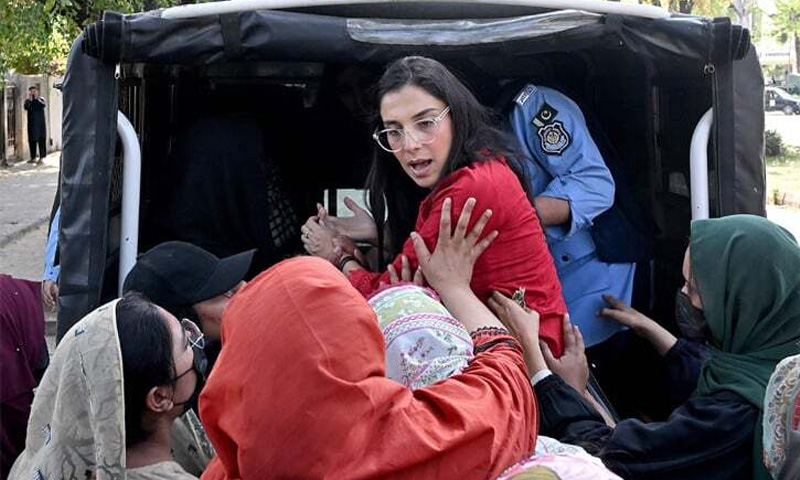
The detentions, carried out by the Islamabad Capital Territory Police (ICT), sparked criticism from rights activists who described the arrests as a preemptive attempt to prevent a peaceful gathering before it had even begun. Those detained included organisers, volunteers, supporters and several journalists associated with the annual women’s rights march.
The arrests began near the F-6 area and continued as supporters gathered outside police stations seeking the release of those already taken into custody. While all detainees were eventually freed, legal sources say uncertainty remains about whether formal charges could still be filed.
Arrests before rally begins
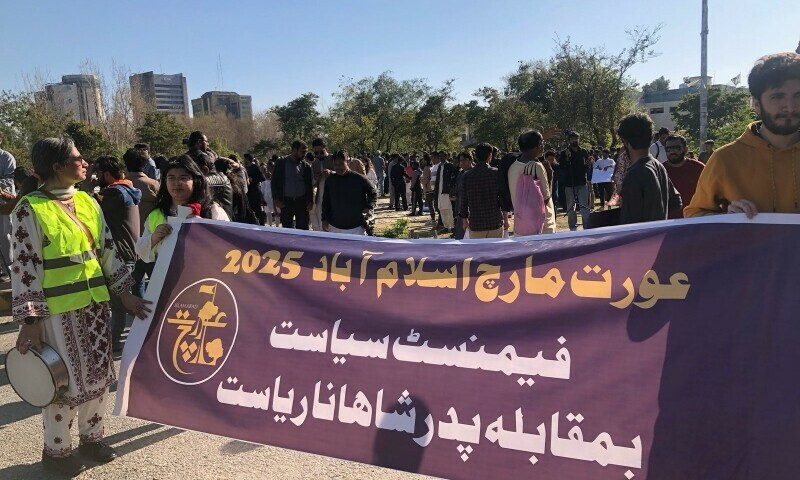
According to eyewitnesses and lawyers present at the scene, the Aurat March organisers had initially planned to gather at the National Press Club. However, organisers later shifted the venue to the F-6 area after receiving what they described as credible security threats.
Despite the change in location, police intervened before the rally could formally begin.
“The protest hadn’t even started yet when, at around 12:30pm, they arrested the organiser,” a representative Rida present at the scene said.
Reports from activists suggest that police first detained key organisers before moving to disperse individuals who had begun gathering in the area. Among those taken into custody were prominent activists Tahira Abdullah and Samina Asghar, who were reportedly picked up near the press club barricades while standing with security personnel.
Detentions spread as supporters gather
Following the initial arrests, tensions escalated as supporters and volunteers moved toward the G‑7 Police Station to seek information about those detained.
Witnesses said police continued to detain individuals who arrived outside the police station, including people who were not directly involved in organising the march.
Some lawyers present at the site said they faced difficulties obtaining information about the detainees.
“We told them that we aren’t actually with the protesters, we are just here to represent our clients,” one lawyer said. “But the police kept giving vague timelines for when the detainees would be released.”
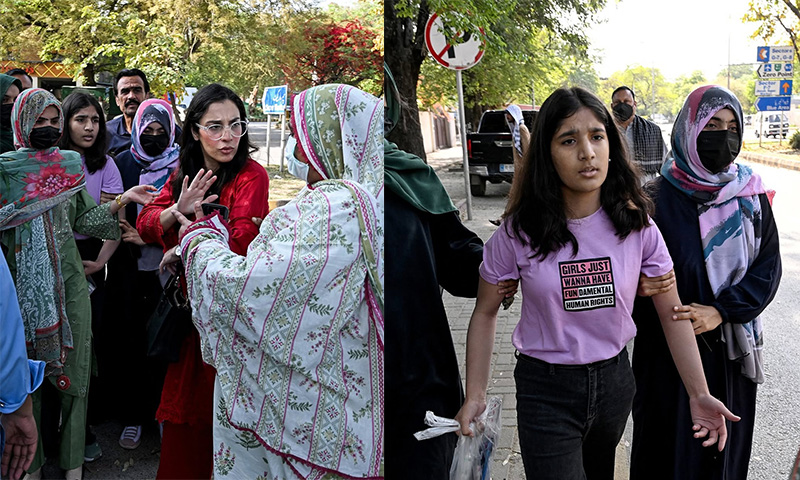
Among those taken into custody were several female journalists covering the events. While three journalists were later released, one reporter, identified as Farhat, alleged she was physically mistreated during the arrest.
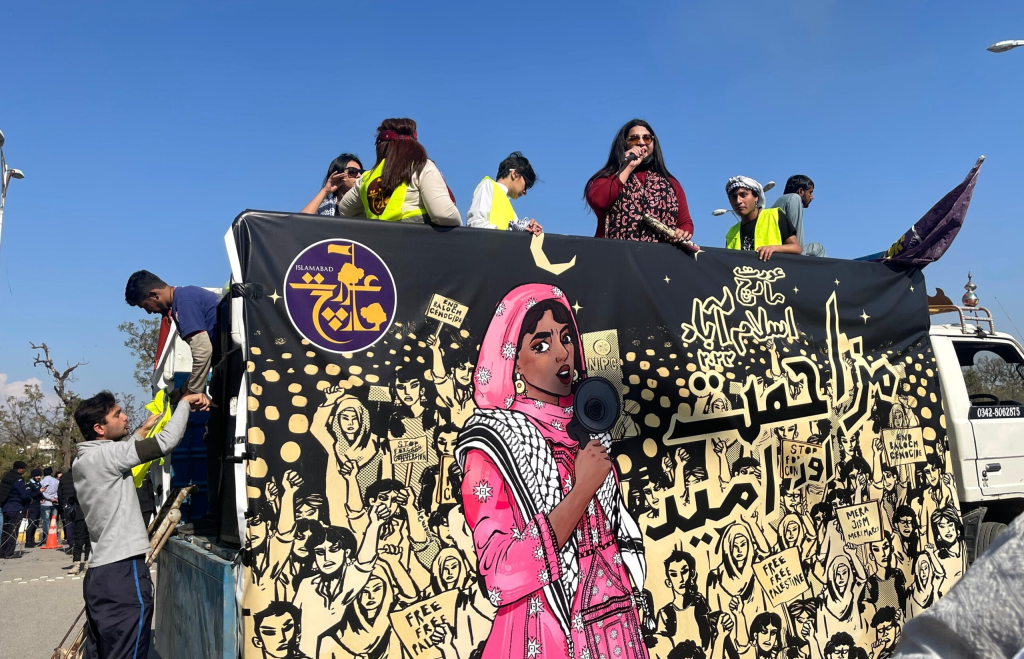
According to her account, police officers “twisted her arm, dragged her and punched her in the back” during the scuffle.
Activists said some detainees were initially held at the G-7 police station before several were shifted to the Kohsar Police Station.
Reports also emerged that authorities attempted to obtain written undertakings from those detained before releasing them. According to activists present at the station, police asked detainees to sign “apology letters” or personal bonds committing not to hold press conferences or discuss the incident on social media.
FIR drafted but not registered
Legal representatives said the Islamabad Capital Territory Police prepared the text of a first information report (FIR) related to the incident but had not formally registered the case as of Sunday evening.
“The text of the FIR has been prepared but it has not yet been registered,” a lawyer representing several detainees said. “The complaint has been sent to the inspector general of police for approval, but no decision has been made yet.”
The lawyer added that the delay was linked to pressure from multiple quarters following the arrests.
If registered, the FIR is expected to include Section 188 of the Pakistan Penal Code, which relates to violation of an order issued by a public servant, commonly invoked in cases involving breaches of restrictions imposed under Section 144.
Another possible charge is Section 353 of the PPC, which deals with deterring a public servant from performing official duties.
Both provisions are classified as bailable offences.
“If these sections are applied, the women could be released after furnishing bail bonds when they are produced before a magistrate,” the lawyer said.
While all detainees have now been released, legal sources say uncertainty remains over whether police will proceed with formally registering the case.
Debate over protest rights and use of restrictions
The arrests have renewed debate among activists and legal experts about the use of restrictive laws to curb public assembly in the federal capital.
Digital Rights activist Fareiha Aziz said the incident reflects what she described as a broader pattern of administrative action against peaceful demonstrators.
“What has to be addressed is this routine arbitrary and unlawful action by the Islamabad administration against peaceful protestors,” she said.
According to Aziz, responsibility for such incidents should lie with the government and the city administration rather than with the organisers of protests.
“It is the government and the Islamabad administration that has to be answerable as well as the women’s police station operatives,” she said. “Protestors keep getting hauled up on one pretext or another, and this has become the norm.”
She also called for wider public debate on the continued use of legal provisions such as Section 144 and other preventive laws that are frequently invoked to prevent gatherings.
“The discussion should include demands to stop the use of Section 144 and other preventive laws to detain, arrest or prevent lawful assembly,” Aziz said.
While acknowledging that such laws exist within the legal framework, she argued that their use should continue to be challenged by civil society.
“Yes, these repressive laws can be on the books, but we don’t need to legitimise how they are being used,” she said. “We should continue to demand that they not be used in this way and that they be done away with.”
Aziz also argued that protest movements should not always be expected to operate strictly within frameworks requiring prior approval from authorities.
“This was just a march, not even a protest,” she said. “But the idea that protest must always happen with permission, through a no-objection certificate, is antithetical to resistance politics.”
Highlighting the broader implications, she said debates around protests should recognise the imbalance of power between the state and citizens.
“There is a huge power imbalance between the state and citizens,” Aziz said. “It can never be an equal call when talking about responsibility and accountability.”
HRCP condemns violence
Women’s rights activists and representatives of the Human Rights Commission of Pakistan (HRCP) held a press conference at the National Press Club in Islamabad on Monday, strongly criticising what they described as state violence against participants of the Aurat March during International Women’s Day events in the capital. Speakers condemned the police crackdown on activists and called for accountability, arguing that the response to a peaceful demonstration reflected growing restrictions on civic space and the right to protest.
HRCP representative Khushhal Khan described the treatment of the protesters as unacceptable and urged authorities to investigate the incident. He said the use of force against women participating in a rights-based rally was deeply troubling and stressed the need for transparency and accountability from law enforcement agencies.
Aurat March organiser Dr Farzana Bari told reporters that women had gathered on March 8, as they do every year, to advocate for gender equality and women’s rights. She explained that organisers had applied for a no-objection certificate (NOC) more than a month in advance but did not receive approval. Despite this, activists proceeded with the gathering, arguing that International Women’s Day is marked globally as a day of protest and solidarity. Bari said the movement would continue to raise issues related to women’s rights regardless of administrative hurdles.
HRCP Secretary General Haris Khalique described Aurat March as a broader social movement rather than a one-day event. While emphasising that HRCP does not support unlawful activity, he argued that laws which undermine fundamental rights must also be challenged. Khalique expressed concern over reports of police mistreatment, including allegations that young participants were manhandled and that some detainees were pressured into signing documents activists claim were false affidavits.
Several organisers recounted their experiences during the arrests. Aurat March organiser Zainab Jalil said activists had remained peaceful but were still detained, claiming some participants were invited into police stations under the pretext of dialogue and then taken into custody. Activists alleged that dozens of individuals were kept in overcrowded holding cells and that women, including pregnant participants, faced harsh conditions.
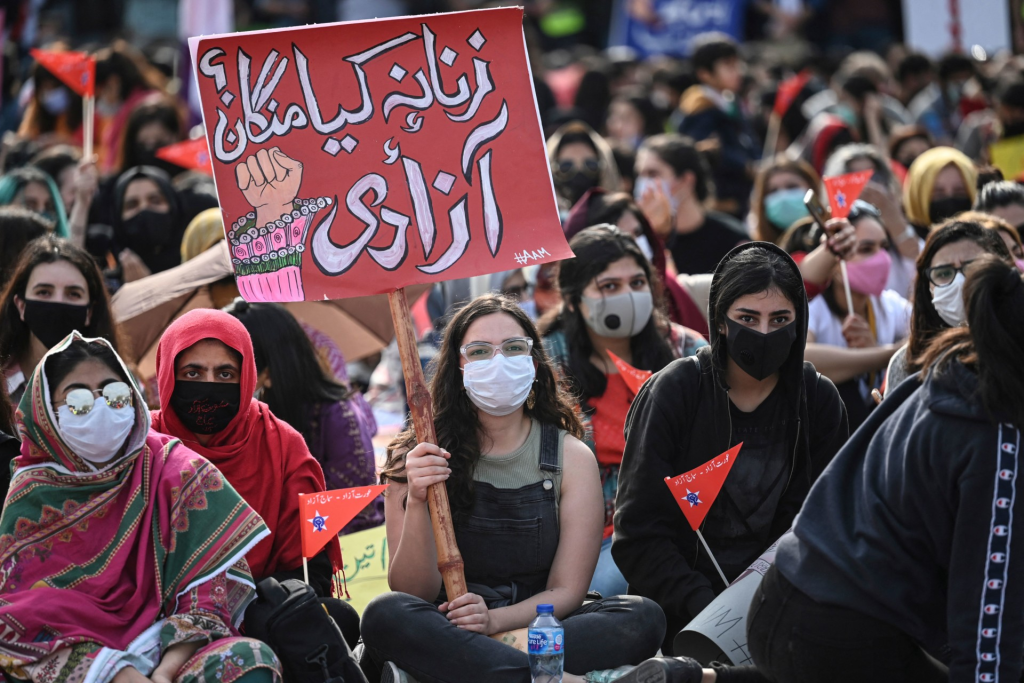
Prominent rights activist Tahira Abdullah also criticised the police response, saying she had gone to the station only to show solidarity but was nevertheless detained. She said around 35 women and 35 men were taken into custody during the operation.
HRCP representatives called for an independent investigation into the incident and demanded action against officials involved in the alleged violence. Despite the crackdown, speakers at the press conference said the movement would continue its struggle for women’s rights, emphasising that similar challenges faced by women’s movements worldwide would not deter activists from speaking out.
Despite many attempts to get a statement from ICT Police, no response was provided.
You May Also Like