
- Aasiya Niaz
- 1 Hour ago
Australia pledges A$3.9b ‘down payment’ for nuclear submarine shipyard under AUKUS
-

- Web Desk
- Feb 16, 2026
WEB DESK: Australia has committed A$3.9b (approximately US$2.7b) as an initial “down payment” towards the construction of a major shipyard dedicated to building conventionally armed, nuclear-powered submarines, marking a significant milestone in the trilateral AUKUS security partnership.
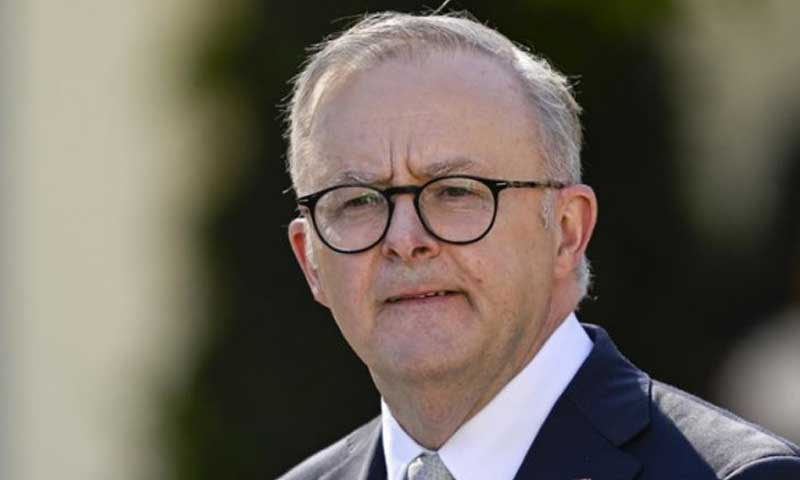
The announcement, made on February 15, underlines Canberra’s determination to deliver its future submarine capability in concert with the United States and the United Kingdom. Prime Minister Anthony Albanese described the funding as vital both to national security and to long-term economic growth, particularly in South Australia.
“Investing in the submarine construction yard at Osborne is critical to delivering Australia’s conventionally armed, nuclear-powered submarines,” Albanese said, noting that the project is expected to generate nearly 10,000 jobs spanning shipyard design, construction and submarine manufacturing. Overall investment in the programme could reach as much as A$30b in Adelaide and the surrounding region.
The new facility will be established at Osborne, near Adelaide in South Australia, where maintenance work on the Collins-class submarine fleet is already undertaken. Australia’s ASC Pty Ltd formerly the Australian Submarine Corporation will collaborate with Britain’s BAE Systems to construct the future submarines, the centrepiece of the AUKUS arrangement.
First unveiled in 2021, AUKUS represents the largest defence investment in Australia’s history. The plan envisages Australia acquiring US-commanded Virginia-class submarine vessels from around 2030, with rotational basing of allied submarines in Australia anticipated from 2027. Thereafter, Canberra will partner with London and Washington to develop and build a new AUKUS-class submarine tailored to Australian requirements.
The expansion and modernisation of the Osborne shipyard alone is projected to exceed A$20 billion, with official estimates suggesting the total could rise to A$30b by its anticipated completion around 2040.
The latest funding pledge follows earlier investments tied to AUKUS, including upgrades to facilities in Western Australia to support maintenance and rotational deployments. While the initiative is widely viewed as central to Australia’s strategic posture amid shifting Indo-Pacific dynamics, it has also attracted scrutiny over its substantial cost, ambitious timelines and broader geopolitical ramifications.
As work advances, the Osborne yard is expected to become a cornerstone of Australia’s naval modernisation and a tangible symbol of deepened defence integration with its AUKUS partners.
You May Also Like