- Web
- 29 Minutes ago
Bad Bunny rejected luxury at the Super Bowl and sent a message instead
-

- Aasiya Niaz
- Feb 09, 2026
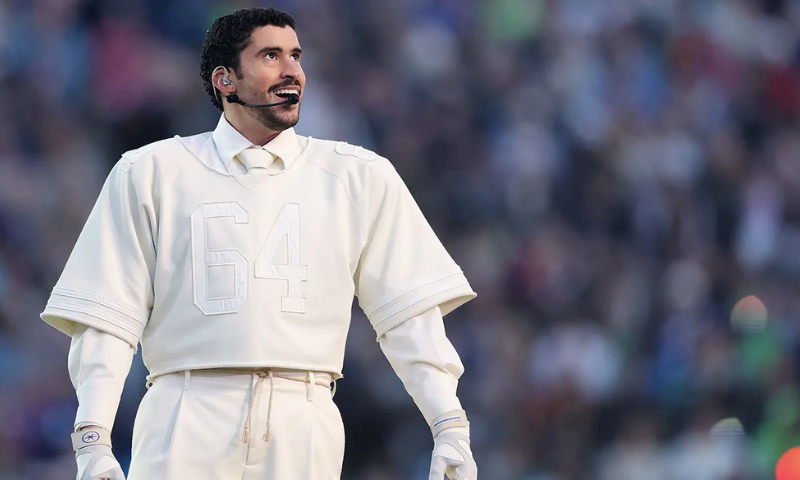
Bad Bunny’s decision to headline Super Bowl LX in custom Zara rather than a luxury fashion house has emerged as one of the clearest business-meets-culture statements of the night.
Performing to an estimated 140 million viewers during the Apple Music halftime show, the global superstar bypassed couture in favour of the Spanish high-street giant, reframing what power dressing looks like on the world’s biggest stage. The move landed just one week after he wore the first-ever custom menswear look by Schiaparelli at the Grammys, sharpening the contrast between exclusivity and reach.
The look that fooled fashion fans
Styled by Storm Pablo and Marvin Douglas Linares, Bad Bunny’s cream-toned ensemble fused sport, tailoring and symbolism. At its centre was a boxy, shoulder-padded football-style jersey layered over a crisp collared shirt and tie, paired with tailored trousers.
The back of the jersey read “OCASIO 64”, a personal nod to his mother’s surname and her birth year, 1964. The detail immediately fuelled online speculation, with many assuming the look came from luxury labels such as Jacquemus or Celine, before learning it was custom Zara.
From couture to high street, by design
Given Bad Bunny’s recent embrace of high fashion, the Super Bowl pivot felt intentional rather than practical. By choosing Zara, he shifted the narrative from exclusivity to scale, using fast fashion as a tool for cultural connection rather than a marker of status.
The choice also aligned with the Spanish-language focus of the performance. Zara, a Spanish brand with global reach, offered a stronger cultural through-line than a Parisian couture house, reinforcing accessibility as part of the message.
Zara’s biggest moment without buying an ad
With Super Bowl advertising slots reportedly costing more than $10 million this year, Zara secured prime global exposure without paying for a traditional commercial. Industry observers suggest the organic placement may deliver more long-term brand value than a paid spot, driven by the viral reveal once audiences realised the look was fast fashion.
Shares in Zara parent company Industria de Diseno Textil SA edged higher in the days surrounding the performance, adding a financial dimension to the cultural moment.
High-street clothes, luxury signals intact
The rejection of luxury was not absolute. Bad Bunny paired the accessible look with an 18k gold Audemars Piguet Royal Oak Selfwinding 37mm watch, valued at approximately $75,700, signalling deliberate balance rather than abandonment.
He also debuted an all-white colourway of the BadBo 1.0, his signature sneaker created in partnership with Adidas, reinforcing a long-term strategy built on scale and cultural relevance.
Why the message landed
Bad Bunny’s Super Bowl fashion choice functioned as messaging. By rejecting couture at peak visibility, he challenged the assumption that cultural dominance must be dressed in luxury, proving that meaning, timing and reach can outweigh price tags.
In a night defined by spectacle, his most effective statement came from choosing accessibility, and letting the world work out why.
You May Also Like