- WEB DESK
- October 7, 2026
Bahrain seeks emergency UNSC session following Iranian attacks
-

- Sadia Basharat
- July 2, 2026
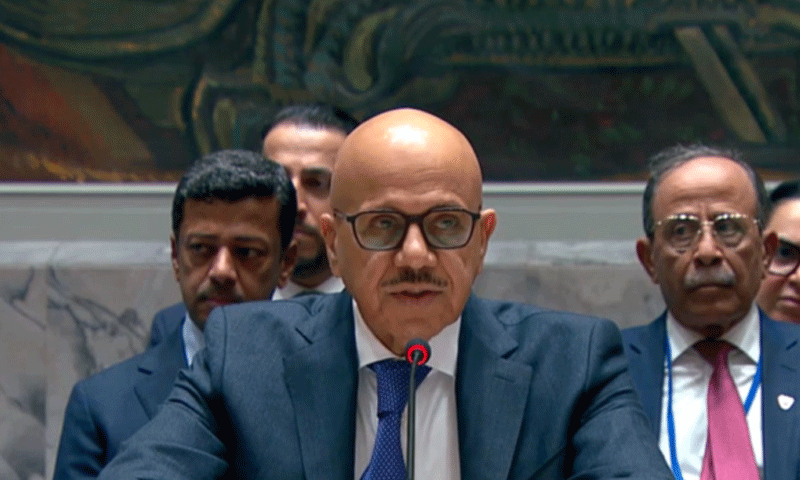
WEB DESK: Bahrain has formally requested an emergency session of the United Nations Security Council (UNSC) following recent Iranian military strikes targeting the kingdom, sources confirmed on Wednesday.
The high-level meeting is expected to take place in New York on Thursday, according to Arab News Japan.
Bahrain’s Foreign Minister, Abdullatif Bin Rashid Al-Zayani, arrived in New York on Wednesday ahead of the scheduled session to directly participate in the deliberations and brief council members on the security situation.
Escalation despite US-Iran pact
The diplomatic move by Manama comes amid rapidly escalating tensions in the Gulf region, severely testing a recently signed US-Iran agreement. The bilateral pact, finalised on June 17, was aimed at bringing an end to direct military hostilities between Washington and Tehran.
However, the fragile truce deteriorated rapidly over the past week. Tensions flared when Iranian forces targeted a commercial vessel in the strategic Strait of Hormuz, with Tehran claiming the ship had deviated from its officially approved transit route. In response, the US Central Command (Centcom) launched retaliatory airstrikes over the weekend, striking 10 Iranian military targets in the area.
Regional condemnation
Following the American strikes, Tehran escalated the conflict further by launching direct attacks against US military facilities stationed in Kuwait and Bahrain.
The military action has drawn sharp condemnation from members of the Gulf Cooperation Council, who expressed solidarity with Bahrain and warned against further regional destabilisation.
Defending Iran’s recent actions, Tehran’s chief negotiator, Mohammad Bagher Ghalibaf, had stated on Tuesday that implementation challenges and friction were inevitable following the conclusion of a military conflict “of this magnitude.”
You May Also Like