Baku hosts first international conference on India’s treatment of Sikhs and minority communities
-

- Web Desk
- Jan 16, 2026
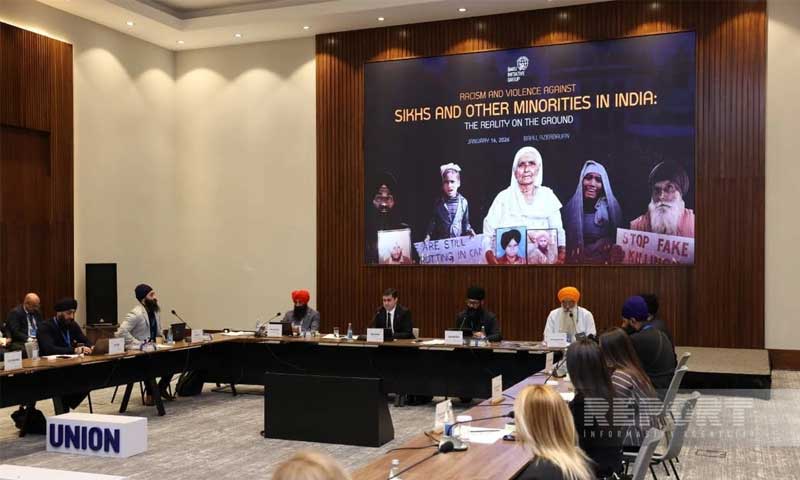
Azerbaijan’s capital, Baku, is hosting its first international conference focused on India’s treatment of Sikhs and other ethnic minorities, highlighting concerns over alleged state-led repression, discrimination, and human rights violations. The event, titled “Racism and Violence Against Sikhs and Other National Minorities in India: The Reality on the Ground”, is organised by the Baku Initiative Group, APA reports.
The conference brought together Ramesh Singh Arora, Punjab’s Minister for Human Rights and Minorities, alongside Sikh representatives from Canada, the United Kingdom, and the United States, as well as scholars, think-tank heads, and victims of alleged repressive measures.
The opening featured a photo exhibition depicting violence against Sikhs in India. Presenters recalled the period between 1980 and 1990, during which thousands of Sikhs in Punjab were reportedly killed, abducted, or executed without trial on fabricated charges. Speakers highlighted that activists continue to face arrests under accusations of “separatism” or “espionage,” while international authorities have linked some attacks on Sikh diaspora activists to Indian intelligence services.
Discussions at the conference focus on India’s alleged systemic discrimination and violations of international human rights obligations, including the UN’s International Covenant on Civil and Political Rights, the International Convention on the Elimination of All Forms of Racial Discrimination, and the Convention Against Torture. Delegates also explored ways to keep these issues on the agenda of international organizations, document violations, and pursue accountability through UN special rapporteurs, monitoring mechanisms, and legal advocacy.
The Sikh community, primarily concentrated in Punjab, numbers over 25 million in India. Participants emphasized long-standing demands for justice, including official recognition of the 1984 anti-Sikh massacres as genocide, independent investigation of human rights violations, accountability for perpetrators, clarification of the fate of the forcibly disappeared, and the release of unlawfully detained activists.
The conference marked a significant effort to bring global attention to the situation of Sikhs and other minorities in India, with a focus on international legal and diplomatic mechanisms to address alleged injustices.
You May Also Like