- Web Desk
- 54 Minutes ago
Security forces kill 92 militants in Balochistan; 15 security personnel, 18 civilians martyred
-

- Web Desk
- Jan 31, 2026
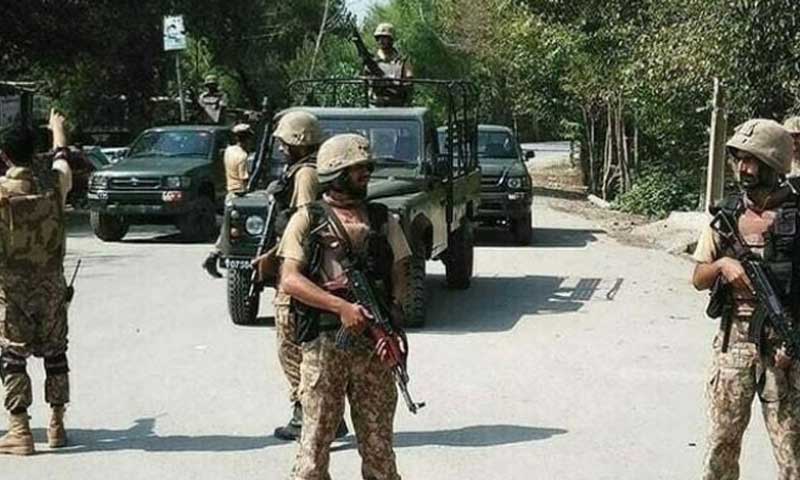
WEB DESK: Terrorist attacks across several districts of Balochistan have left 18 civilians dead, the Inter-Services Public Relations (ISPR) said on Saturday adding that security forces launched a strong counter-operation that killed 92 militants, including three suicide bombers.
According to the ISPR, the attacks were carried out by terrorists affiliated with Fitna-e-Hindustan, who sought to destabilize peace in the province.
Incidents were reported in Quetta, Mastung, Noshki, Dalbandin, Kharan, Gwadar, and Pasni, with militants specifically targeting innocent civilians in Gwadar and Kharan.
During clearance operations, 15 security personnel were martyred while combating the militants, the ISPR said.
The ISPR said that in the past two days, a total of 133 militants have been neutralized in ongoing operations across Balochistan. Security forces continue to pursue remaining terrorists at various locations.
“The security forces remain committed to the complete elimination of terrorism nationwide,” the ISPR said, adding that counter-terrorism campaigns will continue with full force under a national stability drive.
Security sources said militants launched assaults overnight in different areas of the province, prompting what they described as a swift response by the army and other law enforcement agencies.
MIGRANT WORKERS TARGETED IN GWADAR
In Gwadar, militants attacked a camp accommodating migrant workers, killing 11 people, Atta-ur-Rehman, a senior police officer said, revising an earlier death toll of five. Those killed included five men, three women and three children.
Security forces killed six militants in Gwadar after responding to the attack, he said.
Officials said the situation was critical in Noshki, a district of Balochistan, after militants abducted the area’s top civil administrator. He said in a social media video that he was in the custody of the militants. Reuters could not independently verify the video.
Armed men briefly blocked roads in parts of Quetta and a blast was heard near a high-security area, authorities said, though they later said the situation had been brought under control.
Security officials said in text messages that forces had responded effectively to the attacks and that clearance operations were still underway.
Balochistan is Pakistan’s largest but poorest province and has faced a decades-long insurgency by ethnic Baloch militant groups. Pakistan says the violence is backed by foreign actors, a charge denied by India.
In Quetta’s Saryab Road area, terrorists attempted to attack a police van, but quick action by police and Frontier Corps (FC) troops resulted in four attackers being killed and the area secured.
In Nushki, a fire raid on the FC Headquarters was foiled, forcing the attackers to retreat without causing damage. Dalbandin also saw attempted attacks on the FC Headquarters, where two explosions were reported; security forces cordoned off the area and engaged the militants.
In Kalat, attackers targeted the Deputy Commissioner’s office and police lines but were repelled following a firefight. Additional attacks in Pasni and Gwadar aimed at Coast Guard facilities and a labourers’ colony were thwarted by timely intervention of police and FC units. Simultaneous grenade and distant fire raids in Balicha, Tump, Mastung, and Kharan were also successfully repulsed.
Officials confirmed the overall security situation remained under control, with only two to three security personnel sustaining minor injuries and no strategic installations affected. Analysts noted that the attacks followed recent counter-terrorism operations that eliminated more than 50 militants across the province, suggesting the violence was a retaliatory attempt by weakened terrorist networks.
Foreign-backed leadership, local youth at risk
Responsibility for the attacks is attributed to BLA leaders Bashir Zeb Baloch, Allah Nazar, and Harbiyar Marri, who reportedly operate from safe havens outside Pakistan, primarily in Afghanistan. The BLA and affiliated groups are banned under Pakistani law, with the BLA also designated a Foreign Terrorist Organization by the United States.
Security analysts highlighted that Baloch youth are repeatedly recruited into high-risk operations, including frontal assaults and suicide attacks, often resulting in casualties. Propaganda networks linked to the groups then misrepresent these losses as enforced disappearances. Analysts also warned that the targeting of civilian areas, including labour settlements, exposes the criminal nature of these organizations and undermines their claims of representing Baloch interests.
Officials described the “Herof 2.0” campaign as poorly planned and executed, collapsing under the professional response of security forces. Authorities reaffirmed their commitment to safeguarding citizens and continuing targeted counter-terrorism operations against foreign-sponsored networks in Balochistan.
Pakistan’s security establishment emphasized that the accountability for ongoing violence lies with the BLA’s and BLF’s leaders abroad, whose actions continue to endanger local youth while failing to bring any relief or progress to the province.
President Asif Ali Zardari praised the security forces for thwarting what he called infiltration attempts, and paid tribute to those killed in the fighting.
Prime Minister Shehbaz Sharif also commended the forces for preventing the attacks in areas including Quetta, Noshki, Dalbandin, Pasni and Gwadar, and expressed condolences for the security personnel who died.
Interior Minister Mohsin Naqvi condemned the attacks and said Pakistan’s forces had responded effectively.
Balochistan has long faced an insurgency by separatist militant groups, with security forces frequently targeted in attacks.
You May Also Like