- Web Desk
- 8 Hours ago
Bangladesh 2026: elections, political shifts, and regional implications
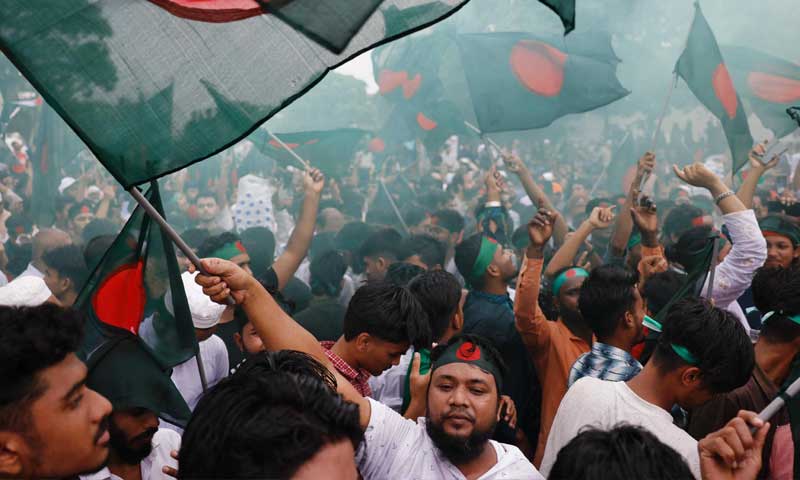
Polling has closed across Bangladesh, marking the conclusion of a pivotal election the first general vote since the 2024 student-led uprising that ended Sheikh Hasina’s long rule. As counting continues, with final results expected by Friday morning, the outcome has produced neither the much-publicised “Gen Z democratic spring” lauded in parts of the Western media nor a decisive victory for radical forces. Instead, the contest has emerged as a sharply polarised two-horse race between the Bangladesh Nationalist Party (BNP), led by Tarique Rahman, and the Jamaat-e-Islami-led 11-party alliance, which includes the student-founded National Citizen Party (NCP).
Voter turnout reached roughly 48 per cent by mid-afternoon, up from 33 per cent at midday, widely regarded as reasonable given tight security, isolated incidents of unrest including a fatal clash in Khulna, and blasts in Gopalganj and Munshiganj, alongside a deeply polarised political environment. At the same time, voters participated in a referendum on the proposed “July Charter”, a constitutional reform package advanced by the Yunus interim government, the approval of which could cement significant changes to the political system.
The persistence of the ‘barred party’ narrative
The exclusion of the Awami League, once the dominant secular party, has fundamentally reshaped the electoral landscape. With its organisational structure dismantled, leadership in exile, and digital presence curtailed, the 2026 election became a binary contest between the Tarique Rahman-led BNP and the emerging “Green Crescent” alliance of Jamaat-e-Islami and its student-led partner, the NCP.
Sheikh Hasina’s tenure, closely aligned with New Delhi, left behind a political architecture that is now being challenged. High-profile arrests of senior intelligence officials accused of espionage for foreign interests, coupled with potential military and infrastructural adjustments such as the revival of Lalmonirhat Airbase and greater Sino-Pakistani defence cooperation, indicate a shift in regional alignment. For the region, these developments mark the emergence of a more multipolar Bangladesh.
Institutional consolidation of change
Yunus’s 2024 admission that Hasina’s removal was “meticulously designed” continues to resonate. While the July uprising was visibly driven by student mobilization, the deeper organisational support now evident in the Jamaat-NCP alliance provided the structural foundation for change.
The current vote, combined with the July Charter referendum, represents the institutional consolidation of that shift. By asking voters to approve constitutional reforms including a bicameral legislature and a 10-year prime ministerial term limit, the interim government seeks a public mandate to implement its reformist agenda. A “Yes” outcome would embed these reforms into the state framework while allowing competitive politics to continue under a newly structured system.
A bipolar contest: BNP vs. the Green Crescent
Pre-election surveys positioned the BNP as the frontrunner, with Tarique Rahman promising to accept results only if deemed fair. Rooted in nationalist conservatism, the party seeks to offer a stabilising alternative to centralised governance and the growing influence of Islamist actors.
Meanwhile, the Jamaat-e-Islami-led alliance, historically marginalised for its 1971 stance, has staged a notable resurgence. By combining seat-sharing arrangements with the NCP and blending youthful reformist messaging with established ideological networks, the alliance has converted grassroots discontent into organised electoral mobilisation. The so-called “Green Crescent” could translate this momentum into substantial parliamentary presence.
Regional implications
Bangladesh’s political realignment has drawn attention in Islamabad, particularly regarding renewed Karachi–Chittagong sea links and potential JF-17 cooperation, signalling growing bilateral opportunities. These developments reflect Dhaka’s shift towards a more independent, multipolar foreign policy approach, recalibrating long-standing regional dynamics.
A precarious transition
The exclusion of the Awami League in the name of reform carries risks. By narrowing secular representation, the interim arrangement has strengthened the most organised ideological forces. Early indications point to a possible BNP lead, alongside notable gains by the Jamaat alliance an outcome that could either restore competitive stability or deepen systemic fragility.
For Pakistan, the key lesson is clear: transitions that marginalise major political stakeholders often generate volatility rather than lasting renewal. At the same time, a westward-leaning Bangladesh presents diplomatic and strategic opportunities for Islamabad within an increasingly multipolar South Asia. The ballots have been cast, but the broader political story is only beginning.
You May Also Like