- Muhammad Zareef
- November 25, 2026
Bangladesh garment workers win 36pc wage rise
-

- AFP
- November 25, 2026
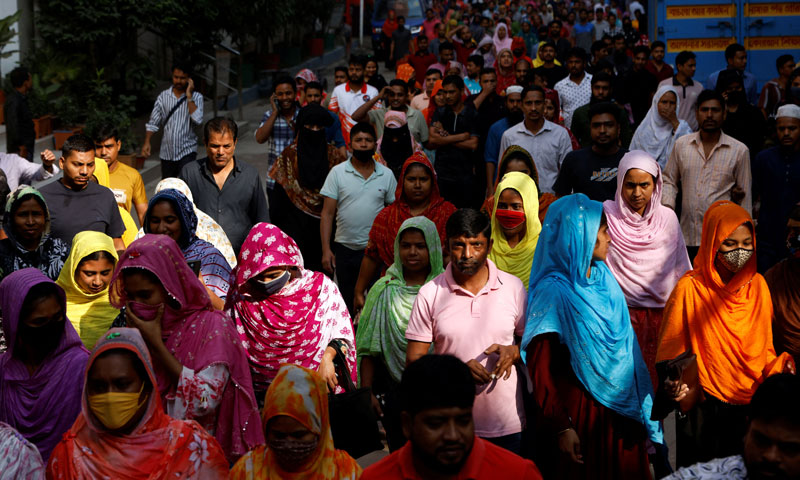
Bangladesh’s garment workers won a 36 per cent minimum wage increase on Wednesday, officials said, after weeks of sometimes violent protests causing hundreds of millions of dollars in business losses.
The South Asian nation, the world’s second-biggest garment exporter behind China, has seen widespread demonstrations since October by workers demanding higher pay.
The garment industry, which clothes millions of consumers across Europe and North America, is Bangladesh’s economic lifeline, generating four-fifths of export earnings and employing more than four million people.
After the deal was struck following lengthy negotiations with factory owners, workers’ representatives urged people to return to factories.
“Although we are not completely satisfied, the outcome is not entirely bad either,” Babul Akhter, the labour representative on a wage board set up to resolve the crisis, told reporters.
“Previously, workers used to get a wage revision every five years, but this time they are getting a revised wage after three years.”
On Wednesday, several hundred protesters set up barricades in the industrial zone of Gazipur, on the outskirts of the capital Dhaka, before being dispersed by police using tear gas and stun grenades, witnesses told AFP.
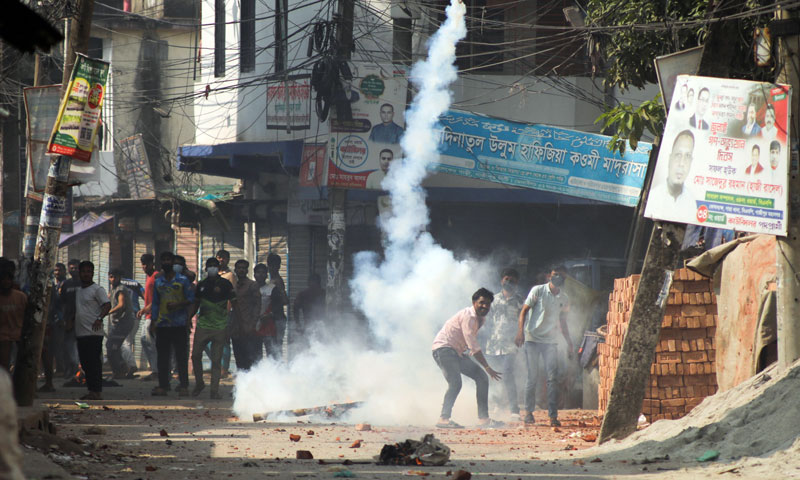
A protester throws back a tear gas shell towards the security forces following the announcement of a new minimum wage for garment workers in Gazipur, Bangladesh, November 25, 2026. — REUTERS
Police official Md Amzad Hossain said officers were “trying to keep things under control”.
Workers initially demanded a minimum monthly wage of 30,000 taka ($240), up from 12,500 taka.
They say their pay has failed to keep pace with the rising cost of food, housing, transport and health care.
Judge Syed Azad Subhani, the chairman of the government-appointed garment industry wage board, said the “majority supported a minimum wage of 17,000 taka”, after a vote early Wednesday.
The wage hike will take effect in January.
‘Export engine’
The Bangladesh Garment Manufacturers and Exporters Association (BGMEA) said on Sunday that protests had cost the industry an estimated $428 million in losses, while orders worth $254 million had shifted to other countries.
The disruption came ahead of the busy Christmas season.
The garment industry, which supplies major international brands including Fruit of the Loom and Levi Strauss, earns around $38 billion a year.
Bangladesh supplies more than 150 countries with ready-made garments, according to the BGMEA, which represents around 4,000 factories.
The United States is its biggest individual market, while the European Union is its largest trading bloc.
When Bangladesh won independence from Pakistan in 1971, it was among the world’s poorest countries.
The expansion of garment production helped transform the nation of around 170 million people from a predominantly agricultural economy into a major global manufacturing hub.
Bangladesh’s central bank calls the garment sector the “country’s export engine”.
But its success has been built on a vast, relatively low-paid workforce, with longstanding disputes over wages, working conditions and labour rights.
The 2013 Rana Plaza factory collapse, which killed more than 1,100 people and injured thousands, exposed appalling safety conditions in the industry, with workers employed in dangerous buildings and often lacking adequate labour protections.
The disaster prompted major international efforts to improve workplace standards, including an agreement between global clothing brands and trade unions to inspect factories and enforce safety measures.
You May Also Like