
- WEB DESK
- September 13, 2026
Beijing’s balancing act: Xi courts Trump while brokering Iran peace
-

- Sadia Basharat
- April 17, 2026
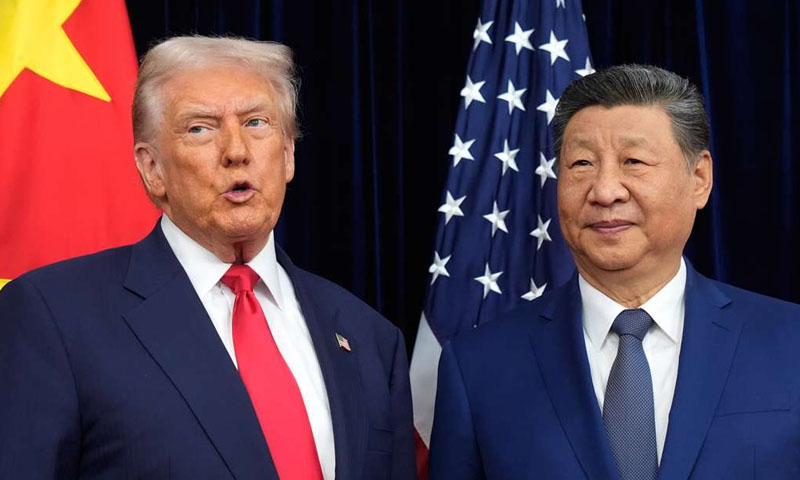
WEB DESK: Beijing is intensifying its diplomatic efforts to mediate in the Iran conflict, navigating a delicate balance between its energy interests in Tehran and a desire for a smooth summit with US President Donald Trump next month.
As the world’s largest crude oil importer, China remains heavily reliant on the Middle East for half of its fuel supplies, making the stability of the region a matter of national security for President Xi Jinping, according to the Express Tribune.
Xi’s peace plan and the ‘transactional’ summit
President Xi recently broke his silence on the escalating crisis by unveiling a four-point peace plan, which emphasises national sovereignty and the international rule of law.
This diplomatic push comes as Beijing prepares to host Donald Trump on 14 and 15 May the first visit by a US president in eight years.
Analysts suggest that China is adopting a “modulated” approach, avoiding direct condemnation of US military actions to ensure the summit remains on track.
By positioning itself as a back-channel mediator, Beijing has already earned public credit from Trump for helping bring Iran to recent peace talks in Pakistan.
The upcoming meeting is expected to be transactional in nature. Sources familiar with Beijing’s thinking indicate that China may offer significant “sweeteners” to the US President, including record-breaking orders for Boeing aircraft and substantial agricultural purchases.
In exchange, Beijing hopes to secure strategic stability regarding trade and its claims over Taiwan, focusing on immediate economic concessions rather than broader, more complex issues like AI governance or manufacturing overcapacity.
Strategic limits and the role of ‘theatre’
Despite the flurry of activity including nearly 30 high-level calls by Foreign Minister Wang Yi and a regional tour by special envoy Zhai Jun some observers remain sceptical of China’s true influence.
While Iran has reportedly asked Beijing to act as a guarantor for a ceasefire, experts note that China lacks the military presence in the Middle East to enforce such an agreement.
This has led some, including Patricia Kim of the Brookings Institution, to describe the diplomacy as more “theatre” than statecraft, suggesting Beijing is content to let Washington bear the primary pressure of the conflict.
Ultimately, China’s goal appears to be the maintenance of a “modus vivendi” with the United States while protecting its “no-strings-attached” relationships with anti-Western allies.
By keeping the summit’s focus narrow and economic, President Xi aims to “butter up” his American counterpart, ensuring that even as the war in the Middle East drags on, the bilateral relationship between the world’s two largest economies remains functional.
You May Also Like


- WEB DESK
- September 13, 2026
Maryam Nawaz’s daughter Mahnoor Safdar ties the knot at Jati Umra

- WEB DESK
- September 13, 2026
Mahira Khan reveals pregnancy, expecting second child
- WEB DESK
- September 13, 2026