- Aasiya Niaz
- 34 Minutes ago
Ben McDermott and the accidental captaincy that fits Hobart’s new reality
-

- Web Desk
- Jan 23, 2026
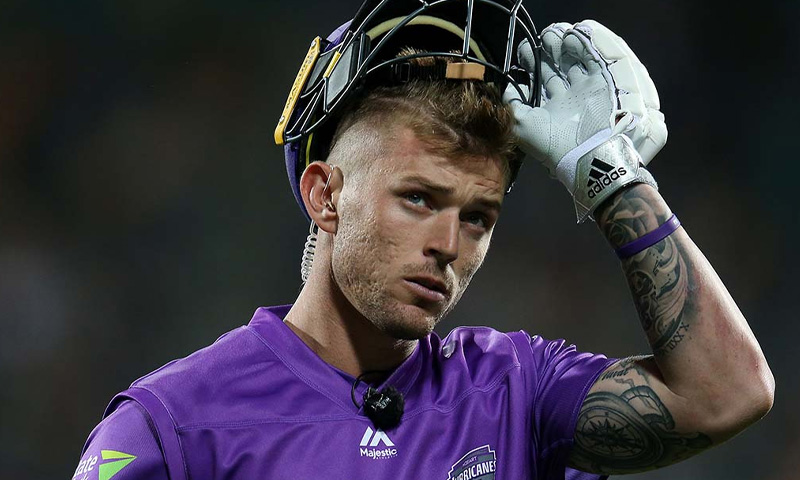
Ben McDermott was never meant to captain Hobart Hurricanes in a BBL finals series. Not like this, not now, and not with the defending champions suddenly stripped of their captain and strike bowler on the eve of the Challenger.
Yet when Nathan Ellis’ hamstring finally refused to cooperate, it was McDermott — the club’s longest-serving Hurricane, its most adaptable batter, and its quiet cultural constant — who found himself holding the reins at the most volatile point of the season.
It is an irony that suits both player and club.
Hobart’s transformation from perennial underachievers to champions has been built on rethinking roles, challenging old hierarchies and leaning into flexibility. McDermott’s own career arc mirrors that shift almost perfectly. Once defined as an opener and little else, he is now Hurricanes’ most shape-shifting asset – a middle-order stabiliser, power hitter, occasional wicketkeeper and, suddenly, finals captain.
Ellis’ absence is a significant blow. He is the Hurricanes’ leading wicket-taker and emotional tone-setter, and his calm under pressure has been central to their late-season resilience. But the decision to hand the captaincy to McDermott is less about seniority and more about continuity. In a side that has learned to win by absorbing chaos, McDermott represents institutional memory.
He has been there through the lean years, the near misses and the moments when Hobart found inventive ways not to win finals. He also hit the ball that finally ended that history — the ramp over fine leg that sealed the club’s maiden BBL title last summer. In many ways, McDermott has already captained Hobart through moments, if not officially through matches.
What makes this moment particularly compelling is that McDermott is leading without being the team’s focal point. Hurricanes’ batting revolution has been powered by Mitchell Owen’s explosive promotion and Tim David’s brute force finishing. McDermott, once the face of their batting, now operates in the margins between chaos and control – exactly the space a finals captain often inhabits.
His move down the order last season was not a demotion but an education. Batting at four or five forced him to read situations rather than impose himself blindly. It demanded restraint, clarity and the ability to switch gears instantly. Those same skills now underpin his leadership, especially with Ellis unavailable and uncertainty surrounding other senior figures.
There is also something quietly liberating about McDermott’s current career phase. By stepping away from a state contract and embracing the freelance circuit, he removed the constant selection anxiety that once hovered over his domestic performances. The result has been a calmer, more rounded T20 cricketer – one less obsessed with making statements and more comfortable making decisions.
That clarity matters in finals cricket, where leadership is less about speeches and more about small calls: when to hold back a bowler, when to take a risk in the field, when to absorb pressure rather than escalate it. McDermott’s value has increasingly lived in those subtleties.
For all the talk about his fading international prospects, this BBL finals run offers McDermott something arguably more rare – the chance to define a club era. Back-to-back titles would not just validate Hobart’s tactical evolution but cement a core group who learned how to win together after years of failing publicly.
McDermott stands at the centre of that group, even if he no longer dominates the highlight reels.
If Hurricanes do manage to defend their title without Ellis, it will be remembered as a triumph of depth and adaptability. It may also be remembered as the moment Ben McDermott stopped being a versatile contributor and became something more enduring: a leader shaped by compromise, patience and timing.
He did not seek this captaincy. He grew into it. And for a Hurricanes side built on reinvention, that feels entirely on brand.
You May Also Like