Berlin calls for urgent overhaul as Europe lags behind China’s pace
-

- Web Desk
- Feb 13, 2026
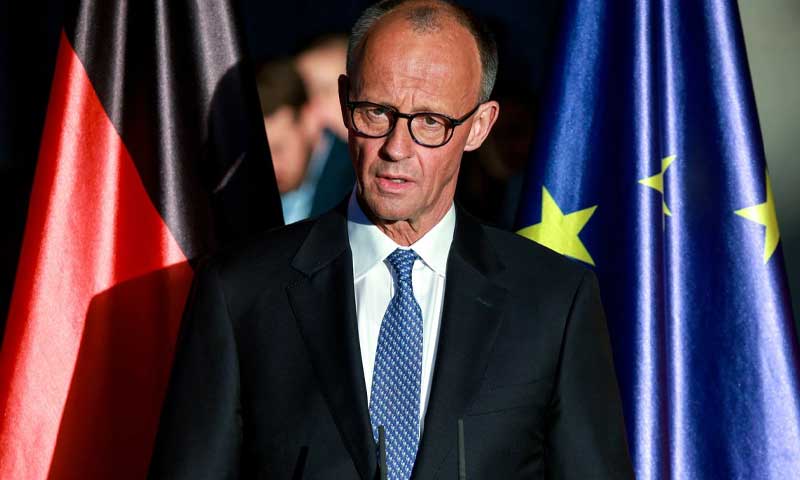
WEB DESK: In a bold address that has sparked widespread debate across Europe, German Chancellor Friedrich Merz sharply criticised the European Union’s bureaucratic hurdles, using China’s rapid infrastructure projects as a stark point of comparison. Speaking at the European Industry Summit in Antwerp on February 11, Merz warned that overregulation is hampering the bloc’s economic competitiveness, climate ambitions, and energy security.
‘China speed’ vs EU delays
Merz highlighted a striking example: China routinely completes the world’s largest solar farms within months, while similar projects in the EU can take years to gain approval. “China builds the world’s largest solar farms within a few months. In the EU, it takes years just for the project to get approved,” he said, emphasising that excessive red tape is a self-imposed barrier to progress.
The Chancellor argued that this “China Speed” results not only from resources but from a fundamentally more efficient approach to permitting and execution. He described the EU’s current system as suffering from “analysis paralysis,” warning that Europe risks falling behind in the global race for green energy and industrial leadership.
Radical reform: automatic approval
To tackle the problem, Merz proposed a sweeping reform: introducing a principle of automatic approval for most permitting processes. Any project not reviewed or decided upon within a few weeks or months would be deemed approved by default often called “silent consent” or “tacit approval.”
“Therefore, I propose to implement a fundamental principle in most permitting processes: any project that is not treated within a few weeks or months will be regarded as approved automatically,” Merz said. This “use it or lose it” mechanism, he added, would compel authorities to act promptly or relinquish their veto power, prioritising urgent infrastructure such as renewables.
Broader agenda: deregulation and competitiveness
Merz framed his remarks within a wider plan to revitalise Europe’s economy amid stiff competition from the US and China. He outlined three priorities: cutting red tape, strengthening the Single Market, and pursuing an ambitious free trade strategy. The speech coincided with ongoing EU discussions in Belgium, where leaders pledged to accelerate reforms, curb over-implementation of EU rules, and boost industrial resilience.
Industry leaders at the summit echoed Merz’s concerns, pointing to high energy costs, regulatory burdens, and subsidised Chinese imports as threats to European manufacturing.
Global reactions
Merz’s call for efficiency has resonated internationally, particularly in the Global South, where countries such as Pakistan seek rapid energy transitions without prolonged approval processes. Analysts see his stance as a pragmatic shift towards competitiveness, though critics warn of potential risks to public consultation and standards.
“We cannot afford to spend years debating what China achieves in months,” Merz urged, signalling Germany’s intent to champion a more agile, deregulated EU. As the bloc prepares follow-up measures in March 2026, his “China Speed” challenge could define Europe’s industrial strategy for years to come.
You May Also Like