
- Web
- 4 Hours ago
Beyond paper mulberry: WWF raises alarm over Islamabad’s tree felling
-

- Sanam Tanzeel
- Jan 16, 2026
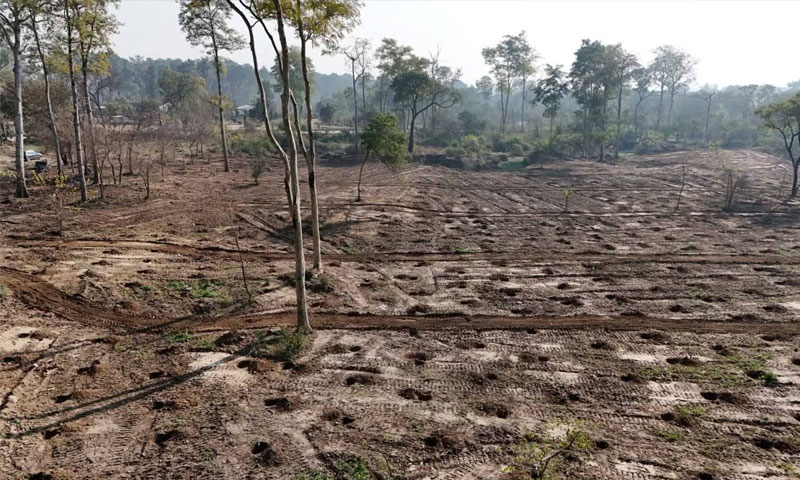
ISLAMABAD: For weeks, recent tree felling in Islamabad has been explained as a measure against paper mulberry trees, allergies, and compliance with court orders. Authorities insist the actions were necessary to protect public health.
But according to a recent field assessment by WWF Pakistan, the reality is far more complex, and far more concerning. Speaking to Hum News, WWF Director of Forests Muhammad Ibrahim Khan made several important revelations.
“Our field assessment shows that tree removal in Islamabad has not been limited to invasive paper mulberry,” said Ibrahim.
“In several locations, native species such as chir pine, phulai, kikar, siris, amaltas, and indigenous shrubs have also been cut or damaged. This has occurred across multiple sites, including Shakarparian, the H-8 Islamabad Expressway corridor, and areas near the National Institute of Health along the Margalla Link Road, indicating a scale of clearance that goes beyond targeted allergy control,” he added.
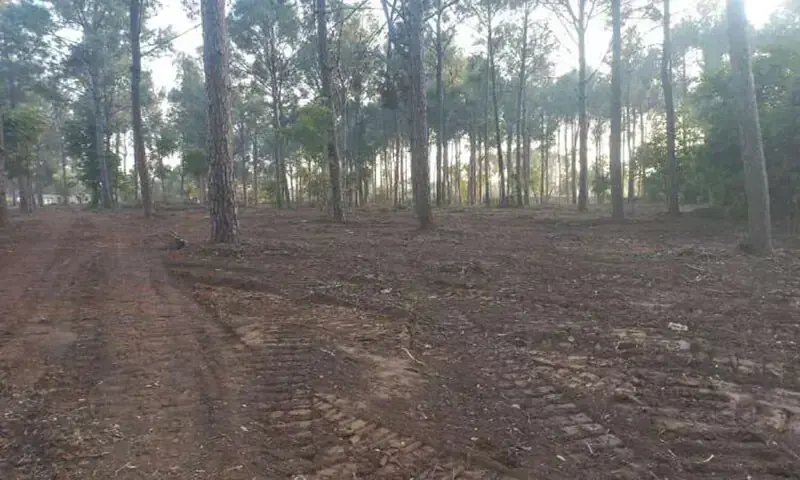
Field observations further revealed that heavy machinery is being used for tree removal, disturbing soil and damaging native ground vegetation. “A more effective approach would involve selective removal, minimal soil disturbance, reseeding and planting of native trees, shrubs, and bushes, mulching for ground protection, and the introduction of fast-growing native competitors such as common mulberry (shahtoot) to prevent reinvasion and restore ecological balance,” Ibrahim explained.
In Shakarparian, large swaths of greenery have already been cleared. Land near the Islamabad Expressway is being prepared for a proposed memorial, while 10 to 15 hectares along the Margalla Enclave Link Road have lost their vegetation. Forested areas surrounding the Lok Virsa Museum and other national heritage sites have also been affected, with little evidence of ecological restoration.
According to official figures, nearly 30,000 trees have been cut in Islamabad alone. It is important to mention here that nationwide, Pakistan loses roughly 11,000 hectares of forest each year, driven by land-use change, infrastructure expansion, weak enforcement, fuelwood dependence, and climate-induced degradation. “With only about 5 percent forest cover, the country is far below what is needed for ecological stability,” Ibrahim said.
WWF-Pakistan is urging urgent action by scaling up native-species restoration, protecting remaining natural forests, integrating nature-based solutions into development planning, and strengthening forest governance and monitoring. Without these measures, continued forest loss threatens climate resilience, water security, and public well-being.
As Islamabad’s concrete jungles expand, the city’s once-thriving green spaces face a stark future. The question is whether urban development can ever coexist with environmental protection, or if these vital forests will vanish without a trace.
You May Also Like