
- WEB DESK
- August 31, 2026
Body of Pakistani climber Asma Mushtaq recovered from Spantik Peak
-

- WEB DESK
- August 31, 2026
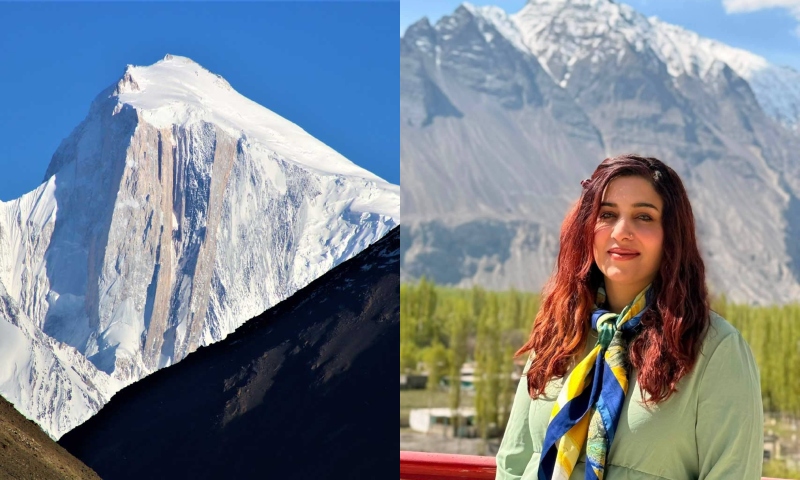
GILGIT: A recovery team retrieved the body of Pakistani climber Asma Mushtaq from Spantik Peak in Gilgit-Baltistan on Monday, 10 days after she died while descending the 7,027-metre mountain, the Alpine Club of Pakistan (ACP) said.
Asma Mushtaq, 34, died on August 20 after developing a serious high-altitude medical emergency at about 6,400 metres during her descent from the summit, according to the ACP.
ACP Secretary General Ayaz Shigri said that a team of climbers from Shigar launched a fresh recovery operation on Friday after earlier attempts were unsuccessful because of heavy snowfall.
The team began its operation at about 3 am on Monday and located Mushtaq’s body near Camp 3, at an altitude of approximately 6,250 metres, after about eight hours of searching, Shigri told Dawn.
The body was expected to be brought to Camp 2 before being transported to the base camp. Pakistan Army helicopters were expected to airlift it to Skardu once it reached the base camp.
The recovery mission was carried out by climbers from Arandu in Shigar on a self-funded basis. Abbas Ali led the operation, with Mehboob, Hussain Ali, Mazahir Hussain, Mehboob Ali and Muhammad Abidin taking part, Shigri said.
Mushtaq had been part of a five-member Pakistani women’s expedition that successfully summited Spantik. The other climbers were Zoni Aslam, Zaba Shigri, Shama and Sohana.
The ACP said Mushtaq was in good health when she reached the summit but developed a serious high-altitude illness while descending.
High-altitude sickness is caused by a lack of oxygen at high elevations and can include potentially fatal conditions affecting the brain and lungs.
Recovering bodies from peaks above 6,000 metres is considered particularly difficult and dangerous because of extreme weather, altitude and terrain. In some cases, bodies are left on the mountain and eventually covered by snow.
Weather conditions in the Karakoram have also become increasingly challenging for mountaineers, with shifting weather patterns and avalanche risks disrupting climbing expeditions in the region.
In 2021, Pakistani climber Sajid Sadpara buried the body of his father, renowned mountaineer Muhammad Ali Sadpara, at around 8,000 metres on K2 after his death during an expedition.
Spantik climbing season
Spantik, commonly known as Golden Peak, is a 7,027-metre mountain in the Karakoram range and is one of Pakistan’s prominent mountaineering destinations.
Mushtaq had successfully reached its summit before falling ill during the descent.
Her death comes during the summer climbing season in Pakistan, when local and international mountaineers attempt some of the country’s highest peaks.