- Web Desk
- 1 Hour ago
Bombing of Tehran intensifies; more tankers come under attack in Gulf waters
-

- Web Desk
- 4 Minutes ago
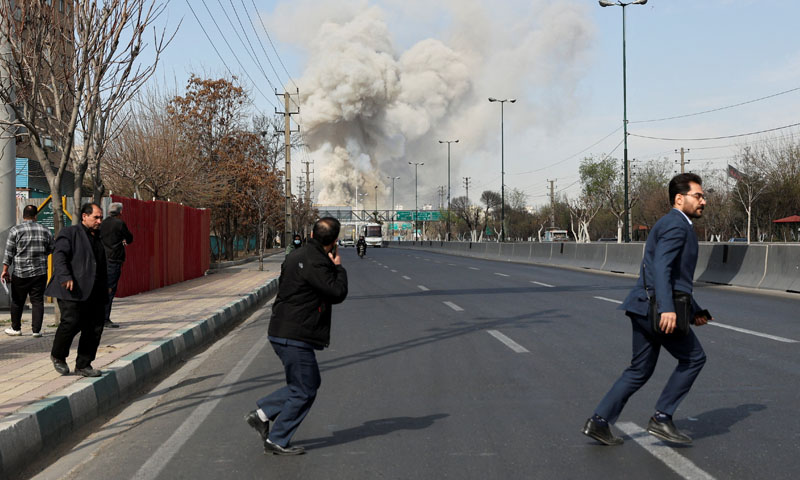
DUBAI/JERUSALEM: The US-Israeli military campaign against Iran entered its sixth day on Thursday as residents in Tehran reported intensified bombing, while Iran vowed to retaliate after a US attack sank one of its warships thousands of miles away from the main conflict zone.
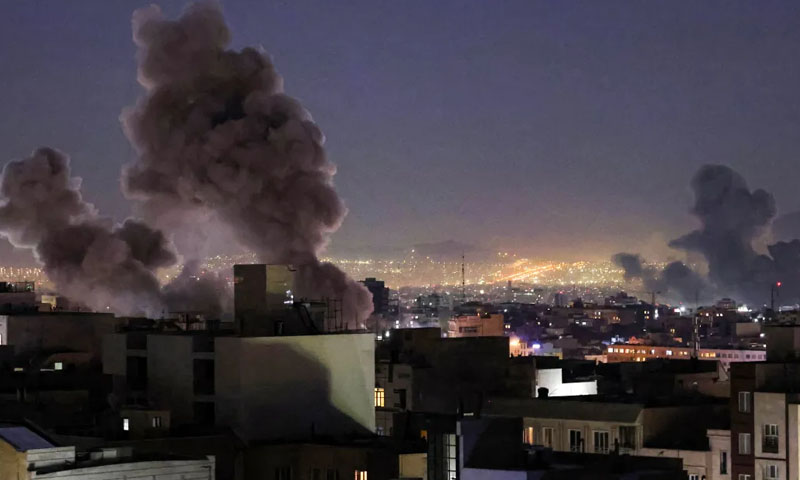
Residents in the Iranian capital described the latest wave of strikes as the heaviest so far, with explosions heard across several parts of the city.
“Today is worse than yesterday. They are striking northern Tehran. We have nowhere to go. It feels like a war zone,” said Mohammadreza, a 36-year-old resident who spoke by phone as explosions echoed in the background.
Israel said the attacks were part of a new wave of strikes targeting Iranian government and military infrastructure.
Iran vows retaliation
Iran vowed revenge after the United States sank an Iranian warship near Sri Lanka on Wednesday in a torpedo attack that reportedly killed more than 80 sailors.
Iran’s foreign minister Abbas Araghchi warned that Washington would “bitterly regret” the attack, accusing the US of targeting a vessel in international waters without warning.
A senior commander of the Islamic Revolutionary Guard Corps, General Kioumars Heydari, said Iran had decided to confront American forces wherever they are.
“We have decided to fight Americans wherever they are,” he said on state television.
Mourning for Khamenei postponed
Meanwhile, Iranian authorities abruptly postponed a planned three-day mourning period for the country’s slain Supreme Leader Ali Khamenei.
Khamenei was killed in the opening hours of the US-Israeli air campaign, marking the first time a country’s top ruler has been assassinated in an airstrike.
His body was due to lie in state in a Tehran prayer hall beginning Wednesday evening, with thousands of mourners expected to gather in the streets.
However, the ceremony was suddenly postponed indefinitely shortly before it was scheduled to begin.
Officials did not publicly explain the decision, but a source told Reuters that security concerns were a major factor, with fears that Israeli or US forces could target the gathering.
Succession questions emerge
The delay also disrupted what appeared to be plans to quickly appoint Khamenei’s successor.
Iranian officials had earlier suggested they were close to naming a new leader, with Khamenei’s son Mojtaba Khamenei widely seen as the leading candidate.
His appointment would have been a strong show of defiance during the mourning period, when large crowds typically gather in public ceremonies for Shiite religious and political leaders.
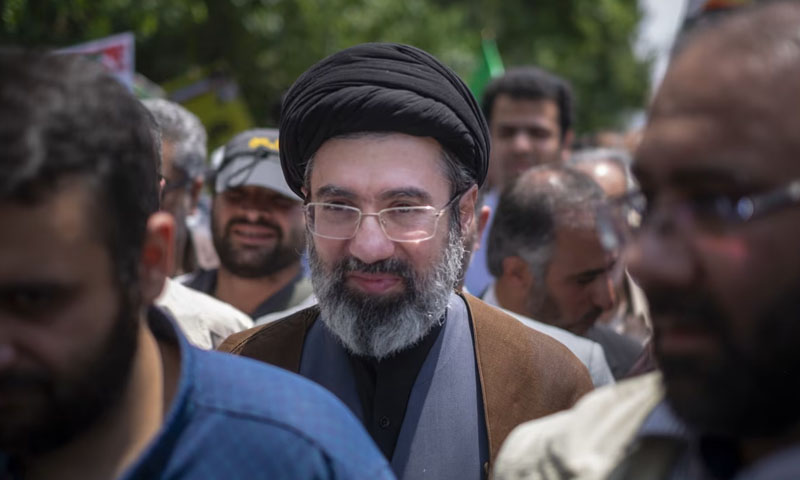
However, Israel has warned that any successor continuing hostile policies toward Israel would also be considered a target.
Israel prepares second phase of strikes
Two sources familiar with Israeli military planning said Israel is preparing to enter a second phase of its campaign.
After targeting senior Iranian leaders during nearly a week of airstrikes, Israel is expected to focus next on underground bunkers where Iran stores ballistic missiles.
Israeli officials say their goal is to weaken Iran’s military capabilities and bring down the country’s clerical leadership.
The United States says its objective is to prevent Iran from projecting military power beyond its borders, although Washington has also called on Iranians to challenge their government.
Iranian state TV hacked
Amid the escalating conflict, Iran’s state television was briefly hacked on Thursday, broadcasting a video message by Reza Pahlavi, the exiled son of Iran’s last shah.
Pahlavi, a prominent opposition figure, called on Iranians to continue their struggle against the ruling system.
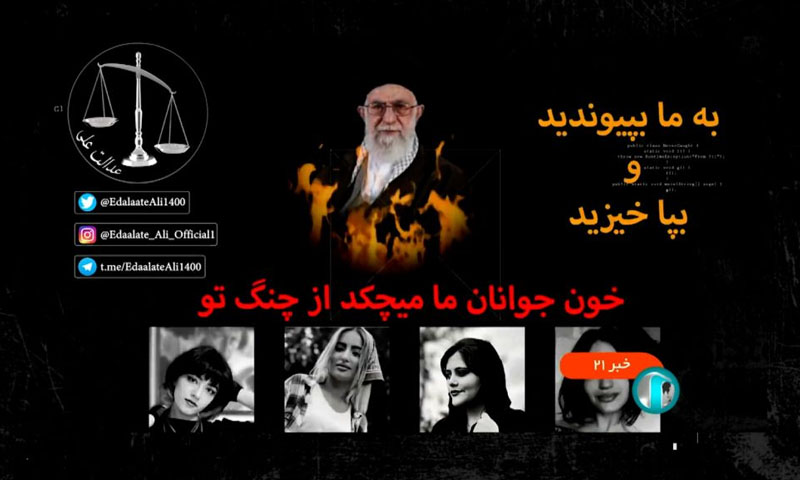
“A heavy burden of destiny rests upon the shoulders of us all. Together we will walk this path until final victory,” he said in the broadcast.
Mixed reaction inside Iran
Some Iranians celebrated Khamenei’s death, particularly after a recent crackdown in which security forces killed thousands of anti-government protesters during the worst unrest since the Iranian Revolution of 1979.
A 25-year-old woman in Tehran who requested anonymity said many government opponents were unable to protest openly while the country was under attack.
However, she said people were sharing videos online celebrating the death of the supreme leader.
“If Mojtaba takes over, he will be killed as well, so we are not concerned about it,” she said.
Missile threat continues
In Israel, air raid sirens sounded again on Thursday as Iranian missiles were fired toward Israeli territory.
Israeli military spokesman Effie Defrin said the number of daily missile launches from Iran had declined, but the threat remained.
“The more we damage their capabilities and destroy launchers, the more the threat will diminish over time,” he said.
Strait of Hormuz tensions
The conflict is also disrupting global energy markets, particularly shipping through the Strait of Hormuz, a vital route through which roughly one-fifth of the world’s oil and liquefied natural gas supplies pass.
Iran’s Revolutionary Guards said they had struck a US tanker in the northern Gulf and that the vessel was on fire.
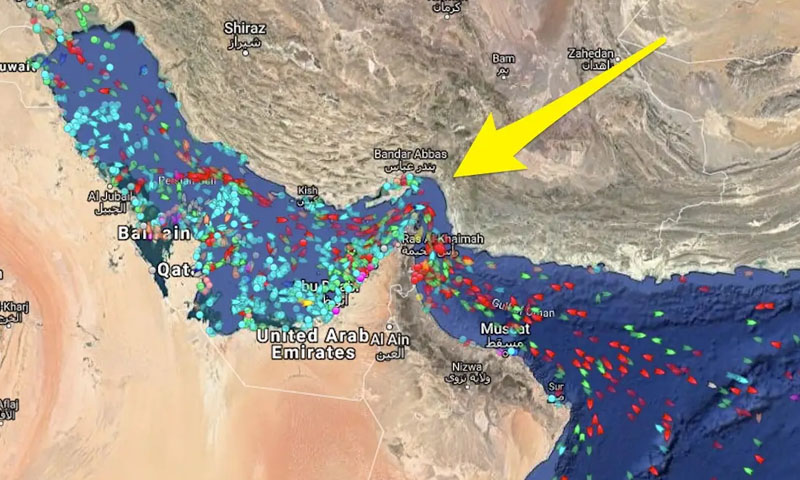
The Guards warned that passage through the strait would now be under Iranian control.
Drone incident reported
Meanwhile, Azerbaijan said four Iranian drones had crossed its border and injured four people.
Officials in Baku said they were preparing a response, although Iran denied responsibility for the incident.
The widening conflict has already shaken global financial markets and raised fears that the war could expand further across the region.
Several oil tankers came under attack in Gulf waters on Thursday as the escalating conflict between the United States and Iran threatened to disrupt global energy supplies and spread instability to other oil-producing nations.
According to shipping sources, a Bahamas-flagged crude oil tanker was targeted by an Iranian remote-controlled boat carrying explosives while anchored near Iraq’s Khor al Zubair port.
A second tanker anchored off Kuwait was reported to be taking on water and spilling oil after a powerful explosion struck the vessel’s port side.
The latest incidents bring the total number of vessels attacked since the conflict erupted between the United States, Israel and Iran on Saturday to nine.
The escalation follows renewed Iranian missile strikes against Israel earlier on Thursday, along with drone incursions into Azerbaijan, where authorities said four people were injured.
Shipping routes disrupted
Shipping data shows that around 200 vessels — including oil tankers, liquefied natural gas carriers and cargo ships — remain anchored off the coast of major Gulf producers as the crisis continues.
According to estimates based on tracking data from MarineTraffic, hundreds of additional vessels are waiting outside the Strait of Hormuz, unable to enter Gulf ports.
The strait is one of the world’s most critical energy routes, handling roughly one-fifth of global oil and LNG supplies.
US proposes naval escorts
US President Donald Trump has offered naval escorts for commercial vessels and insurance support in an effort to restore shipping flows and stabilise energy prices.
Insurance giant Lloyd’s of London said it was in discussions with the US government regarding possible arrangements to insure ships operating in the region.
Oil infrastructure affected
Energy infrastructure across the Gulf has also begun to feel the impact of the escalating conflict.
Energy major BP evacuated foreign staff from Iraq’s Rumaila oil field after two unidentified drones landed within the facility, according to Iraqi oil officials.
Authorities in Baghdad said Iraq had cut its oil production by nearly 1.5 million barrels per day after storage facilities filled up and tankers were unable to load cargo.
Elsewhere in the Gulf, one refinery in Kuwait was forced to shut down while another reduced its processing capacity. A refinery in Bahrain also cut its output amid the growing security concerns.
Oil and gas prices surge
Global energy prices have surged as the conflict disrupts supplies from the Middle East.
Oil prices rose about 2 per cent on Thursday, bringing total gains to roughly 15 per cent since the war began last Saturday following US-Israeli strikes on Iran.
European benchmark gas prices also climbed about 2 per cent on Thursday and have surged nearly 50 per cent this week.
Russian President Vladimir Putin warned that Russia could halt gas exports to Europe if tensions continue to escalate, potentially worsening the continent’s energy crisis.
LNG supply concerns
Energy markets were further shaken earlier this week after Qatar, which supplies about 20 per cent of the world’s liquefied natural gas, halted gas production due to the conflict.
Industry analysts say other major LNG producers such as the United States and Australia have limited spare capacity to replace the lost supply.
The disruption is likely to complicate the European Union’s efforts to refill its gas storage ahead of winter.
The bloc still imports some Russian gas but plans to phase out pipeline supplies by late 2027 and ban new short-term LNG contracts beginning in April 2026.
Asian buyers under pressure
Asian energy markets are also feeling the strain from the supply disruptions.
According to sources familiar with the matter, authorities in China have asked domestic refiners not to sign new fuel export contracts and to try to cancel shipments that have already been scheduled.
Analysts say the growing uncertainty in energy markets reflects fears that the conflict could expand further and significantly disrupt global oil and gas trade.