
- Reuters
- October 16, 2026
Budget 2026-27: Govt announces some relief for salaried class, slashes income tax rates across slabs
-

- Zoya Anwer
- June 12, 2026
By Muhammad Faizan Khan, Saba Bajeer, Farah Mahjabeen, Javed Soomro and Muhammad Zareef
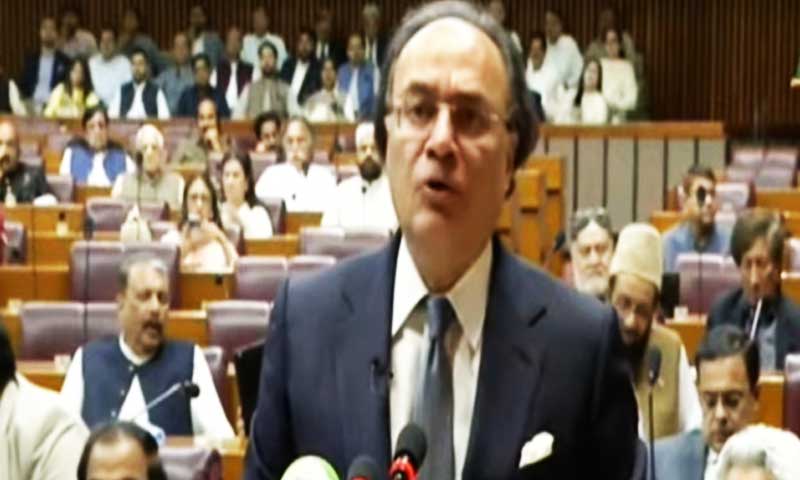
ISLAMABAD: Finance Minister Muhammad Aurangzeb presented Pakistan’s Rs17.5 trillion national budget for the fiscal year 2026–27 in parliament on Friday amid loud protests and sloganeering from opposition lawmakers belonging to the Pakistan Tehreek-e-Insaf (PTI). National Assembly Speaker Ayaz Sadiq is chairing the session. He asked the finance minister to begin his speech despite continued disruptions and shouting from PTI members. The session is being attended by Prime Minister Shehbaz Sharif, federal cabinet ministers, and members of the treasury benches. The budget saw a considerable delay as Pakistan People’s Party (PPP) opted for a partial boycott but following an intervention by Deputy Prime Minister Ishaq Dar and Law Minister Azam Nazir Tarar, Bilawal agreed to attend the session.
Addressing the session, Aurangzeb said the new fiscal budget had been prepared in the aftermath of Operation Bunyan Marsoos, highlighting what he described as the resilience of Pakistan’s armed forces amid external security challenges. Addressing Parliament during the budget presentation, he said, “Our brave forces responded in a manner that forced the enemy to halt its aggression,” adding that strong defence capability remains essential for the country. He also noted that Pakistan’s defence manufacturing sector had gained international recognition, claiming that locally produced fighter jets are now in global demand.
Tax relief for salaried class
Speaking about tax relief, he said the rate for individuals earning between Rs2.2 million and Rs3.2 million annually had been cut from 23 per cent to 20 per cent, adding that “this adjustment is aimed at providing meaningful relief to middle-income earners.”
For those earning between Rs3.2 million and Rs4.1 million, he said the tax rate had been reduced from 30 per cent to 25 per cent, while the rate for incomes between Rs4.1 million and Rs5.6 million had been brought down from 35 per cent to 29 per cent.
Aurangzeb said the tax rate for individuals earning between Rs5.6 million and Rs7 million had also been reduced from 35 per cent to 32 per cent.
Calculate your salary tax here
He further announced that the government had abolished a long-standing surcharge on the salaried class, describing it as part of efforts to simplify the tax structure.
The finance minister said, “We have also rationalised business taxation,” adding that the super tax on businesses earning between Rs150 million and Rs500 million annually had been removed. He said the rate for companies earning above Rs500 million had been reduced from 10 per cent to 8 per cent.
Aurangzeb also said the tax on property transfers had been reduced from 2.5 per cent to 1.25 per cent, calling it a step towards easing transaction costs in the real estate sector.
Housing, agriculture and regional development
The government has also proposed abolishing the super tax on businesses earning between Rs15 million and Rs50 million.
The minister said the tax on contraceptive products under the family planning programme would be removed. BISP coverage will be expanded to 12 million families, with Rs838 billion allocated for the programme in the next fiscal year.
The “Apna Ghar Housing Scheme” has been allocated Rs71 billion, while Rs88 billion have been proposed under the Export Finance Scheme to support exports.
Customs duty has been removed on more than 100 raw materials used in medicines for cancer and other serious diseases.
Under an agriculture financing initiative, Rs300 billion in digital loans will be provided to small farmers while a simplified fixed tax regime is being proposed for small traders.
For regional development, Rs146 billion have been allocated for Azad Jammu and Kashmir and Rs88 billion for Gilgit-Baltistan. An additional Rs95 billion has been proposed for development projects in the newly merged districts of Khyber Pakhtunkhwa.
Defence and administration spending
He said the defence budget has been set at Rs3 trillion, reflecting the government’s focus on national security requirements. The finance minister added that pension expenditure for retired government employees is estimated at Rs1.169 trillion, while Rs1.071 trillion has been allocated for civil administration expenses.
Social initiatives
Aurangzeb said subsidies for electricity and other sectors had been set at Rs1.091 trillion, while the Public Sector Development Programme (PSDP) would receive Rs1.1 trillion for federal development projects. He added that grants worth Rs2.68 trillion had been earmarked for the Benazir Income Support Programme (BISP), Azad Jammu and Kashmir, Gilgit-Baltistan and the former tribal districts.
Announcing relief measures, the finance minister said, “We are proposing a seven per cent increase in salaries for government employees and a seven per cent increase in pensions for retirees.” He added that the minimum monthly wage had been raised by 10 per cent and that Rs128 billion had been allocated to provide relief on petrol and diesel.
The minister said the budget also proposes a substantial reduction in income tax rates for salaried individuals and the complete abolition of a long-standing surcharge on the salaried class. He added that the government had proposed eliminating the super tax on businesses earning between Rs15 million and Rs50 million annually.
Aurangzeb further announced the removal of tax on contraceptive products under the family planning programme and said BISP coverage would be expanded to 12 million families, with Rs838 billion allocated for the programme in the next fiscal year.
Highlighting development initiatives, he said Rs71 billion had been allocated for the Apna Ghar Housing Scheme, while Rs88 billion had been earmarked under the Export Finance Scheme to support exporters. Customs duty on more than 100 raw materials used in medicines for cancer and other serious diseases has also been abolished.
He said Rs300 billion in digital loans would be provided to small farmers under a new agriculture financing initiative, while a simplified fixed tax regime was being proposed for small traders. For regional development, Rs146 billion has been allocated for Azad Jammu and Kashmir, Rs88 billion for Gilgit-Baltistan and an additional Rs95 billion for development projects in the newly merged districts of Khyber Pakhtunkhwa.
Technology-driven tax enforcement
Aurangzeb said that structural reforms in tax administration were beginning to yield tangible results.
He said a production monitoring system, supported by central dashboards, video analytics and tampering alerts, had been introduced. Aurangzeb said the system had been implemented in 27 cement factories and 75 sugar mills.
He said the initiative was expected to generate around Rs61 billion in additional annual tax revenue from the two sectors alone.The finance minister said an artificial intelligence and machine learning-based compliance risk management system had identified more than 840 high-risk cases so far.
The finance minister said these cases were expected to have a tax impact of around Rs34 billion.
He said that, similarly, the government had reduced direct interaction between importers and customs officers through a faceless customs assessment system. He said the system had not only increased revenue per consignment but also reduced opportunities for harassment and bribery.
Saudi Arabia, diplomacy and energy security
Aurangzeb further expressed gratitude to Saudi Arabia, calling it a long-standing ally and saying Pakistan “stands firmly with the Kingdom under our strategic defence partnership.” He said the country had supported Pakistan through difficult phases of economic recovery.
Separately, the finance minister said Pakistan’s diplomatic efforts played a key role in ensuring the continued security of the Strait of Hormuz during a recent regional crisis. He also stated that Pakistan’s foreign policy is based on cooperation and global partnership, adding, “Pakistan believes in strengthening international collaboration and constructive engagement.”
He also said that while global oil market volatility had forced the government to jack up domestic petrol and diesel prices, it continued to provide crucial subsidies to shield the public from the full impact.
Aurangzeb stated that due to prudent government policies and efficient supply management, the country successfully avoided any fuel shortages, ensuring that no long queues of vehicles were seen outside filling stations during the energy crisis.
Economy posts strongest growth in four years
The finance minister said, “Industrial growth has improved to over 3.5 per cent, and the interest rate has come down to 11.50 per cent,” adding that Pakistan’s economy has grown 3.7 per cent in the current fiscal year despite flood-related damages and the impact of the US-Iran conflict.
Echoing June 11’s session he said that large-scale manufacturing expanded by 6.1 per cent during the fiscal year, while the services sector posted growth of 4.1 per cent noting that growth in both sectors was at a four-year high. He further stated, “The size of the economy has reached USD452 billion, marking a new milestone, while per capita income has risen to USD1,901 from USD1,751 last year, driven by GDP expansion.”
He also said that the policy rate has declined significantly over the past two years, falling from 22 per cent to 11.5 per cent.
Fiscal stability improves
Pakistan had increased its tax-to-GDP ratio by around two percentage points over the past three years, adding that these measures had led to “visible improvements in fiscal stability.”
He said the fiscal deficit had declined to 4 per cent of GDP from 7.8 per cent in June 2023, while the primary balance had also improved significantly. “Pakistan has moved from a primary deficit of 0.7 per cent of GDP two years ago to a surplus of 1.6 per cent in the current fiscal year,” he noted, calling it an improvement of 2.3 percentage points.
On inflation, the finance minister said it had dropped sharply from 23.4 per cent last year to 4.5 per cent, adding that average inflation was expected to remain around 7 per cent this fiscal year despite external shocks, including the US-Iran conflict. He cautioned, however, that price pressures had recently re-emerged due to geopolitical tensions, though they were expected to ease once conditions stabilise.
Global confidence returns
Aurangzeb said Pakistan’s improved economic and fiscal stability had strengthened the confidence of global financial institutions. He noted that Moody’s, Fitch and S&P had upgraded Pakistan’s sovereign ratings, reflecting better macroeconomic indicators. He added that this renewed confidence had enabled Pakistan to return to international bond markets in 2022 after several years.
He said Pakistan successfully issued a USD750 million Eurobond, its first in four years, with strong investor demand despite global uncertainty. “This momentum continued recently with Pakistan’s first Panda bond,” he said, noting that demand was five times higher than the issue size and it was priced at a 2.5 per cent coupon rate, marking Pakistan’s entry into China’s onshore debt market.
Aurangzeb said per capita income had risen to around USD1,902, calling it a reflection of continued macroeconomic improvement. He added that inflationary pressures could rise in the short term due to the US-Iran conflict, but said, “price stability will improve once geopolitical tensions ease.”
Investor confidence and digital economy
He said Pakistan had returned to international bond markets in 2022 after a long gap, while investor participation in the stock market had also increased significantly. Aurangzeb noted that the number of investors at the Pakistan Stock Exchange had risen by 173,000 over the past year, with a “large share of new entrants being young investors.”
The finance minister said more than 25,000 technology professionals had secured jobs, reflecting growth in the country’s digital economy. He said privatisation efforts were continuing, pointing to the successful sale of PIA after earlier reforms such as the privatisation of First Women Bank, and added that “further state-owned enterprises will be privatised as part of ongoing reforms.”
Aurangzeb said broad-based reforms were under way at the Federal Board of Revenue (FBR) to improve tax administration. He added that corporate sector performance had strengthened, which had positively impacted the stock market, noting that listed companies posted 22 per cent higher profits in January–March 2026 compared to the same period last year, while overall corporate profits rose 9 per cent during the first nine months of the fiscal year.
He said 11 initial public offerings (IPOs) had been launched so far this year, the highest in two decades, and added that around 39,000 new companies were registered with the Securities and Exchange Commission of Pakistan (SECP). He also noted that more than 250 firms had begun operations in government-established technology zones, creating over 25,000 jobs, saying these trends reflected “growing investor confidence in Pakistan’s business environment.”
Privatisation drive
The finance minister said he had pledged in the same house last year to give practical shape to the long-delayed privatisation agenda.
He said he was pleased to report that the commitment had now been fulfilled and was no longer just a promise. He said the process began with the privatisation of First Women Bank and was followed on December 23, 2025, when Pakistan International Airlines (PIA) was handed over to the private sector for a total of Rs185 billion through a transparent and live-streamed auction.
Finance Minister also assured that the government was pursuing a five-year privatisation plan under which several state-owned entities would be transferred to the private sector, including distribution companies (DISCOs), generation companies (GENCOs), banks, insurance firms and airports. He said, “Expressions of interest have already been issued for the first batch involving three DISCOs.”
Aurangzeb recalled that he had promised in Parliament last year to implement the long-delayed privatisation agenda, saying he was now “pleased to report that the pledge has been fulfilled and is no longer just a promise but a reality.” He noted that the process began with the privatisation of First Women Bank, followed by the transfer of Pakistan International Airlines (PIA) to the private sector on December 23, 2025, for Rs185 billion through what he described as a transparent and publicly broadcast auction.
FBR reforms gain momentum
The finance minister said reforms at the Federal Board of Revenue (FBR) had so far delivered encouraging results. He said FBR’s annual tax collection stood at Rs7,200 billion in fiscal year 2022–23 and was projected to more than double over the next three years, reaching Rs13 trillion by the end of the current fiscal year. He described this as “one of the most significant improvements in Pakistan’s recent fiscal history,” adding that it represented a structural transformation of the tax system.
Aurangzeb said the reform agenda was being driven under the leadership of Prime Minister Shehbaz Sharif.
He said the total size of the federal budget for the next fiscal year has been set at Rs18.771 trillion, adding that it reflects the government’s broader fiscal framework and spending priorities.
The finance minister said the Federal Board of Revenue’s (FBR) tax collection target has been set at Rs15.264 trillion, while non-tax revenue is estimated at Rs5.336 trillion. He further said federal net income has been projected at Rs11.751 trillion.
Aurangzeb said Rs8.848 trillion has been allocated for transfers to provinces, while Rs13.35 trillion has been earmarked for federal and provincial revenue-sharing arrangements.
Inflation had declined over the past two years
Prior to this, addressing the cabinet, Prime Minister Shehbaz Sharif said the budget had been prepared with great effort and sincerity, adding that the welfare of the people of Pakistan had been given top priority.
He reiterated the commitment to addressing terrorism in the country, adding that in line with IMF requirements, efforts had been made to stabilise an economy that had been facing fluctuations over several years and to broaden the country’s development path. He said, “I understand that these measures have caused difficulties for the common man,” adding that he wanted to thank the 240 million people of Pakistan for enduring inflation.
The PM noted that inflation had declined over the past two years from around 38 percent to nearly single digits, although external pressures, particularly global oil prices, had contributed to renewed challenges. He also highlighted that the policy rate had been reduced from 22.5 per cent to 11.5 per cent, saying further reductions were expected, though “global and regional factors continue to create difficulties.”
The prime minister said the government had maintained macroeconomic stability despite challenges and expressed hope that the upcoming budget would help revive economic activity. “We believe that with collective effort, the wheel of the economy will start moving more effectively,” he said.
He stressed that development could not be achieved without security and strong defence, and called for investment in dams and indigenous energy resources, including solar and wind power. He said, “These projects require financial resources,” adding that extensive consultations had been held over the past one and a half months with provinces, including Punjab and Sindh, over additional funding.
He thanked Nawaz Sharif and Chief Minister Maryam Nawaz, saying, “We have taken on board all legitimate provincial requirements.” He also thanked President Zardari, PPP Chairman Bilawal Bhutto Zardari as well as CM KP Sohail Afridi for their input for the budget.
I want to thank my entire team for this achievement, as well as the Federal Government and Provincial Governments for their support. I am also grateful to Muhammad Aurangzeb, Ahsan Iqbal, Rana Sanaullah, and all ministers, secretaries, and the Defence Minister for their contributions.
I request you all to give them a big round of applause for their efforts.
We successfully engaged with the IMF, and I personally connected with the Managing Director, who appreciated our progress. He also discussed his recent visit to China, including areas of cooperation such as CPEC 2.0, agriculture, mining, the Karakoram Highway, and government-to-government (G2G) initiatives.
On the approval of this budget, we also took all stakeholders on board, including the PPP, which supported us, as well as MQM, Aleem Khan, and Mir Khalid Murshid.
PPP opts against budget boycott, Bilawal to skip session
The Pakistan People’s Party (PPP) has decided not to boycott the upcoming federal budget session, party sources said on Friday, though its top leadership will be visibly absent from the high-profile parliamentary sitting. According to sources, PPP Chairman Bilawal Bhutto-Zardari will not attend the session. Instead, the party has decided to send a few lawmakers to represent the party during the budget presentation.
Meanwhile, Deputy Prime Minister and Foreign Minister Ishaq Dar held a high-stakes meeting with PPP Chairman Bilawal Bhutto-Zardari on Friday in a bid to convince him to attend the federal budget session, sources familiar with the matter said.
Following the meeting, Dar went straight to the Prime Minister’s chamber to brief Prime Minister Shehbaz Sharif on the discussions.
Despite the high-level push within the ruling coalition, it could not be immediately confirmed whether Bilawal would attend the session.
The decision followed a high-level party meeting held to deliberate on the PPP’s strategy regarding the fiscal budget. While skipping a full-scale boycott, PPP lawmakers plan to use the parliamentary floor to register a strong protest against federal policies.
PPP attending members are expected to carry placards highlighting acute water scarcity issues in Sindh, a key political stronghold for the party. The strategic move allows the critical coalition partner to formally lodge its grievances over regional resource distribution without completely stalling legislative proceedings.
Possibility of increment in government employees salaries
The federal cabinet on Friday approved an increase in the salaries of government employees in the new fiscal budget, according to sources familiar with the matter. The cabinet has approved a proposed seven per cent raise in salaries for public sector servants, the sources added.
Federal Minister for Industries and Production and National Food Security and Research, Rana Tanveer Hussain confirmed the development following the cabinet meeting.
Earlier developments
PM Shehbaz Sharif had summoned the budget speech, according to sources, with the address sent to the cabinet meeting for review. Sources said some adjustments to the speech are possible following certain demands raised by cabinet members.
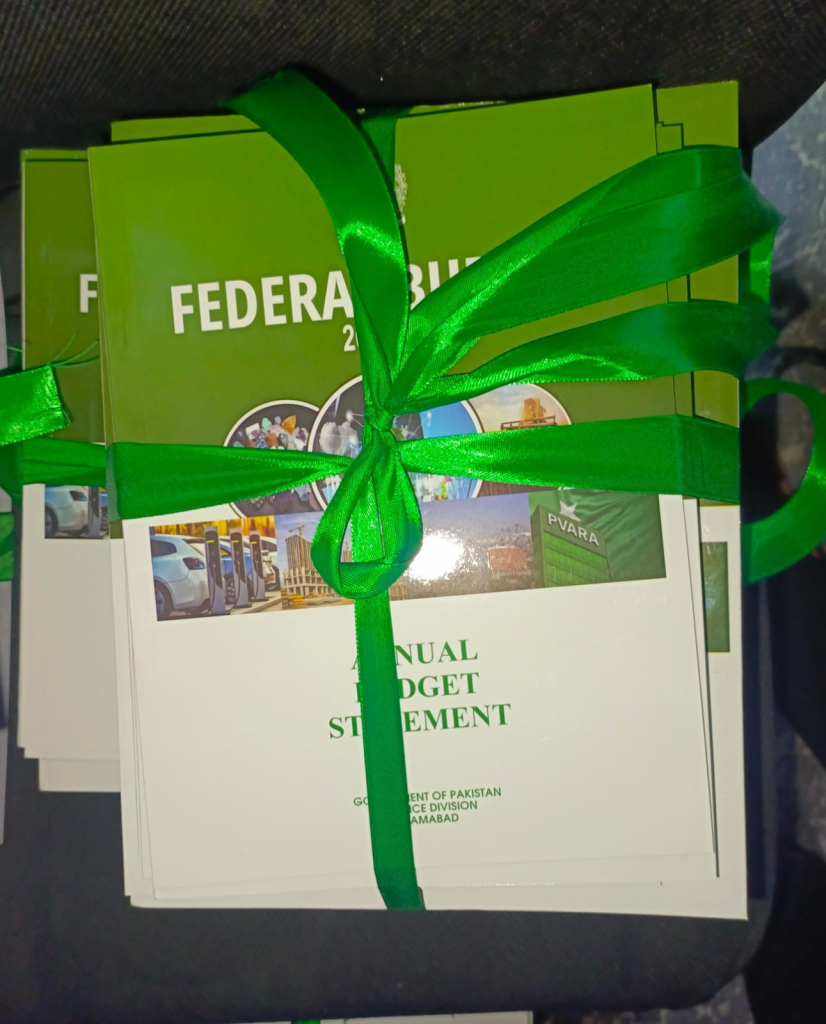
Prior to this the cabinet approved the budget documents and the draft Finance Bill 2026, according to sources, while proposals regarding increases in salaries and pensions of government employees are under consideration. PM Sharif said that the budget has been prepared with great effort and sincerity, adding that the welfare of Pakistan’s people has been given top priority.
Aurangzeb appeared cheery as he assured the media personnel that all would be well as a question regarding taxation was put forward.
Govt likely to raise salaries, prioritise infrastructure and energy projects in FY2026-27 budget
The federal government is expected to announce a salary increase for public sector employees and unveil a development-focused spending plan in the budget for fiscal year 2026-27, according to sources and budget documents seen by HUM News.
Sources said government employees’ salaries are likely to be increased in two phases, with lower-grade employees receiving greater relief. Employees in Grades 1 to 16 are expected to receive a larger increase, while those in Grades 17 to 22 may see a comparatively smaller raise.
The proposed budget places significant emphasis on infrastructure development, particularly road networks, energy projects and water resources. Among the largest allocations is Rs100 billion for the N-25 highway project in Balochistan. The government is also expected to earmark Rs30 billion for the Sukkur-Hyderabad Motorway and Rs25 billion for the ML-1 railway project.
Other major allocations include Rs25 billion for the Sindh Coastal Highway, Rs21 billion for the Mehran Highway, Rs26 billion for the Mohmand Dam Hydropower Project and Rs21 billion for the Dasu Hydropower Project. The Karachi Bulk Water Supply project is expected to receive Rs10 billion, while Rs22 billion has been proposed for the construction of Daanish Schools and Rs3 billion for the Prime Minister’s National Health Programme.
Budget documents indicate the government will seek to boost industrial and economic activity through a series of ambitious targets. Twenty-three offshore oil and gas exploration blocks are expected to be operationalised during the next fiscal year, while the fleet of the Pakistan National Shipping Corporation is planned to be expanded to 30 vessels.
The government has reportedly set a manufacturing growth target of 5.7 per cent, with large-scale manufacturing expected to grow by five per cent. IT exports are projected to reach $7.3 billion, while around 7,500 jobs are expected to be created in the sector. Plans also include establishing 637 small industrial units and planting 11.3 million trees nationwide.
In the power and water sectors, the government aims to add 3,787 megawatts of electricity generation capacity to the national grid. Proposed allocations include Rs151 billion for the power sector and Rs74.92 billion for water resources under the Public Sector Development Programme.
The annual plan for FY2026-27 is expected to target four per cent GDP growth, 3.8 per cent growth in agriculture and 4.5 per cent growth in industry. Inflation is projected at 8.2 per cent, while exports are targeted at $32.9 billion and remittances at $42.4 billion.
Government employees protest ahead of budget
Earlier, government employees began gathering at Pak Secretariat Chowk in Islamabad, from where they plan to march towards Parliament House after participants arrive from all provinces. The protesters, who have been staging a sit-in outside the Ministry of Finance for the past two days, vowed to continue their demonstration until their demands are met.
The agitation, led by the All Government Employees Grand Alliance (AggiGA), has drawn workers from multiple departments, with organisers saying the movement will continue outside Parliament until assurances are provided.
The protesters are also calling for the merger of ad-hoc relief allowances into basic pay, a revised pay scale structure, and a 50 per cent salary increase for employees earning below Rs50,000. Other demands include a 200pc increase in allowances, withdrawal of pension reforms, continuation of the existing pension system, and a 30pc disparity reduction allowance. They are also seeking abolition of the 25pc tax slab for teachers and researchers, regularisation of contract staff, restoration of jobs for families of deceased employees, and a minimum wage of Rs50,000.
Arrivals
Chairman PPP Bilawal Bhutto also arrived at the Parliament and earlier Defence Minister Khawaja Asif, Railways Minister Hanif Abbasi and Adviser to the Prime Minister Nadeem Afzal Chan among others arrived at Parliament House on Friday ahead of the presentation of the federal budget for the fiscal year 2026-2027 by Finance Minister Muhammad Aurangzeb.
Meanwhile, the Ministry of Finance submitted the federal budget documents to Parliament House, completing a key procedural step before the budget is unveiled in the National Assembly.
In an informal conversation, Rana Sanaullah said that government employees’ salaries would be increased by 7 to 10 per cent.
What are the experts saying?
The budget comes after several revisions to the government’s legislative schedule and follows consultations with coalition partners and provincial governments on fiscal priorities, resource distribution and revenue targets.
Ahead of the budget, the Pakistan Economic Survey 2025–26 reported GDP growth of 3.7 per cent in the outgoing fiscal year, an improvement from 3.18pc last year but below the 4.2pc target. The survey attributed the growth to improved macroeconomic management, stronger fiscal indicators, a recovery in large-scale manufacturing, resilience in the agricultural sector after the 2025 floods, exchange rate stability and reforms implemented under the IMF programme.
Meanwhile, the National Economic Council approved a Rs3.669 trillion national development outlay for FY2026–27 and set a GDP growth target of 4pc. The package includes Rs1 trillion for the federal Public Sector Development Programme, Rs2.218tr for provincial development schemes, Rs451 billion for state-owned enterprises and Rs838bn in foreign assistance. The budget speech is also expected to unveil new tax measures and possible relief for salaried individuals.
Aurangzeb outlined a broad package of reforms and incentives aimed at boosting exports, energy security, technology adoption and youth employment, while pledging to increase revenue through enforcement rather than new taxes.
He said Pakistan’s youthful population remained one of its greatest assets, with 67 per cent of citizens under the age of 30.
He said more than 515,000 young people had received technical training under the Prime Minister’s Youth Skills Development Programme, with 53 per cent securing employment. Under the Prime Minister’s Youth Business and Agriculture Loan Scheme, Rd258 billion had been disbursed since January 2023, benefiting more than 534,000 young people.
The minister said the government had abolished the 0.25 per cent export development surcharge on export income and reduced the markup rate under the Export Finance Scheme from 19 per cent to 4.5 per cent. The facilitation period under the Export Facilitation Scheme had been extended from nine months to 18 months.
Under the National Tariff Policy 2025-30, tariffs had been reduced on 7,500 tariff lines in the first year alone, he said. Duty-free imports of textile and apparel machinery had also been allowed, leading to a 21 per cent increase in machinery imports and benefits exceeding 120 billion rupees for businesses.
Energy sector reforms
Aurangzeb said the government had achieved savings of more than 143 billion rupees compared with budgeted energy subsidies during fiscal year 2025-26.
Negotiations with independent power producers (IPPs) had resulted in measures expected to save nearly 3.7 trillion rupees, he said.
The minister announced the formal launch of the Competitive Trading Bilateral Contract Market (CTBCM), with the first competitive electricity auction for 800 megawatts scheduled for September 2026.
He said a direct subsidy mechanism would be introduced from January 2027, while all subsidised consumers were being registered.
Pakistan achieved net-zero accumulation of circular debt in the power sector during the current fiscal year and made progress on the settlement of 1.225 trillion rupees in circular debt stock, Aurangzeb said.
He said that renegotiations of long-term LNG agreements with Qatar and Italy had reduced 35 LNG cargoes for 2026, generating foreign exchange savings of $1.2 billion.
Oil, gas and mining
The minister said consumer gas tariffs had remained unchanged over the past 11 months.
Since March 2026, local companies had added 100 million cubic feet per day (mmcfd) of gas to the national network, ensuring uninterrupted supply to 10 fertiliser plants.
Pakistan had awarded 24 offshore licensing blocks to international exploration and production companies for the first time in two decades, with participation from Türkiye’s state-owned oil company TPAO, he said.
The finance minister said that investment in the exploration and production sector was expected to exceed $1 billion during fiscal year 2025-26.
Aurangzeb said 17 new oil and gas discoveries had been made during the year, increasing domestic production by 108 mmcfd of gas and 16,000 barrels of oil per day. Additional production gains had contributed another 229 mmcfd of gas and 13,000 barrels of oil per day to the national system.
He said the Reko Diq mining project had crossed major financing and implementation milestones during the year.
Technology and digital economy
The minister said information technology exports were growing at an annual rate of 20 per cent and were expected to reach $4.5 billion this year.
Pakistan successfully auctioned 5G spectrum in March, after which services had been launched in five cities, he said.
The removal of right-of-way charges had expanded fibre connectivity to five million homes, up from two million in 2024, while fibre penetration of telecom towers had increased from 14 per cent to 18 per cent.
Aurangzeb said the government had approved Pakistan’s first National Artificial Intelligence Policy and trained nearly one million young people in information technology and AI-related skills over the past year.
Projects under the Digital Nation Pakistan Act, including a National Digital ID, National Data Exchange Layer and Open Data Ecosystem, had also been launched.
Debt management and investment
The minister said Pakistan’s debt-to-GDP ratio had declined from 75 per cent in 2023 to 68.5 per cent this year.
The government had either repaid early or refinanced Rs4.9 trillion of debt over the past two years, while the average maturity of domestic debt had increased from 2.8 years in 2024 to 3.8 years in May 2026, reducing refinancing risks.
He said telecom companies’ digital wallets were now enabling retail investors to purchase government bonds directly.
The Special Investment Facilitation Council (SIFC) had facilitated investment projects across 12 sectors during the past year. Under the initiative, 6,860 acres of land belonging to Pakistan Steel Mills had been activated as a Special Economic Zone.
Aurangzeb said a Thar coal railway project had been launched with joint financial support from Pakistan Railways and the Sindh government, while the warehousing sector had been granted formal industrial status to lower supply chain costs.
The minister said the government’s priorities for fiscal year 2026-27 included raising productivity, boosting exports, developing agriculture and expanding the information technology sector.
He said revenue growth in the coming year would be driven by stronger enforcement and improved tax compliance rather than additional tax burdens on citizens.
Aurangzeb said the government has abolished customs duty on raw materials used in the local manufacture of medicines for cancer and other diseases as part of the federal budget measures aimed at reducing healthcare costs and encouraging domestic pharmaceutical production.
He said the exemption was intended to support local manufacturers and improve the availability of essential medicines in the country.
Aurangzeb said the government has allocated Rs71 billion for the Prime Minister’s Apna Ghar Housing Scheme in the fiscal year 2026-27 budget.
He said the government had proposed reducing the tax on property transfers for filers from 2.5 per cent to 1.25 per cent to support activity in the real estate sector.
The finance minister also proposed cutting the tax on property purchases from 5.5 per cent to 2.75 per cent as part of broader measures aimed at stimulating investment and easing transaction costs in the housing market.
Privatisation drive gathers pace
Aurangzeb said the government had fulfilled its pledge to revive the long-delayed privatisation agenda, adding that the process had now become a reality rather than a promise.
He said the process began with the privatisation of First Women Bank, followed by the transfer of Pakistan International Airlines (PIA) to the private sector on December 23, 2025 through a transparent auction for 185 billion rupees.
The finance minister said a five-year privatisation plan was under implementation, under which multiple state-owned entities would be handed over to the private sector, including power distribution companies (DISCOs), generation companies (GENCOs), banks, insurance firms and airports.
He said expressions of interest had already been issued for the first batch of three DISCOs.
FBR reforms and tax enforcement gains
Aurangzeb said reforms in the Federal Board of Revenue (FBR) were showing “encouraging results,” adding that tax collection had risen from Rs7.2 trillion in fiscal year 2022-23 to an expected 13 trillion rupees in the current fiscal year.
He said the increase represented a structural shift in the tax system rather than a simple rise in revenues, crediting Prime Minister Shehbaz Sharif for leading the reforms.
The minister said production monitoring systems using dashboards, video analytics and tamper alerts had been deployed across 27 cement factories and 75 sugar mills, generating an estimated 61 billion rupees in additional annual tax revenue.
He said artificial intelligence-based risk management systems had identified more than 840 high-risk cases with a potential tax impact of around 34 billion rupees.
Aurangzeb added that a faceless customs assessment system had reduced direct interaction between importers and customs officials, increasing revenues while also lowering harassment and corruption risks.
Expansion of digital enforcement
He said the production monitoring system would be expanded to additional sectors including textiles, beverages, iron, ghee, edible oil, tyres, paper and board industries, covering a large portion of Pakistan’s formal manufacturing base.
You May Also Like
- WEB DESK
- October 16, 2026
Maryam Nawaz takes aim at Maulana Fazl over PTI support

- Reuters
- October 16, 2026
Tesla unveils flying car with rocket thrusters
- WEB DESK
- October 16, 2026
