- Web
- 3 Hours ago
BYC acts as ‘soft face’ of militant network: Security Agencies
-

- Web Desk
- Jan 11, 2026
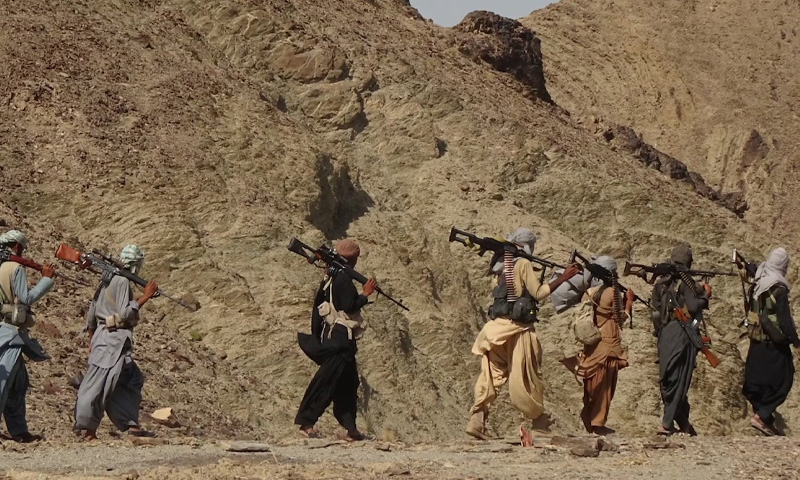
QUETTA: Pakistani law enforcement and security agencies have alleged that the Baloch Yakjehti Committee (BYC) is operating as a “soft face” and support network for armed separatist groups, particularly Fitna-al-Hindustan, according to a series of official briefings and investigations spanning 2025 to early 2026.
Officials say the assessment is not based on speculation but forms part of what they describe as a “continuous official record,” reinforced by recent arrests, confessional statements, and intelligence findings presented by security agencies.
OFFICIAL WARNINGS AND BACKGROUND
Following the March 2025 Jaffar Express train incident, Director General Inter-Services Public Relations (DG ISPR) warned that an organised propaganda campaign was being run through proxy groups to support terrorism in Balochistan. In subsequent press briefings, including one on May 23, 2025, the DG ISPR alleged that the BYC and its leadership were acting as facilitators and proxies for militant networks, using the narrative of enforced disappearances as a systematic tool to influence public opinion.
According to officials, the BYC, led by Mahrang Baloch, was also involved in attempts to forcibly take the bodies of slain militants from hospitals after security operations. Media outlets at the time reported the incident as an alleged effort to obstruct identification and legal procedures. Security officials claim that killings of militants are quickly framed as cases of “missing persons” before identities and affiliations are established.
ARRESTS AND ALLEGED LINKS
In a recent development, Counter Terrorism Department (CTD) officials confirmed the arrest of Sajid Ahmed, a resident of Turbat. According to DIG CTD Aitzaz Goraya, Sajid Ahmed holds a master’s degree in sociology from the International Islamic University Islamabad and has served as a lecturer at the University of Turbat and government colleges.
Investigators allege that Sajid Ahmed maintained close contact with the Baloch Yakjehti Committee while simultaneously facilitating militant networks. CTD officials state that Ahmed admitted to these links in a confessional statement.
DIG CTD also confirmed the arrest of three additional alleged facilitators, stating that each individual involved in intelligence facilitation or terrorism-related activities had prior associations with the BYC.
ALLEGATIONS OF YOUTH RECRUITMENT
Security officials further allege that the BYC has been used as a platform for the initial recruitment of minors. One case cited involves Sarfaraz, an 18-year-old from Kharan, who was allegedly tasked with conducting reconnaissance on police and polio teams. According to DIG CTD, Sarfaraz was first inducted into the BYC, where he participated in protests and road blockades before being recruited by Jahanzeb, also known as Mehrban, aged 20.
Another youth, Bizan, was allegedly recruited through the BYC. Officials say his brother, Shafqat Yar Khad, was killed in an attack on the Levies Force in the Kocha area. DIG CTD said that feelings of loss and deprivation are allegedly exploited to recruit vulnerable youth.
Authorities also claim that, contrary to repeated assertions by Fitna-ul-Hindustan that it does not involve women and children, evidence suggests minors are being drawn into militant activity through social and protest platforms.
GOVT RESPONSE AND EXPERT ASSESSMENTS
To counter what they describe as a growing trend of radicalisation, the government has announced plans to establish rehabilitation centers in Quetta and Turbat. According to CTD officials, these centers will focus on psychological counseling, restoring family contact, and social reintegration.
Security analysts and experts cited by officials argue that the BYC provides what they describe as a “human rights shield,” mobilising rapidly after militant attacks and portraying perpetrators as victims. They further claim that the organisation’s international advocacy, particularly in Europe, reflects external sponsorship and a coordinated strategy.
Experts say that the Jaffar Express incident, DG ISPR briefings in March and May 2025, and CTD’s evidence-based presentations in January 2026 collectively form a consistent official narrative. According to this assessment, the BYC has moved beyond the role of an independent human rights group and is alleged to function as a recruitment channel, narrative platform, and international coordination arm for militant elements.
You May Also Like