- Web Desk
- Mar 18, 2026
Can Bangladesh’s Gen Z recast its democracy?
Bangladesh’s latest general election is not merely a contest between political parties. It is the first national test of a political order reshaped by the 2024 student-led uprising that forced long-time prime minister Sheikh Hasina from office.
The central question is not who wins.
It is whether protest can mature into governance, and whether a youth-driven political rupture can produce institutional stability.
A generation that forced a reckoning
Nearly 28 percent of Bangladesh’s population is between the ages of 15 and 29. It was this demographic that energised the demonstrations of 2024, challenging what many perceived as democratic stagnation, shrinking political space, and electoral manipulation. For this generation, politics is not abstract. It is tied to jobs, mobility, education, and dignity.
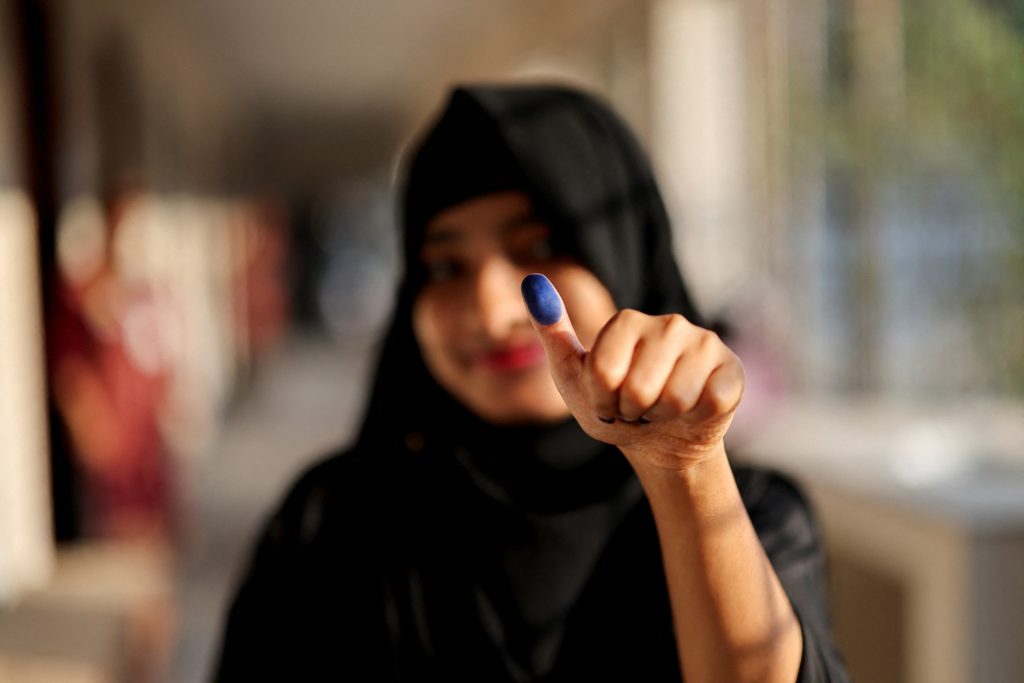
Interviews with first-time voters reflect a consistent theme: the uprising was not simply about removing a leader. It was about resetting the system. Demands range from employment opportunities and infrastructure repair to electoral transparency and institutional accountability.
But revolutions are emotionally coherent in a way elections rarely are. At the ballot box, idealism fragments into competing priorities.
A competitive election — with constraints
This election is widely described as Bangladesh’s first genuinely competitive national contest in over a decade. More than 2,000 candidates are vying for 300 parliamentary seats. Nearly 128 million citizens are registered to vote, almost half of them women. Yet the field remains structurally constrained.
The race is largely between the Bangladesh Nationalist Party and the Islamist Jamaat-e-Islami. Hasina’s Awami League is not contesting the vote, following the suspension of its registration.
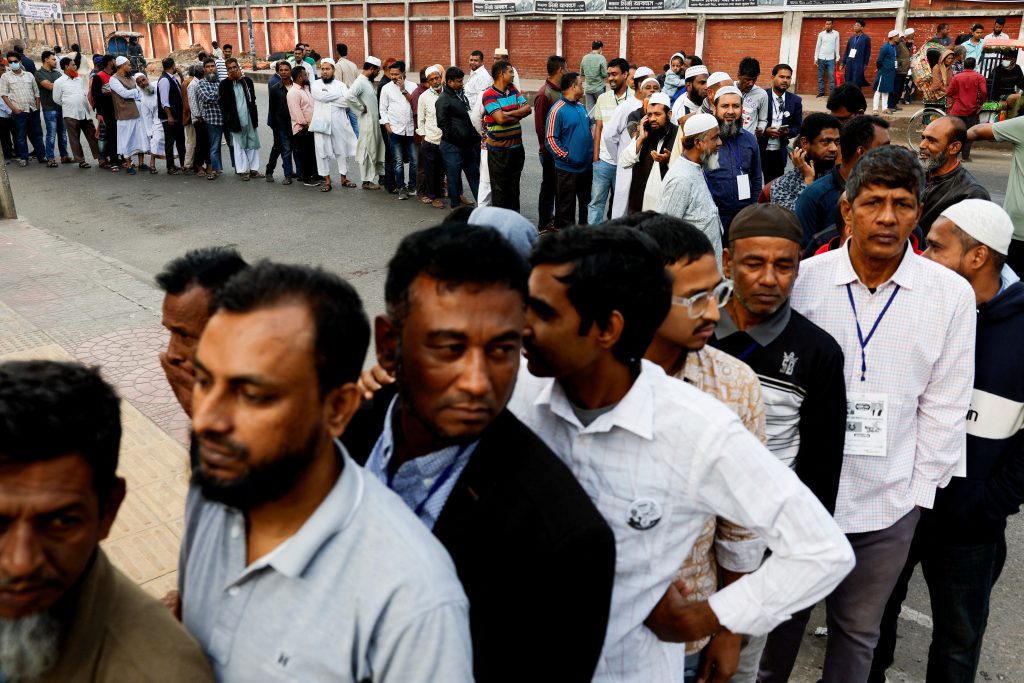
For some voters, this narrowing of ideological space is troubling. Critics argue that while the ballot may be competitive, the spectrum of political alternatives remains limited. The absence of a strong centrist reformist force leaves many young voters choosing between established structures rather than transformative platforms.
In other words, the system has opened — but it has not been rebuilt.
The shadow of security
The heavy deployment of security forces on the eve of voting underscores the fragility of the moment. Ballot boxes were inspected under armed guard. Army patrols were visible across urban centres. Tens of thousands of personnel were deployed to prevent unrest.
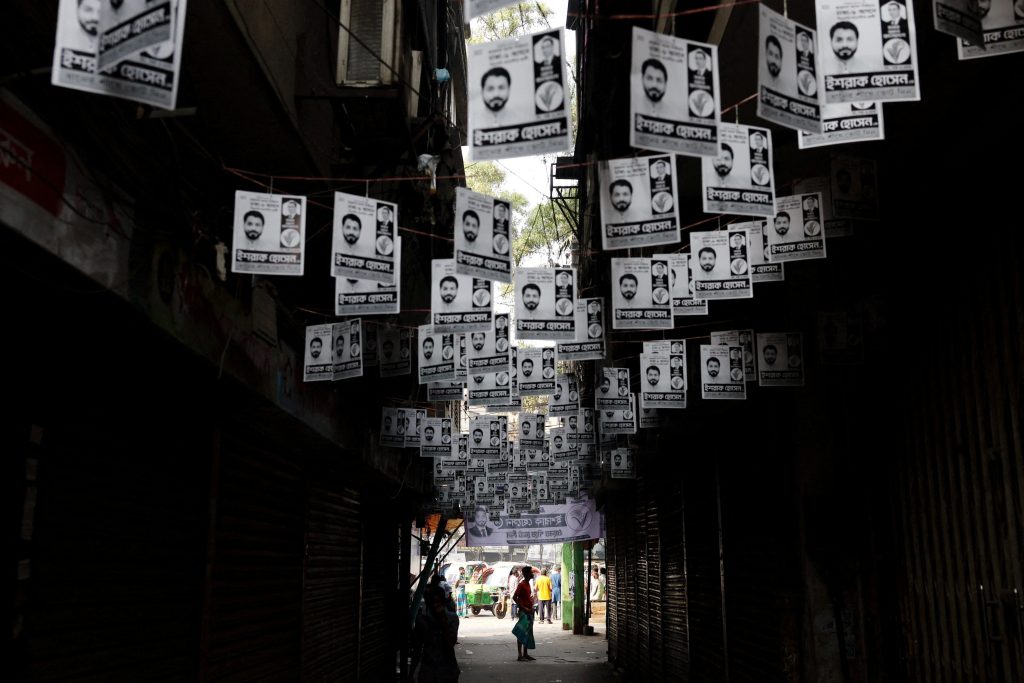
The message was clear: stability is non-negotiable.
For a country that experienced months of disruption after the 2024 protests — including economic strain on key industries — the state is acutely aware that legitimacy now depends on order. Yet excessive securitisation can itself become a reminder of democratic vulnerability. Elections meant to symbolise renewal must also feel safe — not staged.
The referendum within the election
Alongside parliamentary seats, voters are deciding on constitutional reforms: proposals for term limits, stronger judicial independence, structural changes to parliament, and safeguards for electoral neutrality.
These reforms are not cosmetic. They address the very grievances that animated the uprising.
If passed and implemented meaningfully, they could signal an institutional recalibration rather than a mere leadership change. If diluted, they risk reinforcing the cycle that triggered protest in the first place.
From street energy to institutional discipline
Movements thrive on moral clarity. Governance requires compromise. This is perhaps where Bangladesh’s Gen Z faces its most difficult transition. The emotional force that removed a long-standing prime minister must now translate into sustained civic engagement, policy literacy, and tolerance for gradual reform.
Young voters speak of jobs, infrastructure, climate resilience, and political freedom. These are not revolutionary slogans; they are administrative challenges. Delivering them demands bureaucratic competence and long-term planning — not only rhetorical momentum. The danger is not immediate regression. It is disillusionment. If expectations outrun institutional capacity, frustration could return — this time directed not at a single leader, but at the democratic process itself.
A test beyond one election
Bangladesh’s election is ultimately a referendum on democratic durability.
Can a country that experienced political contraction reopen its system without descending into instability?
Can a generation that mobilised through protest sustain its influence through participation?
Can competitive politics coexist with social cohesion?
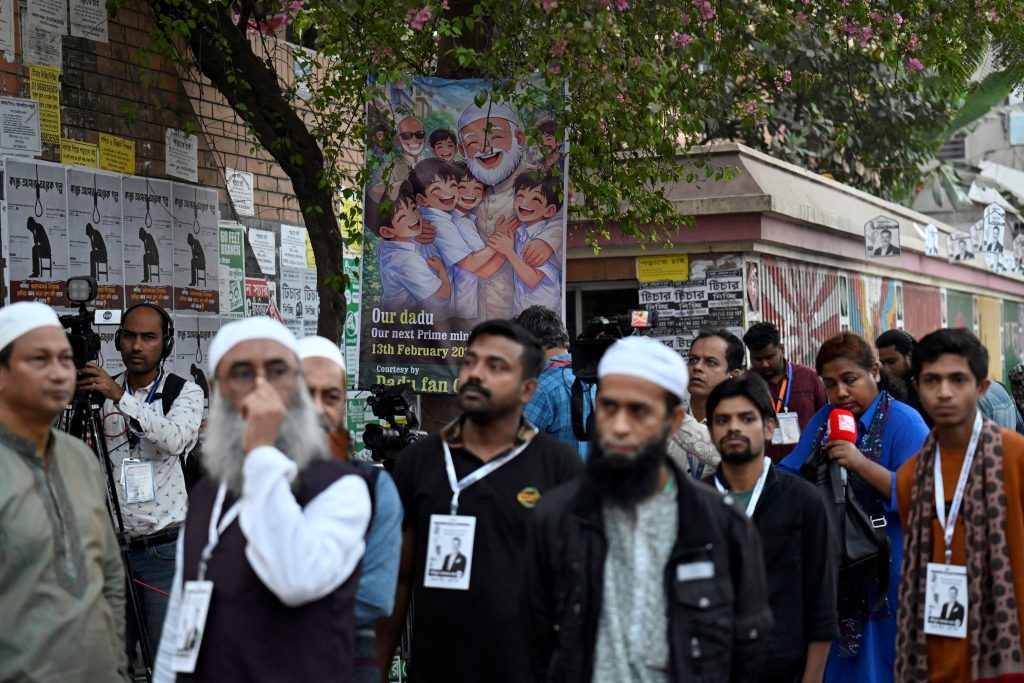
Results are expected shortly. But the deeper verdict will unfold over years.
What began as a youth-driven uprising now confronts the slower, harder work of democratic consolidation.
Whether this moment becomes a genuine reset or merely a transition between elites will define Bangladesh’s political trajectory for the next decade.
The ballot has replaced the barricade.
The question is whether it can carry the same transformative weight.
You May Also Like