- Web
- 4 Hours ago
Can Pakistan escape stagnation? Atif Mian says yes, proposes ‘Five for fifty’
-

- Web Desk
- Dec 11, 2025
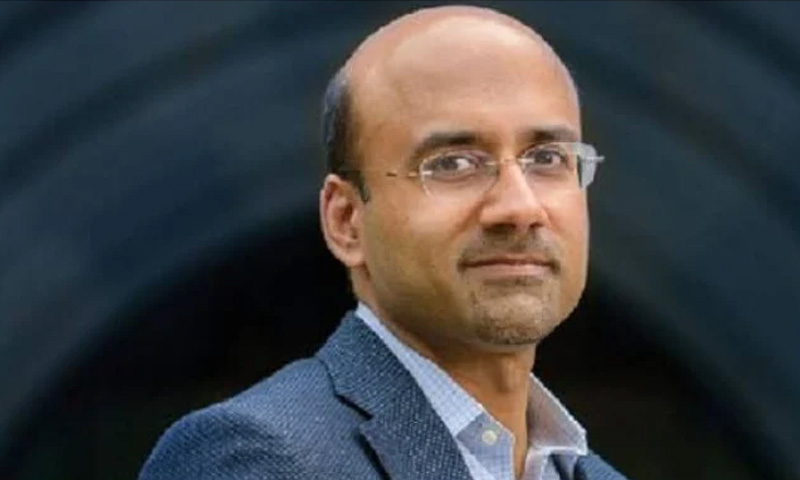
Pakistani-American economist and a Princeton University professor known globally for his work on macroeconomics and development, Atif Mian, has urged Pakistan to embrace a bold, long-term economic transformation anchored in what he calls the “Five-for-Fifty” (5/50) framework.
The proposal, as outlined on his website on Tuesday, sets a strikingly simple yet sweeping target: 5 per cent annual per-capita income growth sustained over 50 years.
According to Mian, achieving such a trajectory would place the average Pakistani on equal income footing with the average global citizen, a milestone he argues is well within reach. He notes that countries like South Korea and China, once comparable to Pakistan in income levels, managed to vault ahead through disciplined, long-run policy commitments. With similar resolve, Pakistan too could “do even better,” he suggests.
Mian describes the 5/50 vision as nothing less than transformative. Had Pakistan followed such a path over the past half-century, he writes, the country might today rank among the world’s top ten economies, boasting a global stature “comparable to France.” Instead, he laments, the nation’s per-capita growth has slipped from an already inadequate 3.1 per cent in the 1980s to near-zero levels in recent years, an economic withering he calls “deeply worrying.”

To break free from this decline, Pakistan requires a “regime change, strategic, not political,” Mian stresses. He argues that decades of misaligned policymaking have locked the country into what he terms a “stagnation regime.” In this state, nations occasionally experience brief bursts of growth, only to slide back toward mediocrity, never catching up to global averages. Sustained high-growth performers, by contrast, build institutions resilient enough to recover quickly from shocks and preserve long-run momentum.
Mian faults multiple policy missteps for Pakistan’s entrenched stagnation. While he acknowledges that the current IMF program was essential for shoring up liquidity, he argues that its design undermines long-term expansion – including, he notes, higher electricity taxes that have made power “among the costliest in the world.”
He further criticizes Pakistan’s chronic misreading of what constitutes real investment, saying policymakers repeatedly “mistake borrowed dollars for growth-generating capital.” The Special Investment Facilitation Council (SIFC), he says, is the latest in a long line of flawed frameworks unable to deliver genuine, productive investment.
On external accounts, Mian is equally unsparing. Pakistan, he argues, never developed a coherent, rational approach to its external-sector management and paid dearly for its insistence on overvalued exchange rates and reckless foreign-currency borrowing. “The nervous system was broken,” he writes.
For Pakistan to escape this decades-long quagmire, Mian calls for a complete intellectual and institutional overhaul:
- massive investment in data and analytical capacity,
- empowered and technically skilled decision-makers,
- independent domestic research institutions, and
- above all, the courage to confront entrenched special interests and pursue an entirely new development philosophy.
“Pakistan needs a regime change in thinking,” he says, one daring enough to imagine a future radically different from the past five decades.
You May Also Like