- Web Desk
- 18 Minutes ago
Canada’s arctic sovereignty: A bold new era of strategic autonomy
-

- Web Desk
- 3 Minutes ago
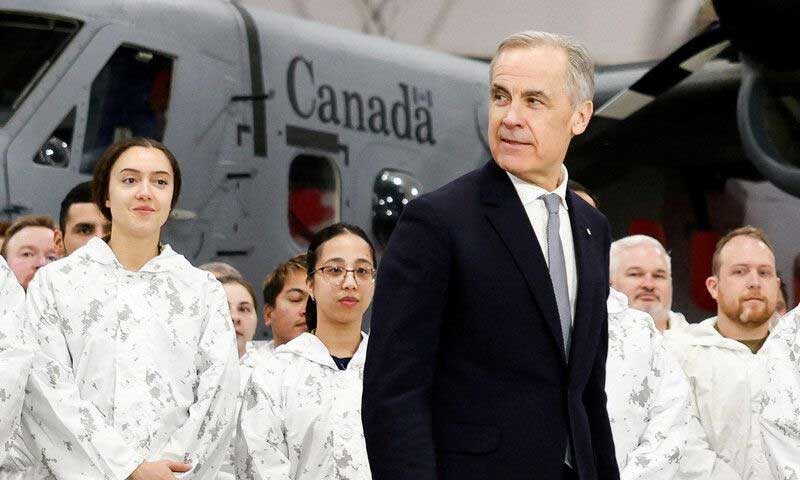
WEB DESK: The Arctic has long been the silent frontier of Canadian identity, but under the leadership of Prime Minister Mark Carney, it has moved to the absolute forefront of the national security agenda. In a landmark announcement that signals a profound shift in the country’s geopolitical posture, the Prime Minister has unveiled a multi-billion-pound investment strategy designed to fortify Canada’s northern reaches.
According to the New York Times, Canada’s claim to the North was “sovereignty in name only,” largely underpinned by a quiet reliance on United States military might and NORAD’s overarching umbrella. However, as the polar ice retreats and global competition for resource-rich shipping lanes intensifies, the Carney administration has made it clear that Canada will no longer be a spectator in its own backyard.
This ambitious plan is not merely a budgetary increase; it is a declaration of independence aimed at ensuring Canada possesses the independent capability to monitor, defend, and govern the vast, frozen expanse of the High Arctic.
The architecture of northern defence
Central to this transformative policy is the establishment of a robust network of new military installations and “operational support hubs” across the territories. Moving beyond the existing, often seasonal outposts, the government has committed to constructing year-round bases in strategic locations such as Resolute and Rankin Inlet.
These sites are intended to serve as the backbone for a permanent military presence, providing the infrastructure necessary for the Royal Canadian Air Force and the Navy to operate effectively in some of the harshest environments on Earth. By investing in dual-use infrastructure such as deep-water ports and all-weather roads the plan also seeks to bridge the gap between military necessity and civilian prosperity.
These hubs will facilitate quicker search-and-rescue responses and environmental monitoring, while simultaneously providing the logistical “teeth” required to intercept any unauthorised incursions into Canadian waters or airspace, thereby reducing the historic deficit in domestic Arctic surveillance.
Shifting alliances and the pursuit of self-reliance
The decision to pivot away from a primary dependence on Washington reflects a pragmatic response to an increasingly volatile international landscape. While the United Kingdom and other NATO allies remain vital partners, the Carney government’s “resilience” doctrine acknowledges that Canada must be the primary guarantor of its own northern security.
This shift is driven by the reality of a warming climate, which has turned the Northwest Passage into a potential global highway, drawing the unwanted attention of rival powers. By fast-tracking military spending to meet NATO’s 2% of GDP target well ahead of schedule, Canada is repositioning itself as a “Tier One” Arctic power.
This surge in domestic capacity is intended to provide Canada with the leverage to dictate the terms of Arctic navigation and resource extraction, ensuring that the future of the North is decided in Ottawa and the territorial capitals, rather than being outsourced to the strategic priorities of its southern neighbour.
You May Also Like