- Web
- 37 Minutes ago
Cheap Iranian drones Vs costly US interceptors: ME conflict now a ‘war of attrition’
-

- Web Desk
- Mar 03, 2026
Just days into the latest Middle East conflict, Iran’s drone assaults are testing the endurance of US and allied defenses, turning the war into a battle of attrition, Bloomberg reported on Tuesday.
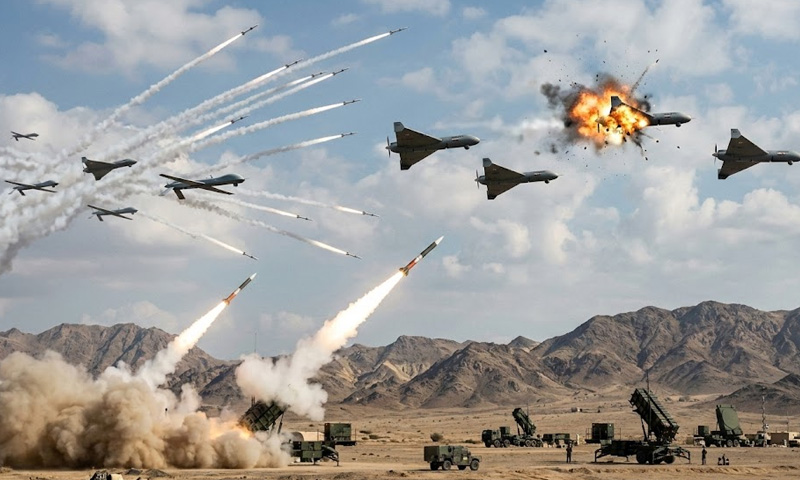
Waves of inexpensive Shahed-136 drones are striking military bases, oil facilities, and civilian targets across the region, forcing a heavy reliance on costly interceptors and potentially straining both sides’ munitions reserves.
The small, one-way Shahed drones, essentially rudimentary cruise missiles, have been deployed relentlessly since US and Israeli airstrikes on Iran began Saturday. While US-supplied Patriot missiles have reportedly intercepted more than 90 per cent of incoming drones and ballistic threats, the cost disparity is stark: each Patriot missile carries a $4 million price tag, while a Shahed costs around $20,000. Analysts say this mismatch highlights a problem Western militaries have faced since the Ukraine conflict, where cheap adversary weapons can rapidly deplete high-value defenses.
“If this continues, both Iran and the US could see their stockpiles drop significantly within days or weeks,” said Kelly Grieco, senior fellow at the Stimson Center. “Whoever can sustain the fight longer will gain a critical advantage.”
Reports suggest that Gulf states are feeling the pressure. Internal assessments indicate Qatar could exhaust its Patriot interceptors within four days at current usage rates, prompting quiet calls for a quick resolution to the fighting.
Iran, which reportedly retained around 2,000 ballistic missiles after last year’s conflict with Israel, appears to have a much larger inventory of Shahed drones. Production estimates, drawing on Russian manufacturing rates, suggest hundreds could be produced daily. Tehran has launched over 1,200 projectiles since the start of the conflict, with a significant portion likely being Shahed drones, possibly conserving ballistic missiles for prolonged campaigns.
The Iranian military seems to be operating with considerable autonomy, according to Foreign Minister Abbas Araghchi. “Our units are functioning independently, following broad directives set in advance,” he told Al Jazeera.
On the US side, logistical challenges may limit sustained operations. While President Donald Trump suggested US forces could maintain strikes for up to four weeks, analysts warn that munitions may not be sufficient to meet that timeline. Defense Secretary Pete Hegseth stressed Monday that the current campaign is not intended to be open-ended.
Iran’s air defenses were quickly targeted in the initial hours of the war, including Russian-made S-300 systems, giving US and Israeli aircraft largely unhindered access to Iranian airspace. The US and allies rely primarily on Patriot PAC-3 missiles and THAAD systems, with each THAAD interceptor costing about $12 million. Advanced Precision Kill Weapon System missiles deployed by fighter jets add tens of thousands per shot to operational costs.
Alternative anti-drone technologies, such as lasers and automated guns, remain limited in the region. Israel’s Iron Beam laser system is designed to counter small aerial threats but has not yet been deployed.
Experts warn that if Iranian drone attacks persist at the current pace, regional PAC-3 stockpiles could run dangerously low within days, potentially forcing a stalemate. “Iran may deplete its missiles and drones, yet maintain regime control even amid chaos,” said Ankit Panda, senior fellow at the Carnegie Endowment for International Peace. “The first 60 hours of this war suggest that scenario is increasingly likely.”
You May Also Like