
- Reuters
- October 27, 2026
China ‘strongly dissatisfied’ as US adds tech giants to military blacklist
-

- Reuters
- June 13, 2026
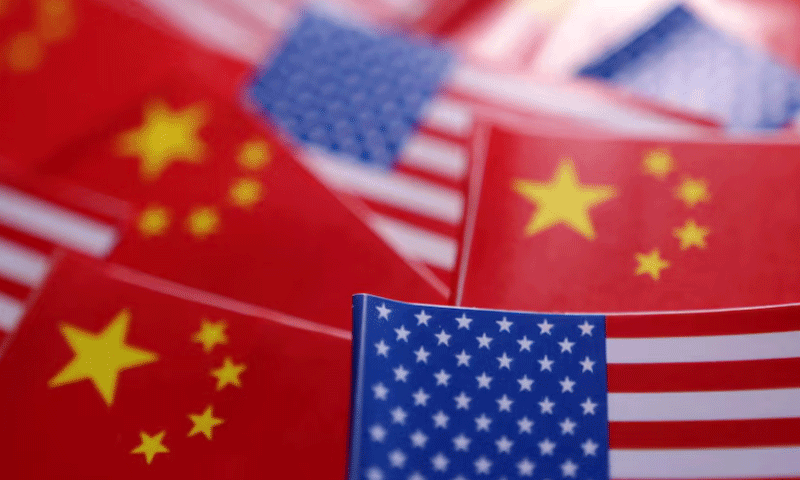
WEB DESK: China on Saturday expressed strong dissatisfaction and firm opposition after the United States added several major Chinese technology firms, including e-commerce giant Alibaba, to a Pentagon blacklist over their alleged links to Beijing’s military.
The developments marks a fresh escalation in the ongoing geopolitical and trade friction between the world’s two largest economies, coming just a month after a meeting between US President Donald Trump and Chinese President Xi Jinping in Beijing.
The updated list, released by the US Department of Defense, targets a broad swathe of China’s leading technology companies.
Washington views these firms as key to advancing Beijing’s military and industrial capabilities, reflecting deep-seated security concerns in the US capital amid intense strategic competition.
Beijing warns of retaliation
Reacting to the move, China’s Ministry of Commerce issued a strongly worded statement urging Washington to reverse its decision immediately.
“China is strongly dissatisfied and firmly opposes this,” the ministry said, calling on the US to “immediately stop its erroneous practices” and return to building a constructive and stable relationship.
The commerce ministry further warned that Beijing would “inevitably retaliate resolutely and forcefully” if Chinese firms continue to face unfair treatment.
The foreign ministry in Beijing also expressed serious concern over the long-awaited update, which supersedes a previous list compiled in early 2025.
According to Chinese officials, the Pentagon’s unilateral move “ignored the consensus” reached between President Xi and President Trump during their recent high-stakes summit, where the two leaders had managed to maintain a delicate truce in their ongoing trade dispute.
Contracting curbs to take effect by 2027
Under US legislation, inclusion on the Pentagon blacklist carries significant long-term commercial consequences.
The Defense Department will be legally prohibited from contracting directly with any of the named companies.
Furthermore, restrictions will be placed on purchasing their products or services through third-party supply chains, with the full ban set to take effect from 2027.
The move is expected to further complicate supply chains for global technology firms and could trigger a new round of tit-for-tat economic measures.
Analysts suggest the targeting of a consumer-facing giant like Alibaba signals an expansion of Washington’s economic restrictions beyond traditional defence and surveillance firms, targeting China’s broader digital ecosystem.
You May Also Like


- WEB DESK
- October 27, 2026
Punjab govt moves to provide life insurance cover to employees
- AFP
- October 27, 2026