- Web
- 1 Hour ago
Climate crisis meets disinformation as Pakistan faces a double war
-

- Syeda Masooma
- Dec 11, 2025
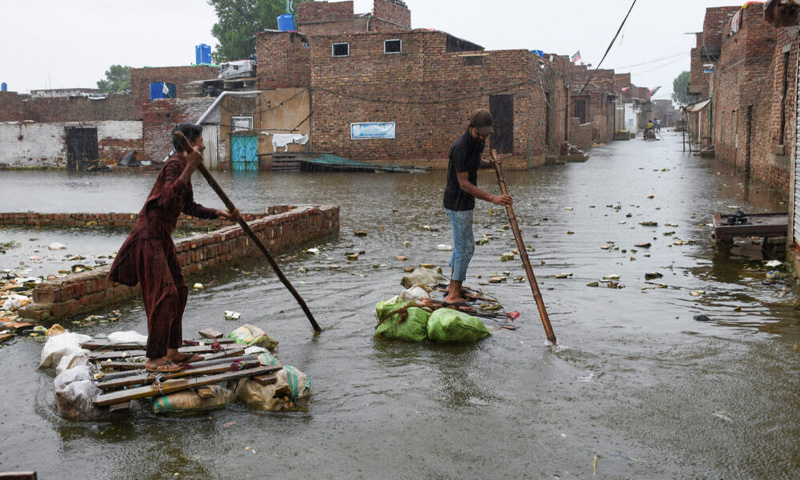
Pakistan’s escalating climate emergency is being compounded by an expanding wave of online falsehoods that is deepening the vulnerability of Indigenous communities, according to a landmark study released by the Institute of Research, Advocacy and Development (IRADA).
The research, described as the country’s first comprehensive baseline assessment of climate disinformation, warns that misleading and politically driven narratives are spreading rapidly across digital platforms, distorting public understanding and obstructing effective climate response. The report, “Climate Disinformation in Pakistan: Silencing Indigenous People’s Voices”, finds that as Pakistan endures increasingly severe floods, heatwaves, droughts and glacial lake outburst floods, its information ecosystem is simultaneously being contaminated by rumours, conspiracy theories and sensational content that often outpace official communication.
Researchers argue that this dual crisis places “Indigenous Peoples”, including tribal groups, pastoralists, fisherfolk, ethnic minorities and mountain communities, at heightened risk of harm, displacement and loss of livelihoods. Drawing on desk research, nationwide social media monitoring, a survey of more than 250 respondents, 14 expert interviews and focus group discussions with Indigenous participants, the study maps the contours of climate disinformation and its disproportionate impact on marginalised groups. It identifies five dominant strands: alarmist and exaggerated content; conspiracy narratives; denialist messages that undermine scientific consensus; misleading “quick fixes”; and religious fatalism that discourages human action.
Almost all identified falsehoods emerged during high-impact events, with 95 per cent coinciding with major disasters when public demand for information surged. The disinformation, the report notes, spread overwhelmingly through social media and messaging applications, often in local languages, making rapid fact-checking difficult. The findings also highlight long-standing weaknesses in Pakistan’s media landscape. Limited scientific literacy, sparse climate coverage, sensationalist editorial incentives and the absence of routine fact-checking procedures leave newsrooms ill-equipped to counter viral falsehoods. Algorithmic amplification on major platforms further accelerates the spread of misleading content.
False information has fuelled confusion during emergencies, influenced harmful adaptation decisions, and created unnecessary fear or misplaced complacency. It has also weakened trust in scientific forecasts and state institutions, eroded confidence in traditional ecological knowledge, and deepened the political marginalisation of Indigenous groups within climate policy debates. Researchers stress that the challenge cannot be viewed solely as a digital problem, describing it instead as a governance issue with direct implications for public safety and climate resilience. They call for a coordinated national response involving government ministries, UN agencies, civil society, the media and technology companies.
Recommendations include embedding information integrity into national climate frameworks, forming a national climate fact-checking alliance, establishing community-led verification networks, strengthening environmental journalism and improving algorithmic transparency on social platforms.
During the launch event of the report, and Pakistan’s first “National Conference on Climate Disinformation”, SDPI Executive Director Dr Abid Suleri gave a comprehensive blueprint for formulating a climate policy that is effective and implementable. “Considering that climate action involves multiple departments and multiple subjects divided between federal, provincial and local governments, the policy formulation should begin from the foundations instead of top down approach,” he added.
You May Also Like