- Web Desk
- 29 Minutes ago
Concerns grow over IWT, as India skips UNSC’s Arria-Formula meeting
-

- Web Desk
- Feb 01, 2026
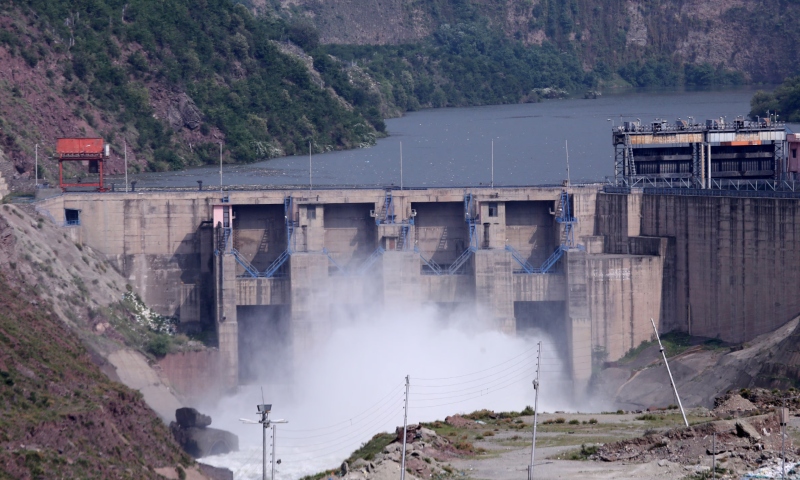
NEW YORK: An Arria-Formula meeting of the United Nations Security Council (UNSC) was held on January 30, hosted by Pakistan, to discuss India’s unilateral actions concerning the Indus Waters Treaty (IWT). The meeting was convened under the theme “Protecting the Sanctity of Treaties.”
The informal and confidential session was attended by representatives of 40 UN member states from all regions, who participated in discussions on India’s reported decision to suspend the decades-old water-sharing agreement. India did not participate in the meeting.
The Arria-Formula mechanism allows any Security Council member to convene discussions with senior officials of international organisations, non-state actors, and countries that are not members of the Council, providing a platform for open and direct dialogue on critical international issues.
The meeting was briefed by David Ninopoulos of the United Nations Office of Legal Affairs, Ahmer Bilal Soofi, President of the Research Society of International Law, Prince Zeid Ra’ad Al Hussein, President of the International Peace Institute, and Professor Adil Najam of Boston University.
Speakers emphasised that international treaties are legally binding and serve as a cornerstone for stability in international relations. They warned that weakening international law could pose serious threats to collective security and undermine the global rules-based order.
India’s unilateral suspension of the Indus Waters Treaty was described during the meeting as a serious violation of international legal obligations, with participants cautioning that such actions could have far-reaching regional and global implications.
Pakistan reiterated that the Indus Waters Treaty remains fully effective and stressed that both Pakistan and India should stay committed to resolving disputes through the treaty’s established dispute resolution mechanisms.
Member states participating in the discussion underscored that agreements like the Indus Waters Treaty are indispensable for regional stability and the prevention of conflict, particularly in geopolitically sensitive regions.
You May Also Like