- Umair Rana
- November 9, 2026
COP31 opens in Turkiye amid climate concerns over war, AI energy demand
-

- Reuters
- November 9, 2026
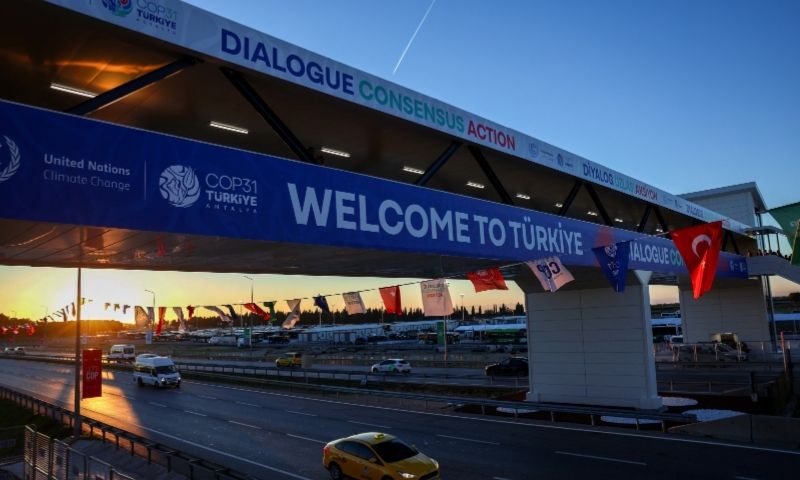
Representatives from nearly 200 countries are gathering in Turkiye on Monday for two weeks of United Nations climate talks, with war-driven energy security concerns, rising electricity demand from artificial intelligence (AI) and US disengagement threatening efforts to tackle global warming.
The 31st UN Climate Change Conference (COP31), being hosted in the Mediterranean coastal city of Antalya, comes against a challenging backdrop as countries grapple with energy supply disruptions linked to the US war with Iran and growing electricity needs driven by the rapid expansion of AI.
The conflict has prompted countries to scramble for oil supplies and increase the use of coal-fired power plants, while the United States, historically the world’s largest greenhouse gas emitter, is staying away from international climate cooperation for the second consecutive year.
These developments are expected to complicate efforts by the Turkish COP31 presidency to secure a strong agreement at the summit.
“It’s hard to be optimistic,” John Holdren, a professor of environmental policy at Harvard University, told Reuters.
Turkiye pushes global electrification target
Turkiye has made a target of electrifying more than a third of the global economy by 2035 the centrepiece of its COP31 presidency.
The goal would mark an increase from around one-fifth of the global economy currently powered through electricity. The presidency is asking countries to endorse a pledge supporting the target.
Greater electrification could help reduce greenhouse gas emissions by accelerating the shift away from fossil fuel-powered vehicles, heating systems, boilers, cookstoves and other equipment.
However, climate advocates have criticised the proposed pledge because it does not require the additional electricity to come from low-carbon sources.
This has raised questions over whether electrification alone should be considered meaningful progress in addressing climate change, particularly if increased electricity generation continues to rely on fossil fuels.
Countries seek clearer roadmap away from fossil fuels
A coalition of countries, including vulnerable South Pacific island nations facing the threat of rising sea levels, is pushing for a clearer global roadmap to move away from fossil fuels.
The issue has remained one of the most contentious subjects at international climate negotiations, reflecting divisions over how quickly the world should reduce its reliance on oil, gas and coal.
Several oil- and gas-producing countries, including Saudi Arabia, maintain that fossil fuels can continue to play a substantial role in the global energy mix while remaining compatible with climate goals, provided technologies are used to reduce or capture emissions.
The debate is expected to add to the challenges facing negotiators as they seek agreement on climate action amid competing energy security priorities and growing pressure to accelerate emissions reductions.
Many oil- and gas-producing nations, including Saudi Arabia, argue that fossil fuels can still form a substantial part of the global energy mix in a climate-friendly world, provided they are paired with technologies that reduce or capture emissions.
Pressure is mounting for faster action on climate change.
A report by the United Nations Environment Programme published in October said the world is already set to overshoot 1.5C of warming above pre-industrial times, the threshold set at the 2015 Paris climate summit.
2026 also stood out with a series of extreme heatwaves across Western Europe and a glacier collapse in Nepal that caused a catastrophic flood that killed more than 1,450 people, with thousands still missing.
“This year has proven to be one of the years with the highest casualties by the climate-induced disasters,” said Manjeet Dal, an adviser to the Least Developed Country bloc and south Asia director of Climate Analytics.
War and tech
The Iran war has underscored the world’s attachment to fossil fuels, as has Russia’s invasion of Ukraine and the ensuing sanctions on Moscow’s energy exports. Some say disruptions from the wars have also clarified the benefits of turning to renewables.
The Iran war, now in its ninth month, severely disrupted Middle East oil shipments through the Strait of Hormuz, lifting fuel prices around the globe and leading governments to scramble for new supplies.
US President Donald Trump’s administration has encouraged policies maximizing oil, gas, and coal production to address the Mideast disruptions. South Korea, India, Thailand and other Asian nations, meanwhile, have increased their reliance on coal or taken steps to boost coal-fired power generation.
“A lot of people who previously might have been embarrassed to argue for continuing very high use of fossil fuel are now feeling empowered to make that case,” said Holdren of Harvard.
At the same time, the deployment of renewable energy has also risen, driven by surging exports of cheap clean tech from China, cheering advocates for ambitious climate action.
“The war has strengthened the case for accelerating the energy transition. The United States is something of an outlier in this regard,” said Andre Correa do Lago, a Brazilian diplomat who presided over last year’s COP.
AI has also added a wrinkle. The technology’s rapid rollout is driving a surge in global power demand, contributing to rising greenhouse gas emissions. But its benefits are proving irresistible, even to climate and environment activist groups.
COP31 host Turkiye will call on governments, businesses and other institutions at the conference to sign a pledge outlining principles to ensure AI is developed and deployed sustainably.
Business advocates said they want just one thing from COP31: clarity.
“Delivery cannot remain a slogan or be left to voluntary initiatives,” said John Denton, the secretary general of the International Chamber of Commerce. “COP31 must send clear policy signals that give businesses the confidence to invest in electrification and the wider energy transition, and turn adaptation needs into bankable projects.”
You May Also Like