- Web Desk
- 20 Minutes ago
CPJ, 17 rights groups urge PM Shehbaz Sharif to protect press freedom in Pakistan
-

- Web Desk
- Feb 25, 2026
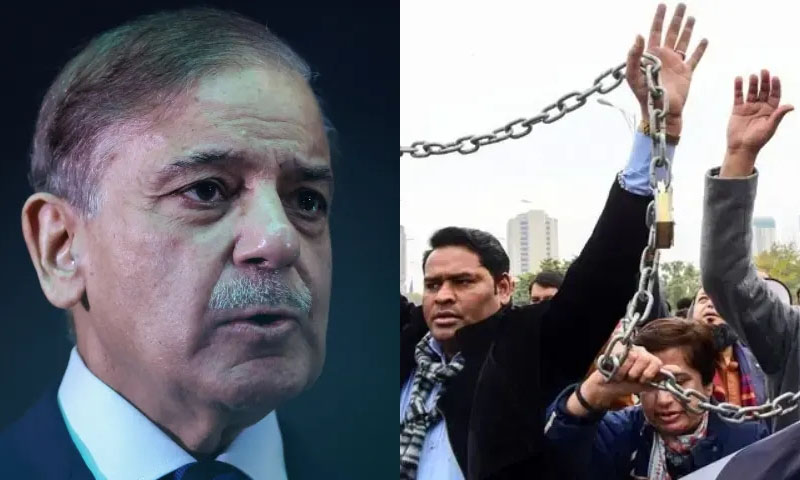
ISLAMABAD: The Committee to Protect Journalists (CPJ), along with 17 other international and domestic press freedom and human rights organizations, has written to Prime Minister Shehbaz Sharif, urging his government to take immediate steps to uphold Pakistan’s constitutional and international obligations to protect press freedom.
In a joint letter addressed to the Prime Minister’s Office, the groups expressed “deep concern” over what they described as the sustained deterioration of media freedom in Pakistan. They said recent legal and institutional developments, combined with persistent failures to ensure accountability for attacks on journalists, have contributed to an increasingly hostile environment for the press.
The signatories urged the government to act in accordance with Pakistan’s Constitution and its commitments under the International Covenant on Civil and Political Rights (ICCPR), which guarantees freedom of expression and requires the state to protect journalists from violence, intimidation, and unlawful interference.
Concerns over 27th Constitutional Amendment
The letter states that Pakistan’s press freedom situation, already challenging, has worsened since the adoption of the 27th Constitutional Amendment in November 2025. The amendment led to the establishment of the Federal Constitutional Court (FCC), which the groups say has coincided with weakening judicial oversight in cases involving attacks on journalists.
Rather than strengthening protections, they argue, the institutional changes have created a more restrictive and uncertain climate for independent journalism. The groups also pointed to judicial inaction in high-profile murder cases as reinforcing a pattern of impunity that continues to endanger media workers.
According to the letter, journalists across Pakistan have faced increased legal harassment, intimidation, surveillance, regulatory scrutiny, and threats since the amendment. These pressures, the organizations said, have had a chilling effect on press freedom.
Call for Release of Sohrab Barkat
Among the urgent demands raised in the letter is the immediate and unconditional release of journalist Sohrab Barkat, who has reportedly been detained for more than 90 days under the Prevention of Electronic Crimes Act (PECA) 2016 in connection with his reporting.
The groups noted that despite being granted bail by the Supreme Court on December 18, Barkat has not been released. They said his prolonged detention raises serious concerns about due process and has contributed to the closure of his employer’s Islamabad office.
The letter urges the government to ensure that laws are not used to criminalize journalism and that media organizations are allowed to operate without intimidation or administrative pressure.
Demand for Justice in Arshad Sharif Case
The organizations also expressed serious concern over the lack of accountability in the killing of journalist Arshad Sharif, who was shot dead by police in Kenya in October 2022 after leaving Pakistan due to threats linked to his reporting.
They said justice remains incomplete in the case, and noted that in February 2026, the Federal Constitutional Court formally disposed of the suo motu proceedings related to his death.
The groups have called on the government to reopen a transparent investigation through an independent judicial commission, saying the case has global significance for journalist safety.
Ending Impunity in Other Cases
The letter also highlights several other unresolved cases of violence against journalists.
It calls for justice in the murder of Shan Dahar, who was shot dead in Badah in January 2014. The organizations described his case as emblematic of impunity in Pakistan, noting that no serious attempt has been made to investigate the killing and that key suspects have not been interrogated.
They further demanded accountability in the alleged killing of journalist Imtiaz Mir in Karachi last year, reportedly claimed by a militant group. Authorities have been urged to conduct a swift, thorough, and transparent investigation into both perpetrators and masterminds.
The groups also called for an investigation into threats against journalist Nadir Abbas Baloch, who they say has faced harassment and police summons allegedly linked to his reporting on human rights and the misuse of blasphemy laws.
They emphasized that ensuring accountability in cases of intimidation is essential to prevent further escalation of threats against journalists nationwide.
Concerns Over Transnational Repression and Afghan Journalists
Another major concern raised in the letter is what the organizations described as the prosecution and conviction of Pakistani journalists living overseas. They termed this an alarming expansion of restrictions on press freedom beyond national borders and urged the government to halt judicial action against foreign-based journalists for their reporting or commentary.
The letter also calls on the government to protect Afghan journalists in exile from deportation. The groups expressed concern over what they described as a recent surge in detentions and deportations of Afghan media workers living in Pakistan.
Many of these journalists fled threats and persecution under Taliban rule, the letter states, and deportation could expose them to serious retaliation, arbitrary detention, violence, or death. The signatories urged Islamabad to uphold the principle of non-refoulement for individuals facing credible threats due to their journalistic work.
Call to Reform PECA
The organizations have also demanded the urgent repeal or substantial amendment of the Prevention of Electronic Crimes Act 2016, including amendments made in 2025.
They argue that vague provisions in the law enable arbitrary FIRs, arrests, and prosecutions of journalists and digital platforms for legitimate reporting on state institutions, creating a chilling effect on free expression.
“These abuses violate international freedom of expression standards and must be reformed to safeguard journalists’ constitutional rights and the public’s right to information,” the letter states.
Signatories
The letter was signed by a wide range of local and international organizations, including CPJ, Freedom Network Pakistan, Human Rights Commission of Pakistan, International Press Institute, Reporters Without Borders (RSF), PEN America, CIVICUS, and the International Federation for Human Rights (FIDH), among others.
Copies of the letter were also sent to Federal Minister for Information Attaullah Tarar, Federal Minister for Law and Justice Senator Azam Nazeer Tarar, and National Commission for Human Rights Chairperson Rabiya Javeri Agha.
The groups said they look forward to the government’s response and expressed willingness to engage in dialogue on strengthening protections for journalists in Pakistan.
You May Also Like