- Web
- 2 Hours ago
Dar calls UAE president’s visit successful, cites diplomatic and regional gains
-

- Web Desk
- Dec 27, 2025
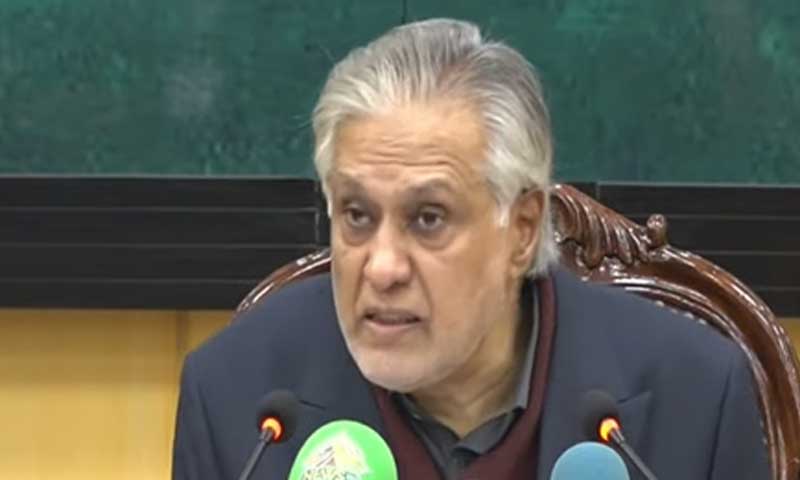
ISLAMABAD: Deputy Prime Minister and Foreign Minister Ishaq Dar on Saturday described the recent visit of United Arab Emirates President Sheikh Mohamed bin Zayed Al Nahyan to Pakistan as “highly successful”, saying it strengthened bilateral cooperation and delivered tangible economic support at a critical time for Islamabad.
Briefing the media, Ishaq Dar said discussions between UAE President Sheikh Mohamed and Prime Minister Shehbaz Sharif were positive and forward-looking, covering investment, financial assistance and broader regional issues. He noted that Pakistan’s engagement with key allies had helped stabilise the country’s external position and reduce diplomatic pressures inherited by the current government.
Economic support from key allies
Ishaq Dar said Saudi Arabia, China and the UAE had extended crucial support to Pakistan through state deposits, helping shore up foreign exchange reserves during a difficult economic period. He confirmed that the UAE was prepared to roll over a $2 billion deposit in January, easing immediate repayment pressures.
In addition, he said Pakistan expected further investment from the UAE against an outstanding $2bn amount, signalling growing confidence among Gulf partners in Pakistan’s economic recovery plans. He also revealed that the UAE would acquire a stake in the Pakistan Military Foundation, describing the move as part of broader defence and industrial cooperation.
According to the deputy prime minister, these developments reflected a significant shift from the situation faced by the Pakistan Democratic Movement (PDM) government when it first took office. “When the PDM assumed power, Pakistan was facing diplomatic isolation,” he said, adding that sustained engagement had since helped rebuild trust with regional and global partners.
India-Pakistan tensions and military posture
Turning to regional security, Ishaq Dar referred to a recent four-day conflict, saying Pakistan’s armed forces had effectively countered what he described as exaggerated Indian claims. He said India had resorted to misinformation after Pakistani forces shot down aircraft, adding that New Delhi continued to issue “false narratives” following the incidents.
Ishaq Dar claimed that within a 36-hour period, India launched 80 aerial assets towards Pakistan, of which 79 were neutralised. “After the downing of aircraft, India repeatedly resorted to misstatements,” he said, arguing that these claims had damaged India’s international credibility.
He stressed that Pakistan had not asked any country to mediate or facilitate reconciliation with India. “We did not ask anyone to broker peace between us and India,” he said, underscoring Pakistan’s position of strategic autonomy.
Reference to Pulwama, Kashmir and Indus Waters Treaty
Recalling the aftermath of the Pulwama incident, Ishaq Dar said Pakistan was fully aware of India’s actions and intentions at the time. He alleged that India used Pulwama as a pretext to attempt the annexation of occupied Kashmir.
He further claimed that under the guise of another incident in Pahalgam, India sought to undermine the Indus Waters Treaty, a critical water-sharing agreement between the two countries. Such actions, he warned, threatened regional stability and violated established international commitments.
Ishaq Dar also said India made a “grave mistake” by targeting the Nur Khan Airbase, calling it a serious escalation that Pakistan had to respond to defensively.
Diplomatic outreach after April 22
The deputy prime minister said Pakistan’s Foreign Office had remained highly active after April 22, engaging major global powers to present Islamabad’s stance. He said Pakistan made it clear to the international community that it would not initiate hostilities.
“We told the P5 countries that if India claims we carried out any attack, it must present evidence,” Ishaq Dar said. He also rejected Indian claims of shooting down a Pakistani F-16, calling them false and saying such statements further eroded India’s credibility.
According to Ishaq Dar, Pakistan briefed the world on its actions under Article 51 of the UN Charter, which allows for self-defence. He said that once Pakistan’s defensive operation concluded, the US secretary of state informed Islamabad that India was ready for a ceasefire.
Defence capability and future vision
Ishaq Dar emphasised that Pakistan’s armed forces acted strictly in self-defence and showed restraint despite having greater capacity. “Our forces only defended the country; we could have done more,” he said.
He added that Pakistan had effectively dismantled perceptions of Indian military superiority, crediting the country’s nuclear and missile programmes for making it “invincible”.
Looking ahead, Ishaq Dar said Pakistan’s next priority was economic strength. “Now Pakistan must become an economic power,” he said, arguing that economic stability would enable the country to play a leadership role in the Muslim world.
“If Pakistan becomes an economic force, it will naturally assume leadership of the Muslim Ummah,” he added, linking economic revival with broader diplomatic and strategic ambitions.
You May Also Like