- WEB DESK
- October 5, 2026
Dawn of a Resurgent Nation: HUM Network’s Sultana Siddiqui on Marka-e-Haq and Pakistan’s global rise
-

- WEB DESK
- May 4, 2026
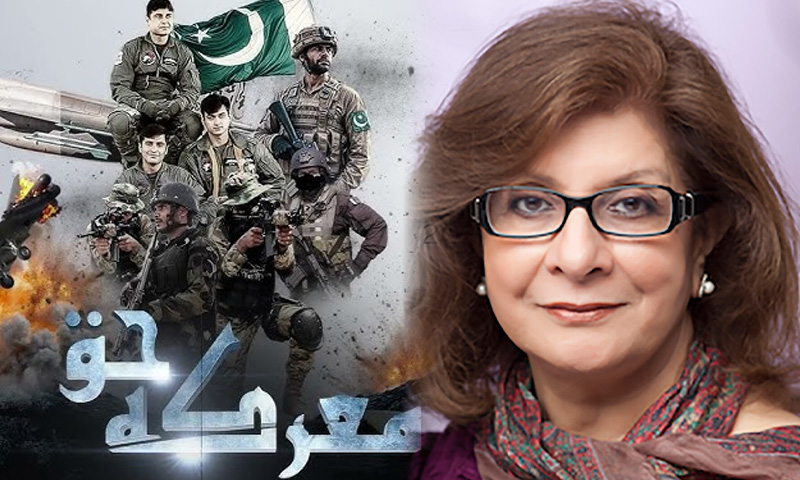
In a powerful blend of storytelling and national reflection, veteran media pioneer and chairperson of HUM Network, Sultana Siddiqui described Marka-e-Haq as a defining moment of renewed global recognition, unity, and confidence for Pakistan.
Speaking about her latest television project on Marka-e-Haq, produced in collaboration with Noor-ul-Huda, she framed the work as more than entertainment, calling it a narrative of national identity, resilience, and spiritual strength.
She reflected on how dramatically perceptions of Pakistan have changed over the years, saying the country is no longer overlooked or misunderstood on the world stage.
Recalling earlier international visits, she said there was a time when even basic awareness of Pakistan was limited. Today, she noted, that reality has shifted.
“Earlier when I used to go abroad to conferences, people used to ask me where Pakistan is,” she said. “Now everyone knows where it is and what it wants. It wants peace, friendship, and dignity for all.”
She added that Pakistanis living abroad have also witnessed this transformation firsthand, sharing that communities in the United States and elsewhere now report a more positive attitude toward Pakistan, with increased curiosity and respect from foreigners.
At the heart of her message was a strong emphasis on unity, both among citizens and between the public and state institutions. Siddiqui linked this cohesion to Pakistan’s improved standing, describing it as a moment of collective strength and confidence.
Quoting a verse of the holy Quran, she said, “You exalt whom You will, and You abase whom You will.”
She said, “Allah is being kind to us, and our people are standing with the armed forces. When there is unity, this is what happens.”
Her remarks reflected a broader national sentiment that Pakistan’s internal solidarity has contributed to a stronger external image, particularly at a time of heightened global attention on regional diplomacy and security dynamics.
She also highlighted Pakistan’s positioning in a complex international environment, where it is increasingly seen as a voice for dialogue and stability. She referred to Pakistan being “chosen for peace” amid global tensions, including diplomatic developments involving Iran and the United States.
However, she stressed that this commitment to peace is not weakness, but balance. She described Pakistan’s identity as one rooted in diplomacy, dignity, and negotiation, while also acknowledging that the country retains the capability to respond firmly if challenged.
As the founder of Hum Network and a recipient of the Sitara-e-Imtiaz, Siddiqui has played a central role in shaping modern Pakistani television. With this new project on Marka-e-Haq, she moves beyond traditional drama storytelling into a broader national narrative, focusing on identity, resilience, and collective pride.
The project arrives at a time when public discourse increasingly revolves around national image, regional influence, and cultural confidence. In Siddiqui’s framing, Marka-e-Haq is not just a television production, it is a reflection of a nation she believes is entering a new era of recognition, unity, and purpose.