
- Reuters
- October 27, 2026
Defence Forces, National Command Authority amendment bills sail through Parliament
-

- Javed Soomro | Muhammad Zareef
- August 20, 2026
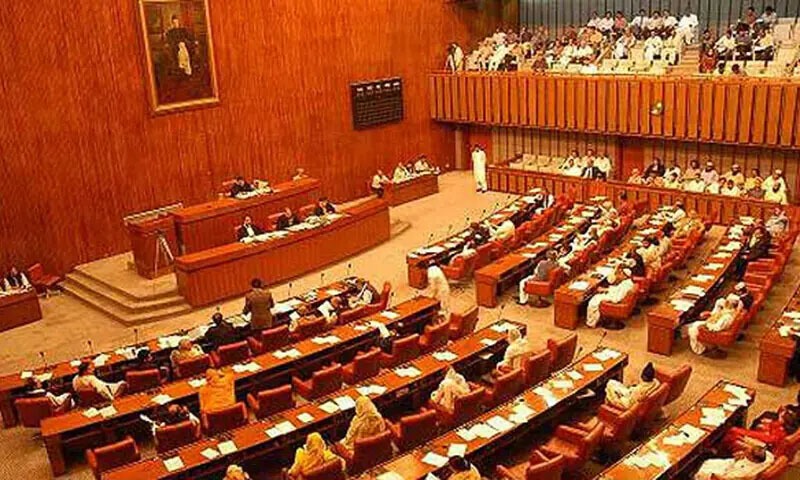
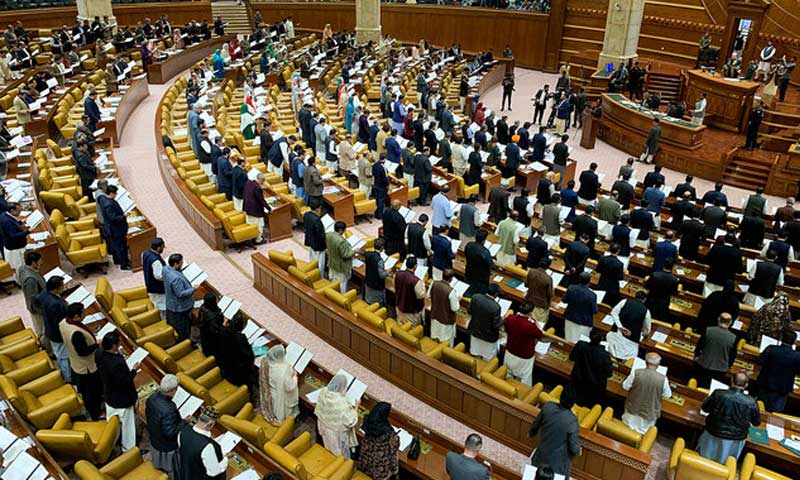
ISLAMABAD: The Senate on Thursday passed the Defence Forces of Pakistan (Amendment) Bill 2026 and the National Command Authority (Amendment) Bill 2026, completing parliamentary approval of the two pieces of legislation after the National Assembly had earlier passed them during the day.
Defence Minister Khawaja Asif moved both bills in the upper house, with the National Command Authority (Amendment) Bill approved unanimously.
The legislation seeks to bring the existing legal framework governing the country’s defence and strategic command structure in line with changes introduced through the 27th Constitutional Amendment.
The bills were brought before the Senate through supplementary agenda, with Law Minister Azam Nazeer Tarar informing the House that the Ministry of Defence had to introduce the two pieces of legislation in light of the constitutional changes.
The Senate proceedings, however, were marked by strong opposition from PTI, Jamiat Ulema-e-Islam and Majlis Wahdat-e-Muslimeen senators, who objected to the manner in which the bills were introduced and complained that copies of the legislation had not been provided to them in time for examination.
Opposition objects to procedure
Leader of the Opposition in the Senate Allama Raja Nasir Abbas strongly objected to the government’s move, saying the bills should first be referred to the relevant committee for consideration.
“This is not the way,” Raja Nasir Abbas said, demanding that the legislation be sent to a committee.
He said the opposition had not even received copies of the bills.
“How can a bill be passed when I do not even have it?” the opposition leader questioned.
Raja Nasir Abbas announced that opposition parties would boycott the proceedings and walk out of the House in protest.
Members belonging to PTI, JUI and MWM subsequently walked out of the Senate.
At one point, opposition senators questioned members of the treasury benches: “Have you read the bill?”
The opposition also argued that the legislation should be dealt with according to parliamentary procedure and given sufficient time for lawmakers to examine its provisions.
Chairman says rules were suspended
Chairman Senate Yousuf Raza Gilani told the opposition that the suspension of rules had already been allowed to facilitate the introduction of the legislation.
When the opposition complained that copies of the bills had not been provided, the chair asked lawmakers to read the legislation before raising further objections.
The government proceeded with the legislation despite the opposition’s protest.
Defence Minister Khawaja Asif moved the motions for consideration of both bills after the House allowed the government to take up the legislation through the supplementary agenda.
Senators were initially asked to allow debate on the bills, with Awami National Party (ANP) Senator Aimal Wali Khan seeking permission for discussion.
The chair pointed out that the rules had been suspended to allow the bills to be taken up.
New defence command structure
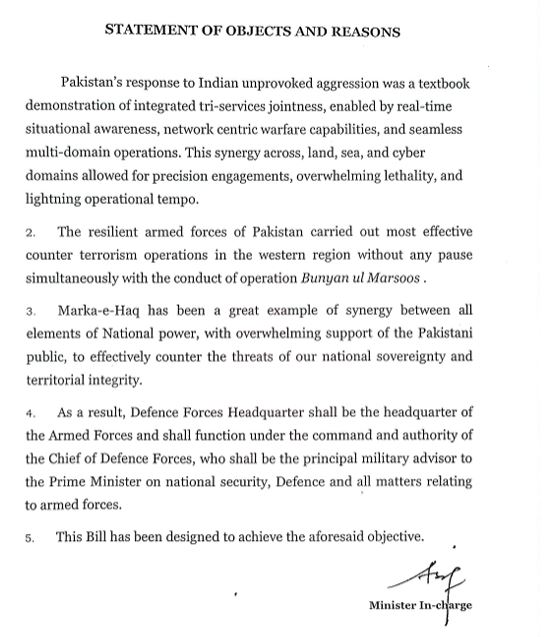
The legislation follows the 27th Constitutional Amendment, which reshaped Pakistan’s higher defence command structure.
The constitutional amendment abolished the office of the Chairman Joint Chiefs of Staff Committee and created the post of Chief of Defence Forces (CDF), a position held concurrently by the Chief of Army Staff.
Field Marshal Asim Munir became Pakistan’s first Chief of Defence Forces under the new structure.
The amendment also created the position of Commander of the National Strategic Command, a four-star post responsible for overseeing the operational integration of the country’s strategic forces.
The Defence Forces legislation provides statutory backing to the new command structure and sets out the administrative and operational responsibilities of the Defence Forces Headquarters and the CDF.
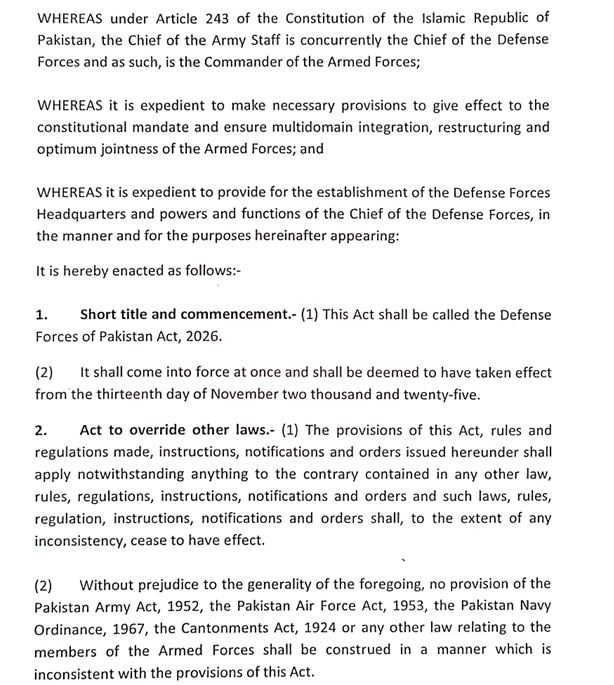
The law provides for a single Defence Forces Headquarters, functioning under the command and authority of the CDF. It also makes the headquarters the principal military adviser to the prime minister on national security, defence and matters relating to the armed forces.
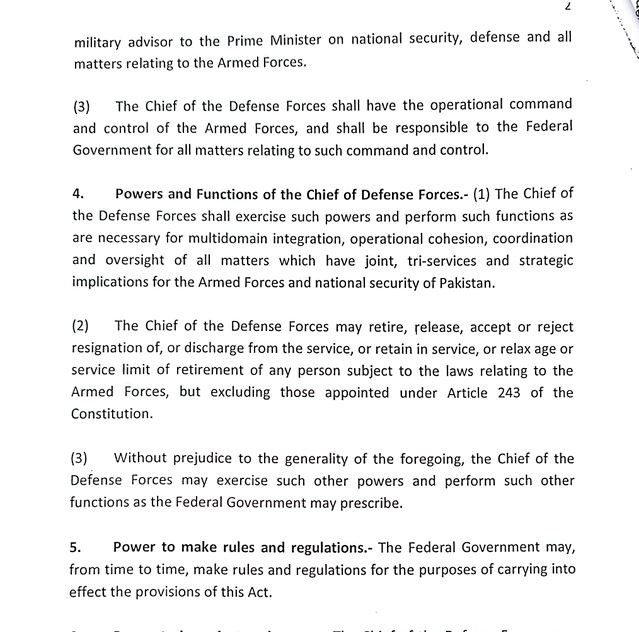
The CDF is given operational command and control of the armed forces and is accountable to the federal government in exercising those powers.
The legislation also sets out the CDF’s powers concerning military personnel, including retirement, release, dismissal, acceptance or rejection of resignations and, subject to applicable law, reduction in the retirement age or period of service.
The National Command Authority amendment, meanwhile, updates the existing law to reflect the new strategic command arrangements established through the constitutional amendment.
Bills pass despite walkout
Following the opposition walkout, the Senate proceeded with the legislation and passed the two bills.
The passage of the bills in the Senate came hours after the National Assembly approved both pieces of legislation by a majority vote during its session on Thursday.
The National Command Authority (Amendment) Bill 2026 was passed by the Senate unanimously, according to the proceedings.
The Senate session was subsequently adjourned until 10:30am on Friday.
Earlier in the day, the federal cabinet, chaired by Prime Minister Shehbaz Sharif, had approved the draft Defence Forces Act 2026 and amendments to the National Command Authority Act 2010.
The bills were subsequently brought before the National Assembly during its ongoing session.
Law minister defends legislation
Speaking during the debate in the National Assembly, Law Minister Azam Nazeer Tarar described the legislation as technical in nature and said the government was carrying out the legislation after taking parliamentary leaders into confidence.
He said the office of the Chief of Defence Forces had already been created and the legislation was intended to clearly define its powers.
Tarar said the amendments would remove ambiguities regarding the appointments of the Chief of Defence Forces and the chiefs of the Pakistan Air Force and Pakistan Navy.
The law minister also referred to the controversy surrounding the possible transfer of PTI founder Imran Khan to a hospital, saying there was no ambiguity in the relevant legal provisions.
He questioned how Article 125 of the Constitution should be interpreted when a person in prison was required to be moved out of jail on medical grounds.
“Whenever someone has to be sent out of prison, a medical board will be constituted,” Tarar said, explaining that the law provided a mechanism for dealing with such cases.
He said the first option would be a government hospital and questioned whether the law should allow a prisoner to be shifted to another hospital or sent outside the government system.
“There is no ambiguity in this matter,” Tarar said, adding that there was nothing negative in the provision.
PPP Chairman Bilawal Bhutto Zardari said that the opposition had not been taken into confidence over the legislation.
However, he said he supported the legislation passed by the National Assembly.
Bilawal also criticised the government’s handling of Imran Khan’s possible transfer to a hospital, saying the government could have played a better role in the matter.
He said the government initially accepted the decision regarding the former prime minister’s medical treatment but later decided to challenge it in court.
Opposition Leader in the National Assembly Mahmood Khan Achakzai also objected to the manner in which the bills were brought before the House.
“We are members of this Parliament,” Achakzai said, adding that the opposition wanted legislation to be carried out but needed sufficient time to examine the bills.
He asked the government to provide copies of the legislation so that lawmakers could read them and give their opinion.
“Keep them for at least two or three days so that they can be debated,” he said.
Achakzai also called for a briefing on Pakistan’s regional and foreign policy situation, particularly developments involving Iran, the United States and Afghanistan.
Referring to US President Donald Trump’s reported warning against countries conducting economic dealings with Iran, he said Pakistan should be briefed on what was happening in the region.
Achakzai also criticised the government’s handling of Pakistan’s diplomatic engagement with Afghanistan.
He said that opposition lawmakers had recently visited the Afghan embassy, where ambassadors from several countries were present.
“We went to the Afghan embassy the other day. Ambassadors of all countries were sitting there,” he said.
He claimed that while other countries were represented by senior diplomatic officials, Pakistan had sent a desk officer to the Afghan embassy.
“This was embarrassing for us,” Achakzai said, calling for greater seriousness in Pakistan’s engagement with Afghanistan.
He also criticised what he described as excessive focus on Imran Khan, saying the former prime minister had been turned into an unnecessarily major issue.
“Even the worst criminal has the right to have his health taken care of,” he said, arguing that the government should focus on broader national interests.
Achakzai urged the government and opposition to sit together and find solutions to the country’s problems.
“Whatever legislation you want to bring, bring it, but at least take us into confidence,” he said.
“Let us sit together so that we can put the country right.”
The legislation comes as the government moves to bring existing laws into conformity with the new constitutional structure following the sweeping changes made through the 27th Amendment.
Speaker suspends proceedings
At the outset of the proceedings, National Assembly Speaker Sardar Ayaz Sadiq expressed strong displeasure over the absence of officials from the Ministry of Inter-Provincial Coordination during Question Hour and suspended proceedings for 15 minutes after a question raised by a lawmaker remained unanswered.
The speaker directed that the Ministry of Inter-Provincial Coordination secretary, joint secretary and deputy secretary be summoned to the House and ordered them to remain present until the conclusion of Question Hour.
“Bring all of them here and make them sit here. They will remain here until Question Hour is over,” Sadiq directed.
The speaker was reacting to the non-receipt of a reply to a question raised by MNA Chaudhry Ilyas. “Why has this question not been answered? Who is responsible?” he asked.
Addressing Federal Minister for Parliamentary Affairs Dr Tariq Fazal Chaudhary, Sadiq said that the parliamentary minister should ensure that questions listed for the House were properly attended to.
“You are the Parliamentary Affairs Minister. You should look after Question Hour,” the speaker told him.
Sadiq also warned that if the officials concerned failed to attend the National Assembly in future, a privilege motion should be moved against the Minister for Parliamentary Affairs and the relevant officer.
The speaker’s intervention came as the absence of officials and ministers disrupted the proceedings.
Sadiq subsequently suspended the proceedings for 15 minutes to allow the relevant officials to reach the House.
Financial assistance to families of Pakistanis who die abroad
During Question Hour, the speaker asked how assistance was provided to the families of Pakistanis who died abroad.
Minister of State for Overseas Pakistanis and Human Resource Development Muhammad Awn Chaudhry said that financial assistance was provided to the families of deceased Pakistanis.
He told the House that 3,498 families of Pakistanis who died abroad had so far been provided financial assistance amounting to Rs1.3 billion.
Awn Chaudhry, who is a member of the ruling coalition, said that financial assistance was also provided to Pakistanis injured in accidents abroad.
Shehryar Afridi raises concerns over CDA housing schemes
Pakistan Tehreek-e-Insaf (PTI) lawmaker Shehryar Afridi raised concerns over the functioning of housing societies under the Capital Development Authority (CDA), particularly their impact on overseas Pakistanis.
Afridi said that there was no proper mechanism for dealing with CDA housing societies and said that overseas Pakistanis had suffered because of the system.
“Overseas Pakistanis have been ruined because of the CDA,” Afridi said, while calling for greater protection for people investing in housing schemes.
Federal Minister for Parliamentary Affairs Dr Tariq Fazal Chaudhary said that policies for dealing with overseas Pakistanis had been improved.
He said that the CDA had considerably tightened its scrutiny mechanism and that practices such as selling the same plot to two different people had been eliminated.
Chaudhary said that the improvements in the CDA’s system had helped address such problems, while further steps were being taken to facilitate overseas Pakistanis.
Afridi insisted that the CDA should serve as a model institution. He also pointed out that some housing societies were operating without no-objection certificates (NOCs) and alleged that overseas Pakistanis had been defrauded.
Chaudhary acknowledged that some mafias were involved in fraudulent practices and said additional measures were being taken to provide greater relief to the public.
EOBI pensions come under discussion
Jamiat Ulema-e-Islam-Fazl (JUI-F) lawmaker Aliya Kamran raised the issue of pensions being paid by the Employees’ Old-Age Benefits Institution (EOBI).
She questioned why EOBI pensions were not being increased.
In response, Awn Chaudhry said that the government had increased pensions and was taking steps to provide whatever improvements were possible for workers.
He said a separate fund was available to provide assistance to workers who suffered accidents.
Pakistan People’s Party lawmaker Dr Shazia Sobia Aslam Soomro also participated in the discussion on issues concerning workers and social protection.
PIA flights, Hajj pilgrims’ difficulties discussed
The performance of Pakistan International Airlines (PIA) during the Hajj operation also came under discussion.
Jamiat Ulema-e-Islam Pakistan (JUI-P) lawmaker Naeema Kishwar Khan said the largest number of complaints received this time related to PIA.
She urged the government to include other airlines and flights in the Hajj operation so that pilgrims did not have to face similar difficulties.
PPP lawmaker Shagufta Jumani also criticised the handling of flights and said PIA sometimes changed flight schedules at its own discretion, leaving confirmed passengers waiting at airports.
She said some pilgrims had been forced to wait for as long as 48 hours at airports.
“A Pakistani pilgrim is left to suffer like an abandoned person,” she said, highlighting the difficulties faced by passengers.
Parliamentary Secretary Raja Usama Ashfaq Sarwar said that around 50,000 pilgrims had been transported under the Hajj operation, although 3,000 to 4,000 pilgrims had faced difficulties.
Federal Minister for Religious Affairs and Interfaith Harmony Sardar Muhammad Yousaf said that the government had made efforts to ensure that flights were not delayed.
Yousaf said that the ministry had tried to ensure that no flight faced unnecessary delays, while also explaining that the Hajj operation was primarily handled through the relevant Hajj arrangements.
Defence Minister Khawaja Asif suggested that the load should be distributed among other flights to reduce pressure on the system.
PPP lawmaker Shagufta Jumani further complained that confirmed passengers were sometimes left waiting after changes to flight schedules.
Poor facilities at Karachi airport highlighted
PPP lawmaker Mir Munawar Ali Talpur drew attention to the condition of facilities at Karachi’s Jinnah International Airport.
He complained about the poor condition of bathrooms and said a bathtub had been installed in a bathroom at Karachi airport, while the water there was also dirty.
The issue was raised during a broader discussion on the airport’s infrastructure and facilities.
Data on deported Pakistanis sought
Majlis Wahdat-e-Muslimeen Pakistan (MWMP) lawmaker Hamid Hussain raised a question about Pakistanis deported from Gulf countries.
Tariq Fazal Chaudhary explained that the figures available with the government sometimes differed from figures cited by lawmakers because government records were based on Pakistanis arrested and deported and subsequently handed over to Pakistani authorities.
He said the government maintained records of those who were handed over to Pakistan after deportation.
Chaudhary said the laws of the relevant countries required authorities to prepare travel documents for arrested individuals and contact the Pakistani embassy concerned before deportation.
The speaker directed Tariq Fazal to arrange a meeting between Hamid Hussain and Minister of State for Interior Talal Chaudhary to discuss the issue further.
Responding to another question, Tariq Fazal Chaudhary said work on the Jinnah Medical Complex had already begun.
He said no sector had been developed on land belonging to any university and added that the government planned to establish an education city.
Karachi airport infrastructure under spotlight
Later, MQM-P lawmaker Syed Amin-ul-Haque, along with Javed Hanif and Syed Waseem Hussain, moved a calling attention notice concerning the infrastructure and condition of Jinnah International Airport, Karachi.
Amin-ul-Haque said that the condition of Karachi airport was deteriorating with each passing day and particularly criticised the state of its washrooms.
He asked the government to explain what plan it had to improve the airport’s infrastructure and facilities.
Parliamentary Secretary Raja Usama Ashfaq Sarwar said upgradation work was under way at different parts of the airport.
He said a new runway had been constructed at Karachi airport and that the lighting system for night-time landings had also been improved.
Sarwar added that work on a new control tower was also being initiated.
You May Also Like


- WEB DESK
- October 27, 2026
Punjab govt moves to provide life insurance cover to employees
- AFP
- October 27, 2026