- Reuters
- September 16, 2026
Delhi world’s most polluted major city ahead of Diwali, Lahore also battles toxic air
-

- WEB DESK
- November 7, 2026
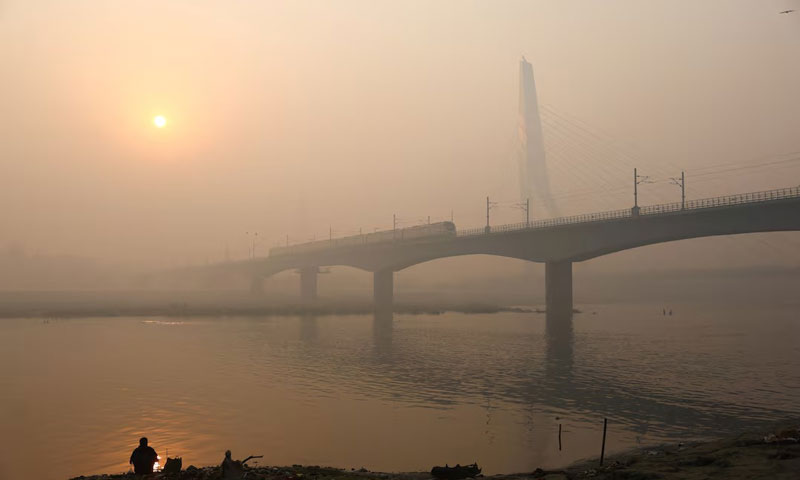
Delhi was the world’s most polluted major city on Saturday morning, with air quality reaching a US index reading of 581, as the Indian capital braced for further deterioration ahead of Diwali, the Hindu festival of lights, according to Swiss air-quality monitoring group IQAir.
The reading, recorded at 10:35am, was more than double the 285 recorded in neighbouring Lahore.
India has urged people in and around Delhi to work from home and ordered schools to offer online classes ahead of Diwali on Sunday. The festival is usually marked by widespread firecracker use, which can further worsen air quality.
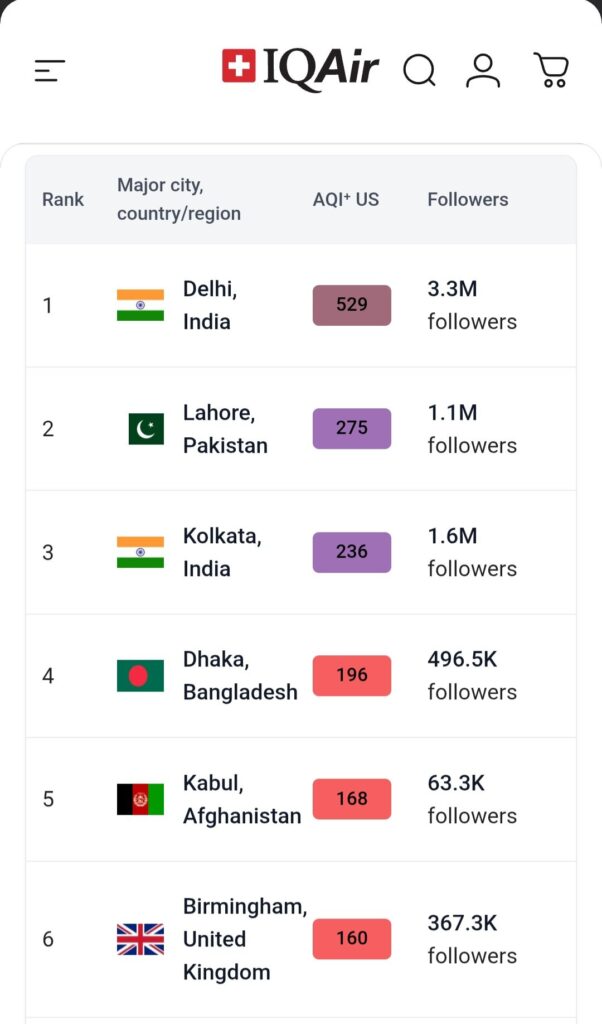
IQAir’s index is based on concentrations of air pollutants and is not directly comparable with India’s official index, which uses a different scale and methodology.
The Central Pollution Control Board put Delhi’s air quality index at 363 at 10am on Saturday, categorising it as “very poor”. Friday’s air quality was the worst recorded before Diwali in eight years, local media reported, citing official data.
Delhi, 11:34 AM. The AQI stands at 499, in the Hazardous category.
A thick haze hangs over the city, with severely polluted air affecting the skies above Delhi.
When pollution reaches these levels, exposure to outdoor air can pose serious health risks. Children, older adults, and people with respiratory or cardiovascular conditions are particularly vulnerable.
Track real-time air quality, monitor pollution levels, and stay informed with https://t.co/mXIZvSRAaO.
#DelhiPollution #DelhiAQI #AirPollution #AQI #AQIIndia #AirQuality #AQIin
— AQI (@AQI_India) November 7, 2026
Air pollution is an annual problem across parts of northern India from the onset of winter, when cold, heavy air traps vehicle emissions, construction dust and smoke from crop-waste burning.
Lahore pollution eases from previous day’s peak
In Lahore, air pollution had risen temporarily a day earlier because of weak winds and falling temperatures, the Punjab Environmental Protection Agency (EPA) said.
The city recorded an overall AQI of 458, while readings in some localities were considerably higher. Burki Road recorded an AQI of 609, followed by Allama Iqbal Town at 583 and Model Town at 447. The index stood at 312 in Defence Phase 5 and 223 in Askari 10.
The EPA said enforcement operations had continued across Punjab over the previous 24 hours to curb pollution. Officials inspected 328 industrial units and 543 brick kilns, sealing 11 industrial units and demolishing four kilns over violations. A total of 11 cases were also registered.
Industrial units were fined a combined Rs1 million, while brick kiln owners were penalised Rs2.05 million for breaching environmental regulations.
The agency also confiscated 726 kilogrammes of substandard plastic across the province, sealed four locations and imposed fines totalling Rs65,000.
Senior Provincial Minister Marriyum Aurangzeb urged farmers not to burn crop residue and called on residents to refrain from burning rubbish and plastic, warning that such practices contribute to worsening air pollution.
Why weather conditions worsen Lahore’s air quality
Weak winds can allow pollutants from vehicles, industry, construction and other sources to accumulate near the ground because there is less movement to carry them away and less mixing with cleaner air above.
Falling temperatures can also contribute to a temperature i nversion, in which relatively warm air sits above colder air near the surface. The warmer layer can restrict the upward movement of pollutants, trapping them close to where people breathe.
As sunlight warms the ground later in the day, the inversion may weaken and atmospheric mixing can increase, helping disperse pollution. Stronger winds can also carry pollutants away more quickly.
However, the AQI does not rise simply because temperatures fall. It increases when concentrations of pollutants near the ground rise. Fine particulate matter, known as PM2.5, is a key component of air-quality monitoring in Punjab.
— With additional input from Reuters.