- Javed Soomro
- October 19, 2026
DG ISPR warns attacks on Saudi Arabia will trigger collective response under Makkah pact
-

- WEB DESK
- October 19, 2026
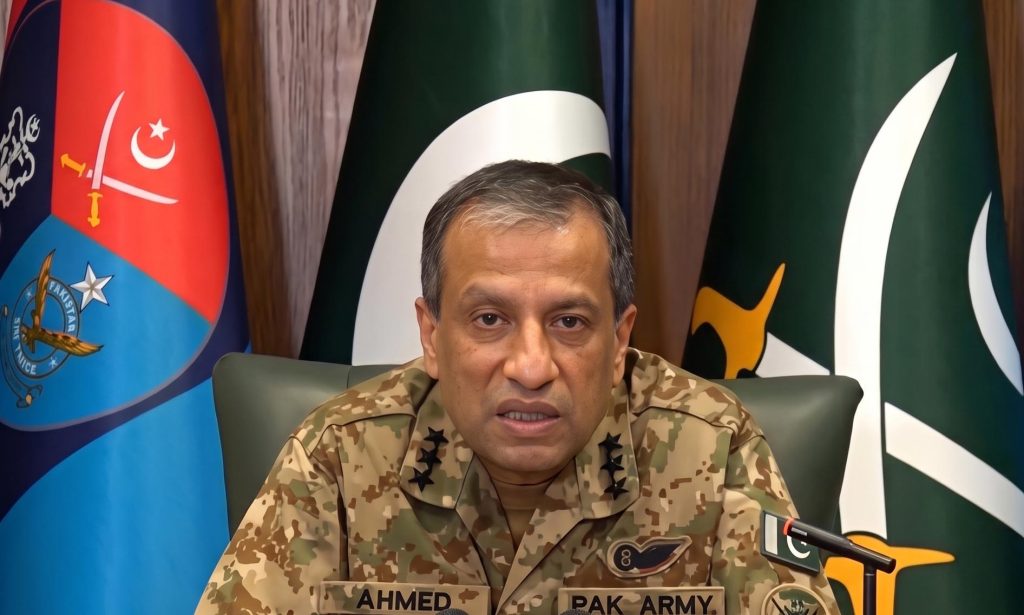
ISLAMABAD: Inter-Services Public Relations (ISPR) Director General Lt-Gen Ahmed Sharif Chaudhry has reaffirmed Pakistan’s commitment to Saudi Arabia’s sovereignty, territorial integrity and the protection of the Haramain Sharifain, warning that any military attack on a member of the Makkah Defence Alliance would trigger a collective response.
In an interview with Independent Arabia published on Sunday, the military spokesperson said Pakistan’s position on the security of Saudi Arabia and the two holy mosques was unequivocal, adding that the country was providing the necessary military support to the kingdom.
He said Pakistan was prepared to use all available means to deter attacks on Saudi Arabia, while operational secrecy prevented him from disclosing further details.
Chaudhry said the Makkah Defence Alliance, comprising Pakistan, Saudi Arabia and Turkiye, was founded on longstanding relations, mutual trust and respect, with the shared objective of promoting regional security and stability.
The alliance, he added, was purely defensive and was not directed against any particular country.
Under the agreement, an attack on any of the three members would be treated as an attack against all, activating the collective deterrence mechanism, he said.
The DG ISPR described the alliance’s progress as exceptional, pointing to the establishment of its secretariat and a political and defence strategic committee involving the three countries’ foreign and defence ministers and military chiefs.
He said the alliance was intended to strengthen collective security rather than create confrontation, adding that its effectiveness would ultimately be judged by its results.
Calls for restraint and dialogue
Chaudhry warned that expanding military confrontations in the Middle East would serve no country’s interests and called for negotiations to prevent further escalation.
He said Pakistan’s political and military leadership had been communicating with Iran for months to encourage restraint and reduce tensions.
Asked about the possibility of a direct warning to Tehran following attacks on Saudi Arabia, he neither confirmed nor denied that such a warning had been delivered. He said Islamabad’s contacts with the relevant parties remained focused on de-escalation.
The military spokesperson said recurring cycles of escalation and temporary calm were undermining regional stability, adding that Pakistan would continue its diplomatic efforts to prevent the conflict from widening.
He also stressed the need for unity among Muslim countries, saying that expanding military conflicts would not benefit their peoples.
Possible military assistance to Yemen
On the possibility of Pakistan providing direct military assistance to Yemen’s internationally recognised government, Chaudhry said he was unaware whether Islamabad had received a formal request.
He added that Pakistan would consider any such request and make an appropriate decision.
His remarks came as the Makkah Defence Alliance faced an early test following Houthi attacks on Saudi Arabia and the reported activation of the three countries’ collective defence commitments.
Chaudhry said Pakistan’s military cooperation with Saudi Arabia predated the alliance by decades and would continue, describing the existing relationship as broader than the agreement itself.
He also said the alliance’s membership was not necessarily closed to other countries that shared its objectives of collective deterrence, peace and regional stability. Decisions on admitting new members, however, rested with the political and strategic leadership of the three founding countries.
The DG ISPR further said the agreement did not replace or undermine the existing military partnerships of its members.
He maintained that the alliance was designed to promote peace, security and stability, with any party threatening those objectives potentially facing its collective deterrence mechanism.
Chaudhry also highlighted growing regional cooperation on maritime security, noting that Pakistan was part of a multinational defensive maritime coalition established to help safeguard international shipping routes.
You May Also Like