- Web Desk
- 5 Minutes ago
Dissident armed faction surrenders in Balochistan; pledges loyalty to Pakistan
-

- Web Desk
- Dec 07, 2025
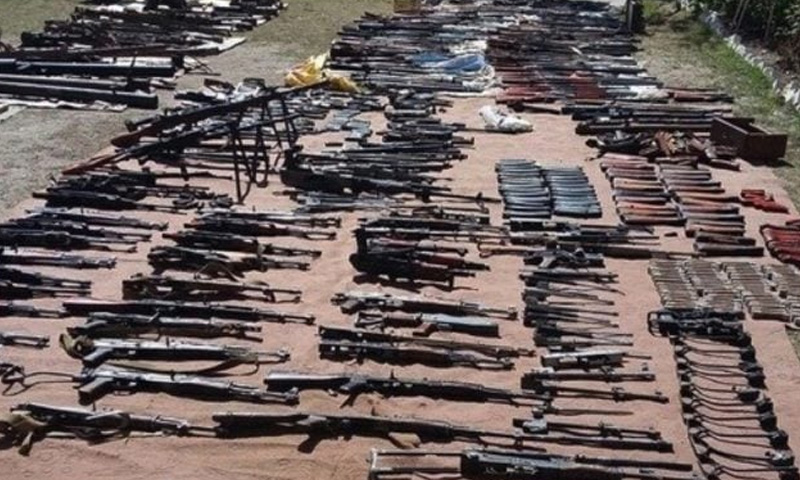
DERA BUGTI: Senior commander of Brahumdagh Bugti faction (BRA) in Balochistan, Wadera Noor Ali Chakrani, surrendered their weapons and pledged loyalty to Pakistan, along with more than 100 former militants. The surrender came during a ceremony held at Pakistan House in Sui.
The oath-taking took place in the presence of Mir Aftab Bugti, marking what officials describe as a major step toward long-term peace and stability in Dera Bugti.
A STRATEGIC TURNING POINT FOR DERA BUGTI
Authorities and local leaders noted that the surrender represents a notable setback for the BRA, particularly due to the influence of the Chakrani tribe, one of the region’s most prominent. Officials say the move weakens the group’s operational capacity, reducing its ability to recruit, extort, and carry out violent activities.
Dera Bugti and Sui, historic centers of Pakistan’s natural gas production, are strategically critical to both provincial and national energy security. Stability in the area, security officials argue, directly contributes to economic resilience and development efforts.
REJECTION OF THE VIOLENCE NARRATIVE
The mass surrender is being interpreted by officials as a broader rejection of the violence-driven “resistance” narrative advanced by anti-state factions. Local communities, they claim, are increasingly placing trust in the State, motivated by aspirations for dignity, safety, and development.
According to observers at the event, the shift in public sentiment reflects a growing awareness of the impact of foreign manipulation and the limits of armed conflict. Officials say the perception that militancy offers a viable future has diminished sharply.
A STRONG SIGNAL TO HOSTILE FORCES
Government representatives described the event as a message to external actors allegedly involved in supporting militancy in Balochistan. The return of more than 100 individuals, they said, indicates that efforts to exploit sections of Baloch youth for geopolitical purposes are failing.
Officials reiterated claims that certain factions attempted to use young militants as proxies, asserting that this development demonstrates the rejection of such influence by local communities.
PART OF AN ONGOING RECONCILIATION PATTERN
The Chakrani mainstreaming aligns with earlier high-profile reconciliations, including those of Sarfraz Bangulzai, a former United Baloch Army (UBA) commander, and Gulzar Imam Shambay, founder of the Baloch Nationalist Army (BNA). Both figures had previously spoken publicly about foreign exploitation within militant ranks.
Authorities say these cases, along with the latest surrender, underscore the State’s broader commitment to offering a dignified path back to society for individuals who renounce violence.
PAKISTAN’S POLICY OF DIALOGUE AND REINTEGRATION
Government officials reiterated that Pakistan’s long-standing reconciliation policy differentiates between hardened militants and individuals misled or coerced into militancy. Those willing to return peacefully, they said, will be welcomed and rehabilitated.
The policy, they added, reflects a confidence that reintegration, not solely force, can secure sustainable peace. A senior official repeated the State’s stance: “Those who return will find dignity; those who persist in violence will isolate themselves.”
FOCUS ON REINTEGRATION AND SOCIAL DEVELOPMENT
With the Chakrani tribe’s return, authorities highlighted opportunities for a comprehensive reintegration and social uplift programme, potentially including:
- Employment schemes
- Access to modern education
- Expanded healthcare services
- Vocational training for youth
- Women’s empowerment initiatives
- Support for small businesses and agriculture
Officials expressed hope that such measures would strengthen reconciliation efforts and promote long-term stability in the region.
A MESSAGE OF HOPE FOR RETURNING FAMILIES
In a statement following the ceremony, officials described the Chakranis’ return as a “ray of hope” for Dera Bugti. They emphasized that those who have returned have “chosen peace over fear, dignity over exploitation, and prosperity over destruction.”
Authorities added that this act of reconciliation could inspire others still engaged in militancy to reconsider, reunite with their families, and pursue a stable future for their children. Local development projects—ranging from roads and schools to jobs and gas supply—are expected to benefit from the improved security outlook.
CALL TO THOSE STILL IN THE MOUNTAINS
The State reiterated its message to remaining militants: violence has only benefited those pursuing foreign agendas, while the people of Balochistan have borne the cost. Officials urged fighters to abandon militancy and rejoin society with respect and honour, should they choose peace.
The message is clear, “Dera Bugti’s path to peace is marked with unity, reconciliation, and development. Those who return will own the future; those who fuel conflict will be left behind by their own people.”
You May Also Like