
- Aasiya Niaz
- 21 Minutes ago
DLSS 5 sparks backlash as Nvidia promises ‘photoreal’ gaming leap
-

- Aasiya Niaz
- 2 Minutes ago
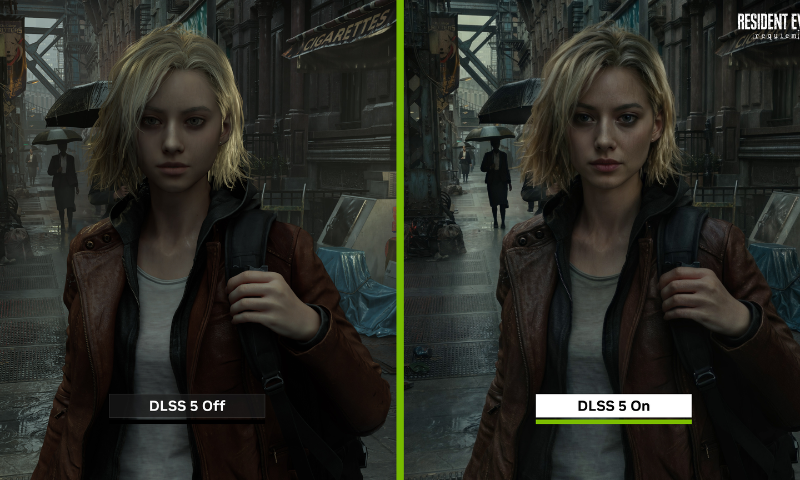
Nvidia has unveiled DLSS 5, a new AI-powered graphics technology it says could transform how video games look, promising near-photoreal visuals in real time. But even before release, the breakthrough is already dividing opinion.
Announced at the company’s GTC 2026 conference, DLSS 5 is being billed as Nvidia’s biggest leap since real-time ray tracing in 2018. Chief executive Jensen Huang called it a “GPT moment for graphics”, signalling a shift from hardware-driven rendering to AI-led visuals.
At its core, DLSS 5 changes how images are created. Instead of rendering every pixel traditionally, it analyses a frame’s colour and motion data, then uses AI to rebuild the scene with more realistic lighting, textures and materials, all in real time.
In simple terms, it aims to make games look closer to real life without sacrificing performance.


The technology is designed to solve a long-standing problem. While Hollywood visual effects can take minutes or hours to render a single frame, games must do it in milliseconds. Nvidia’s bet is that AI can finally close that gap.
The system can recognise elements such as skin, hair, fabric and lighting conditions, allowing it to simulate complex effects like light scattering and realistic reflections. Developers can also control how strongly the AI is applied, helping preserve each game’s artistic style.
DLSS 5 is expected to launch later this year for RTX 50-series GPUs, with backing from major studios including Bethesda, CAPCOM, Ubisoft and Warner Bros. Games. Confirmed titles include Starfield, Hogwarts Legacy and Assassin’s Creed Shadows, among others.
Nvidia says the upgrade marks a shift for DLSS, which has been used in more than 750 games since 2018. Earlier versions focused on performance. DLSS 5 instead targets visual fidelity, aiming to reshape how games look rather than just how they run.
Early demos suggest a major leap. Scenes show more lifelike lighting, deeper shadows and richer detail, with some moments edging closer to cinematic visuals.
But the reaction has not been entirely positive.
Some early viewers and players say the technology appears to go beyond lighting, with characters and faces sometimes looking altered or overly processed. Critics have likened it to an “AI filter”, raising concerns about whether it could override a developer’s original artistic intent.
There are also questions around performance. Early demonstrations reportedly ran on extremely high-end setups, and it remains unclear how the technology will scale on consumer hardware. Nvidia says optimisation is ongoing and the final version will run on a single GPU.
For now, DLSS 5 represents both a breakthrough and a flashpoint.
If it delivers, it could mark a new era of AI-driven graphics. But as early backlash shows, the push towards realism may come with trade-offs that the industry is still figuring out.
You May Also Like